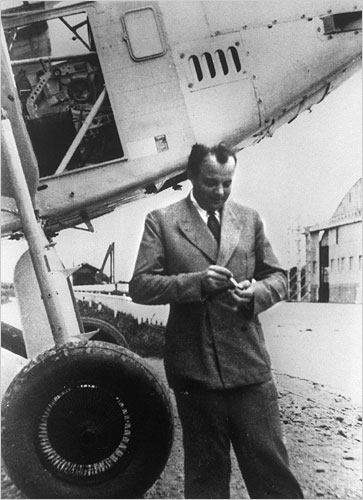
Antoine de Saint-Exupéry
Also known as Antoine Marie Jean-Baptiste Roger, vicomte de Saint-Exupéry, Antoine-Marie-Roger de Saint-Exupéry, A. de Saint-Exupéry
Pioneering aviation literature through personal experience and philosophical reflection created a distinctive body of work that appeals to readers across generations. Antoine de Saint-Exupéry drew from his years as a commercial pilot and air force officer to craft poetic memoirs, philosophical essays, and timeless fables. His celebrated work The Little Prince remains one of the most widely read books in world literature.
Career & Background
Born into an aristocratic French family in Lyon in 1900, Antoine de Saint-Exupéry lost his father at a young age and was educated in Catholic schools. He developed a passion for aviation early in life, taking his first airplane ride at twelve years old. After failing the entrance examination for the naval academy, he learned to fly during his military service in 1921 and received his pilot's wings in 1922. In 1926, he became a commercial pilot, flying pioneer airmail routes across Europe, Africa, and South America alongside noted aviators such as Jean Mermoz and Henri Guillaumet. His literary career began with the publication of the short story The Aviator in 1926, followed by novels and memoirs inspired by his flight experiences. During World War II, he served as a pilot in the French Air Force. On July 31, 1944, his Lockheed P-38 Lightning airplane disappeared during a reconnaissance mission over France.
Writing Style & Themes
All of Antoine de Saint-Exupéry's literary endeavors were rooted in his personal adventures as a pilot, using aviation as a launching point for abstract discussions on wisdom and the meaning of life. His early novels featured a poetic evocation of the romance and discipline of flying, while his later memoirs and essays stressed a deeply humanistic philosophy. His writing combines a child's sense of wonder with a pilot's eye for danger and duty, blending action with quiet philosophical contemplation.
Major Works
- The Little Prince — Written during World War II and published in 1943, this allegorical fable about a young prince visiting various planets explores themes of love, loneliness, friendship, and human nature.
- Французский с Антуаном де Сент-Экзюпери. Ночной полет / Antoine de Saint-Exupery. Vol de nuit — An edition featuring his 1931 novel Night Flight (Vol de nuit), which draws on his experiences as an airmail pilot in South America to examine duty, heroism, and the sacrifices demanded by aviation.
- Southern Mail — Published in 1929, his debut novel reflects his early experiences flying airmail routes across North Africa, combining romantic narrative with realistic depictions of pioneer aviation.
- Wind, Sand and Stars — A 1939 memoir detailing his survival after a desert plane crash and his reflections on camaraderie, human courage, and the philosophical significance of flight.
- Flight to Arras — A 1942 personal narrative recounting a dangerous reconnaissance mission during the Battle of France in World War II, emphasizing humanistic values amidst wartime destruction.

The Little Prince
