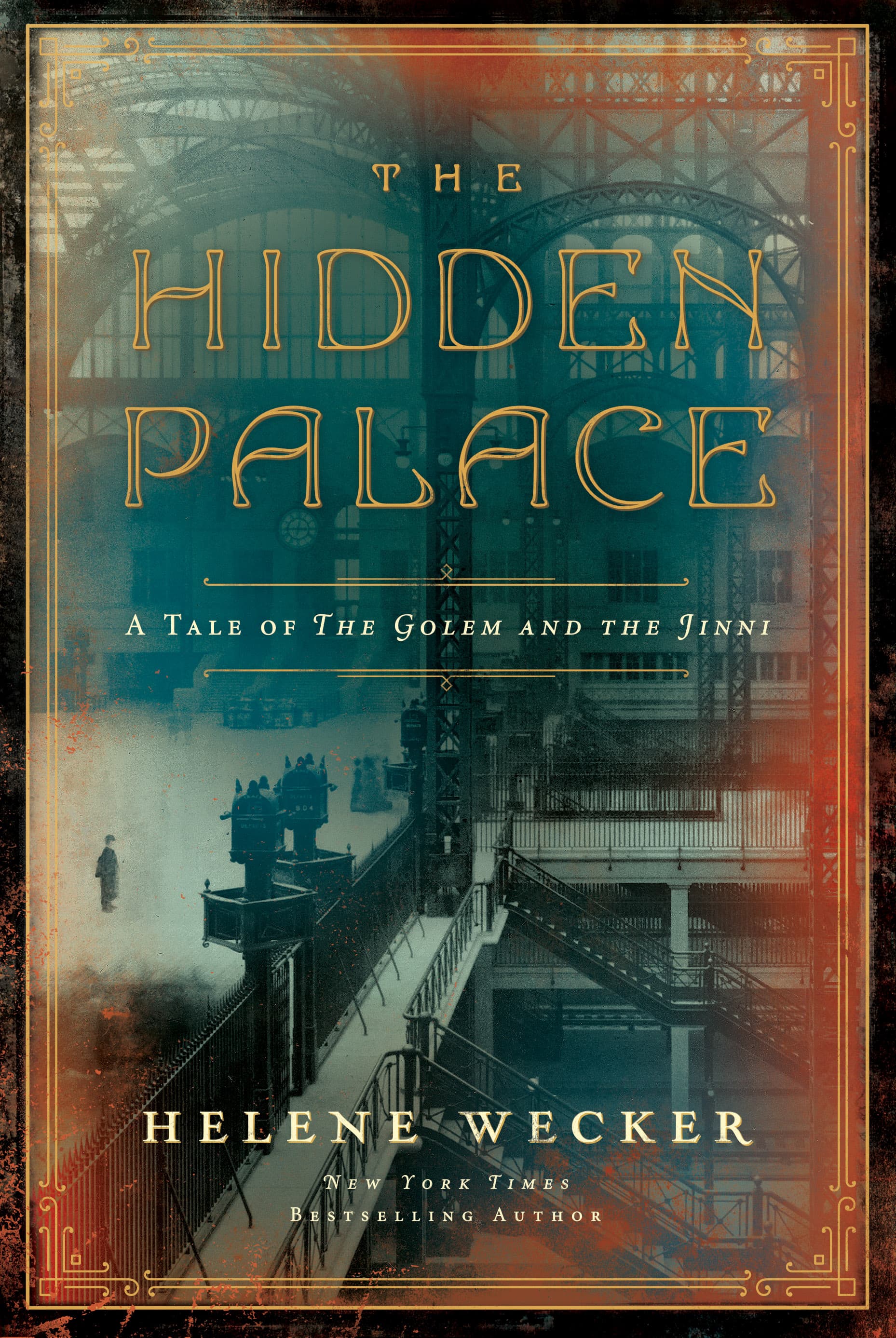
In this enthralling historical epic, set in New York City and the Middle East in the years leading to World War I— the long-awaited follow-up to the acclaimed New York Times bestseller The Golem and the Jinni—Helene Wecker revisits her beloved characters Chava and Ahmad as they confront unexpected new challenges in a rapidly changing human world.
Chava is a golem, a woman made of clay, who can hear the thoughts and longings of those around her and feels compelled by her nature to help them. Ahmad is a jinni, a restless creature of fire, once free to roam the desert but now imprisoned in the shape of a man. Fearing they’ll be exposed as monsters, these magical beings hide their true selves and try to pass as human—just two more immigrants in the bustling world of 1900s Manhattan. Brought together under calamitous circumstances, their lives are now entwined—but they’re not yet certain of what they mean to each other.
Both Chava and Ahmad have changed the lives of the people around them. Park Avenue heiress Sophia Winston, whose brief encounter with Ahmad left her with a strange illness that makes her shiver with cold, travels to the Middle East to seek a cure. There she meets Dima, a tempestuous female jinni who’s been banished from her tribe. Back in New York, in a tenement on the Lower East Side, a little girl named Kreindel helps her rabbi father build a golem they name Yossele—not knowing that she’s about to be sent to an orphanage uptown, where the hulking Yossele will become her only friend and protector.
Spanning the tumultuous years from the turn of the twentieth century to the beginning of World War I, The Hidden Palace follows these lives and others as they collide and interleave. Can Chava and Ahmad find their places in the human world while remaining true to each other? Or will their opposing natures and desires eventually tear them apart—especially once they encounter, thrillingly, other beings like themselves?
Add to your library to track progress and write reviews
Find The Hidden Palace Helene Wecker in PDF, EPUB, ebook, audiobook, print, or library editions.
2 books in catalog
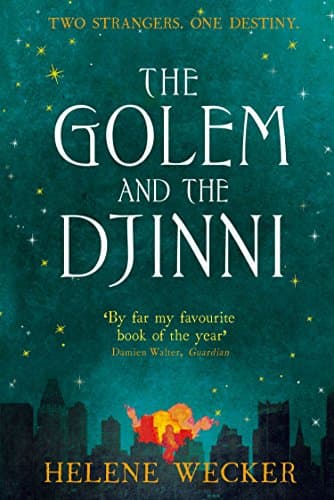
Combining folklore traditions with turn-of-the-century historical fiction, speculative fantasy often explores how mythical beings assimilate into human society. Author Helene Wecker gained widespread recognition with her debut novel, The Golem and the Djinni (also published as The Golem and the Jinni), which weaves Jewish and Middle Eastern mythology into the immigrant neighborhood landscape of 1899 New York City.
Born Helene Deborah Wecker in September 1975 in Libertyville, Illinois, she grew up in the northern suburbs of Chicago. She earned a Bachelor of Arts in English from Carleton College before working in marketing and communications in Minneapolis and Seattle. Deciding to return to fiction writing full-time, she relocated to New York City and earned a Master of Fine Arts in Fiction Writing from Columbia University, where early workshop exercises sparked the initial concept for her debut novel.
Her debut novel achieved widespread critical acclaim and appeared on bestseller lists for The New York Times and the San Francisco Chronicle. The work received the Mythopoeic Award for Adult Literature, the VCU Cabell Award for First Novel, the Harold U. Ribalow Prize, and a National Jewish Book Award, along with nominations for the Nebula Award and the World Fantasy Award. She later continued the narrative with her sequel, The Hidden Palace. Her shorter work has appeared in literary publications such as Joyland and Catamaran, as well as the speculative anthology The Djinn Falls in Love and Other Stories.
Wecker's writing is characterized by meticulous historical research, evocative period settings, and empathetic character development. By bringing together two distinct supernatural creatures—a golem crafted from clay rooted in Jewish folklore and a jinni forged from fire originating in Middle Eastern lore—her work examines themes of displacement, cultural identity, free will, and the immigrant experience in early twentieth-century America. Her narratives blend elements of traditional myth and fairy tales with grounded historical realism.
The Golem and the Jinni