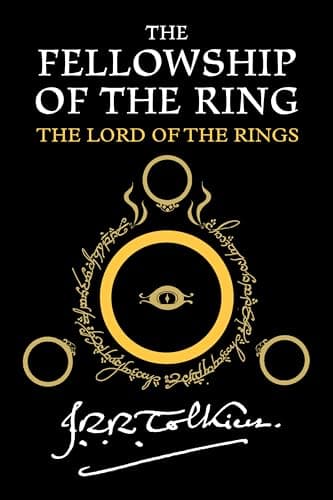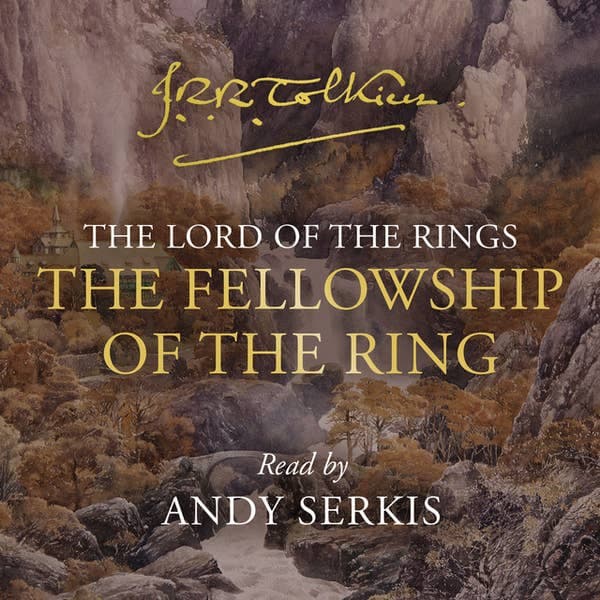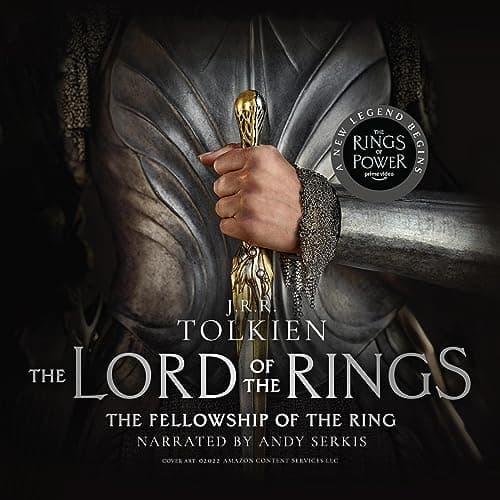
The legacy of an ancient, malevolent power resurfaces in the quiet corners of the Shire, as a simple gold ring inherited by the hobbit Frodo Baggins is revealed to be the One Ring—a vessel for the malice of the Dark Lord Sauron. This artifact possesses the potential to enslave all of Middle-earth, and its discovery sets into motion a desperate exodus from the comforts of the pastoral life toward a horizon darkened by the gathering forces of a long-forgotten shadow.
Unlike conventional epics that center on legendary warriors from the outset, this narrative anchors itself in the perspective of the small and the unassuming. The conflict is not merely a physical journey across treacherous terrain, but a psychological and moral struggle against the Ring’s corrupting influence. As Frodo and his companions flee the Shire, they find themselves pursued by terrifying, spectral riders, realizing that their world is far larger, older, and more dangerous than any map or hearth-side tale had suggested.
Middle-earth is not a mere backdrop but a meticulously realized secondary world governed by deep philological roots and millennia of lore. The atmosphere shifts from the idyllic, agrarian warmth of the Shire to the cold, haunting ruins of forgotten kingdoms. Tolkien employs a "layered" approach to world-building, where every ruin, song, and name suggests a vast history that predates the current characters. This creates a sense of "belatedness," where the protagonists are living in the fading twilight of a more majestic, mythic age, navigating a landscape where the very stones seem to remember ancient wars.
The protagonist’s development is defined by the erosion of innocence. Frodo begins as a creature of habit and comfort, but his relationship with the Ring quickly transitions from curiosity to a heavy, isolating duty. This dynamic is mirrored in the formation of the Fellowship itself—a fragile alliance of disparate races (Hobbits, Men, Elves, and Dwarves) who must overcome ancient prejudices and mutual distrust. The early chapters focus on the "Small Hero" archetype, exploring how those without traditional power respond when the fate of the world is thrust upon them, moving from a desire for safety to the acceptance of a perilous, selfless mission.
While "The Fellowship of the Ring" utilizes the classic Quest trope, it subverts it by making the primary objective one of destruction rather than acquisition. In most mythic cycles, the hero seeks a powerful relic to save the world; here, the heroes must discard the ultimate weapon to prevent its misuse. Tolkien also plays with the "Chosen One" trope—Frodo is not chosen for his strength or magical prowess, but for his inherent lack of ambition, which provides a unique, albeit temporary, defense against the Ring’s promise of absolute power.
The central thematic tension lies in the nature of the One Ring itself. It is not merely a tool of invisibility; it is a sentient-adjacent force that preys on the specific desires of its bearer. Through the Council of Elrond and the initial stages of the journey, the narrative explores the moral dilemma of whether "the end justifies the means." The characters are forced to confront the reality that using the Dark Lord's power to defeat him would only result in the creation of a new, perhaps more terrible, tyrant. This philosophical conflict provides the internal stakes that mirror the external threat of the Nazgûl and the orcs.
The first half is a long walk, and it never pretends otherwise. Meals, songs and stops at Crickhollow, Tom Bombadil's house and Bree sit beside a growing sense of pursuit. Some readers would skip the first eight chapters. Others call the Shire the emotional foundation of everything after it. Both camps have a point.
Then comes the Council of Elrond, roughly 15,000 words of spoken history and moral debate, and the gear changes. It is talk, but it gives every character a stake in the quest. Bombadil is the sharpest dividing line. Tolkien called him an intentional enigma, a figure free of the will to dominate, and the 2001 film cuts him entirely. Whether the episode deepens the world or stalls the story is still argued. Both readings are fair.
Add to your library to track progress and write reviews
W.H. Auden's 1954 review of this volume praised the reversed quest and said it gave him more joy than any fiction in years. Edmund Wilson's 1956 review of the complete work dismissed it as an overgrown children's tale with amateurish prose and thin characters. Later critics kept fighting: Richard Jenkyns attacked its psychological depth, Michael Moorcock its conservative worldview, and Tom Shippey tried to explain why the gulf persists.
Find The Fellowship of the Ring J.R.R. Tolkien in PDF, EPUB, ebook, audiobook, print, or library editions.

7 books in catalog
Deep in the mud of the Somme in 1916, a young officer of the Lancashire Fusiliers began scribbling a mythology that would eventually redefine the boundaries of fantasy literature. While his contemporaries focused on the stark realism of the First World War, this Oxford-educated philologist sought to fill a perceived void in English culture by constructing a vast, interconnected legendarium rooted in the ancient structures of language itself. What began as an academic's private obsession with Old Norse and Anglo-Saxon dialects evolved into an influential fantasy phenomenon, with The Lord of the Rings selling over 150 million copies and being translated into more than 40 languages.
Beyond its commercial scale, the epic mythos created by J.R.R. Tolkien earned honors as the 'Greatest Book of the 20th Century' in polls conducted by Amazon and Waterstones, inspired a multi-billion dollar film franchise, and established the foundational blueprint for high fantasy world-building across modern publishing.
Born in Bloemfontein, South Africa, on January 3, 1892, to English parents, John Ronald Reuel Tolkien moved to England at age three and was brought up in and around Birmingham before studying at Exeter College, Oxford. Before becoming a household name, J.R.R. Tolkien was a formidable scholar of early Germanic languages and English literature. He served as an officer during the First World War in 1916, experiencing heavy combat at the Battle of the Somme. Following his military service, he devoted his professional life to academia, serving as the Rawlinson and Bosworth Professor of Anglo-Saxon at the University of Oxford from 1925 to 1945, and subsequently as the Merton Professor of English Language and Literature from 1945 until his retirement in 1959. His academic commentary on Beowulf remains a foundational work in medieval literary criticism.
His transition to fiction was accidental, famously beginning with a spontaneous sentence scrawled on a blank exam paper: 'In a hole in the ground there lived a hobbit.' This spark led to the publication of The Hobbit (also published as The Hobbit, or There and Back Again) in 1937. The success of the children's book prompted his publishers to request a sequel, which took twelve years to complete and expanded into the far more complex epic The Lord of the Rings. Throughout his time in Oxford, he was a key figure in 'The Inklings,' an informal literary discussion group that included his close friend C.S. Lewis. Tolkien lived until 1973, leaving behind an extensive archive of mythic writings.
Tolkien's prose is characterized by its commitment to 'sub-creation'—the secondary invention of a fictional world that possesses the inner consistency of reality. Unlike many fantasy writers who employ magic merely as a plot device, Tolkien's world-building was fundamentally a philological exercise. He famously maintained that his stories were written primarily to provide a home for his invented languages, including Quenya and Sindarin, rather than constructing languages to serve a pre-existing narrative.
Thematically, his work explores the tension between the organic natural world and the destructive forces of industrialization, reflecting his personal opposition to the rapid mechanization of the English countryside. Recurring motifs include the 'ennoblement of the humble,' where the smallest and least assertive individuals alter the trajectory of history, as well as the corruptive influence of absolute power. His writing is also deeply elegiac, frequently emphasizing the 'long defeat'—the tragic perspective that even in great victories, ancient beauty and wisdom are inevitably lost over time.
The Lord of the Rings