SSansFiction
The libraryCollectionsJournalStatsFor authors
Sign inJoin now
Sansfiction,

A digital library for books. Made by readers, for readers.

v 2.0 · 2026
The library
  • Discover
  • Collections
  • Book tracker
  • Journal
  • Stats
For authors
  • SF Links
  • Analytics
  • How it works
  • FAQ
Elsewhere
  • X / @sansfiction
  • Privacy
  • Terms
  • Contact
© 2026 SansFiction · Digital · GlobalA quiet room for your reading life.
The libraryCollectionsJournalStatsFor authors
Sign inJoin now →
Navigation
Library
Bookshelf
Journal
Discover
Collections
Tierlists
Stats
Profile
Author Page
Link Builder
Account
Sign in
S
G
BooksdystopianThe Fall of Hyperion
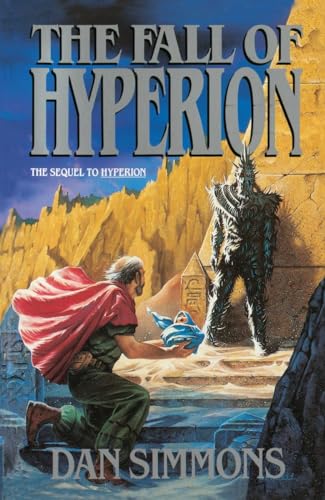
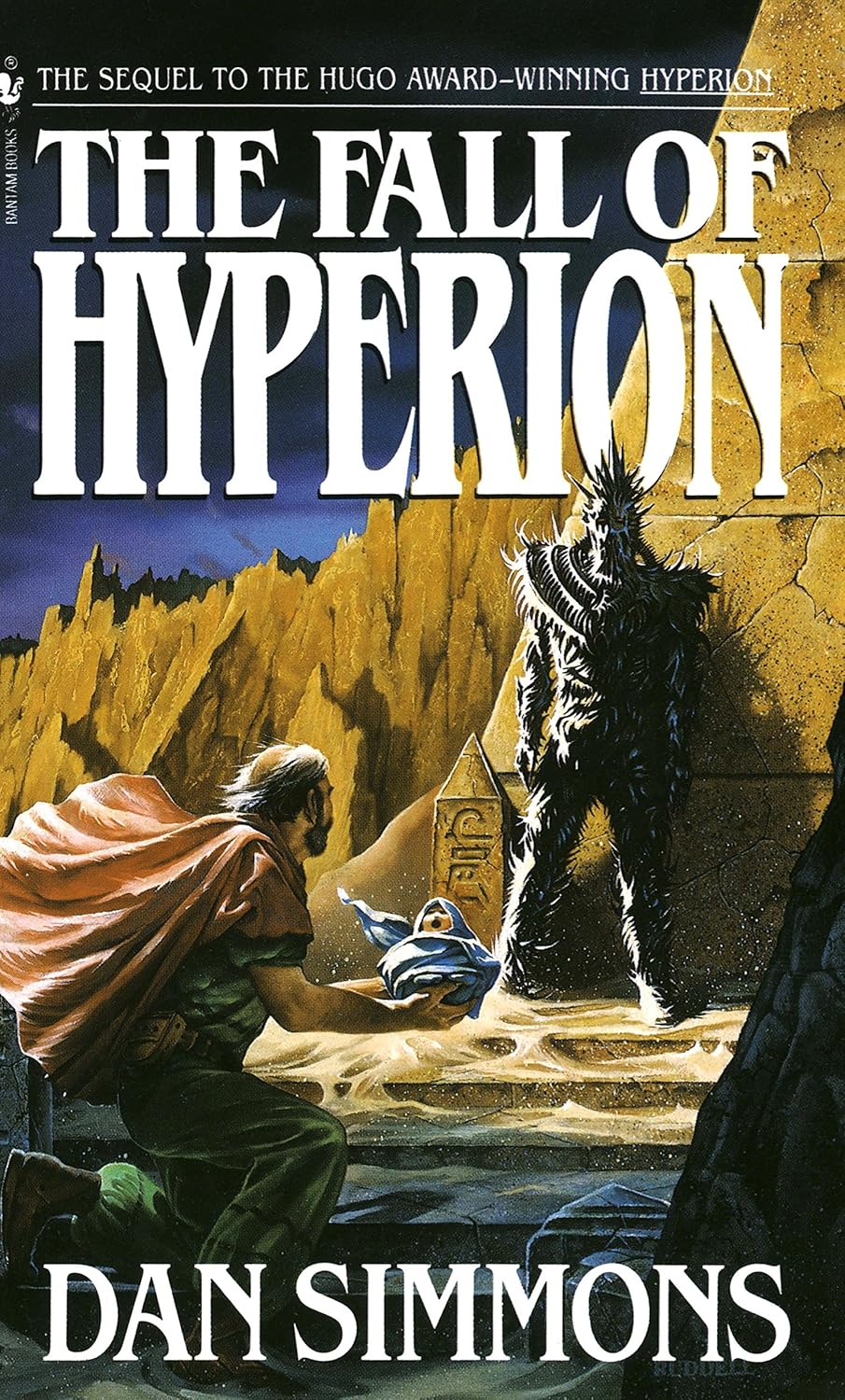
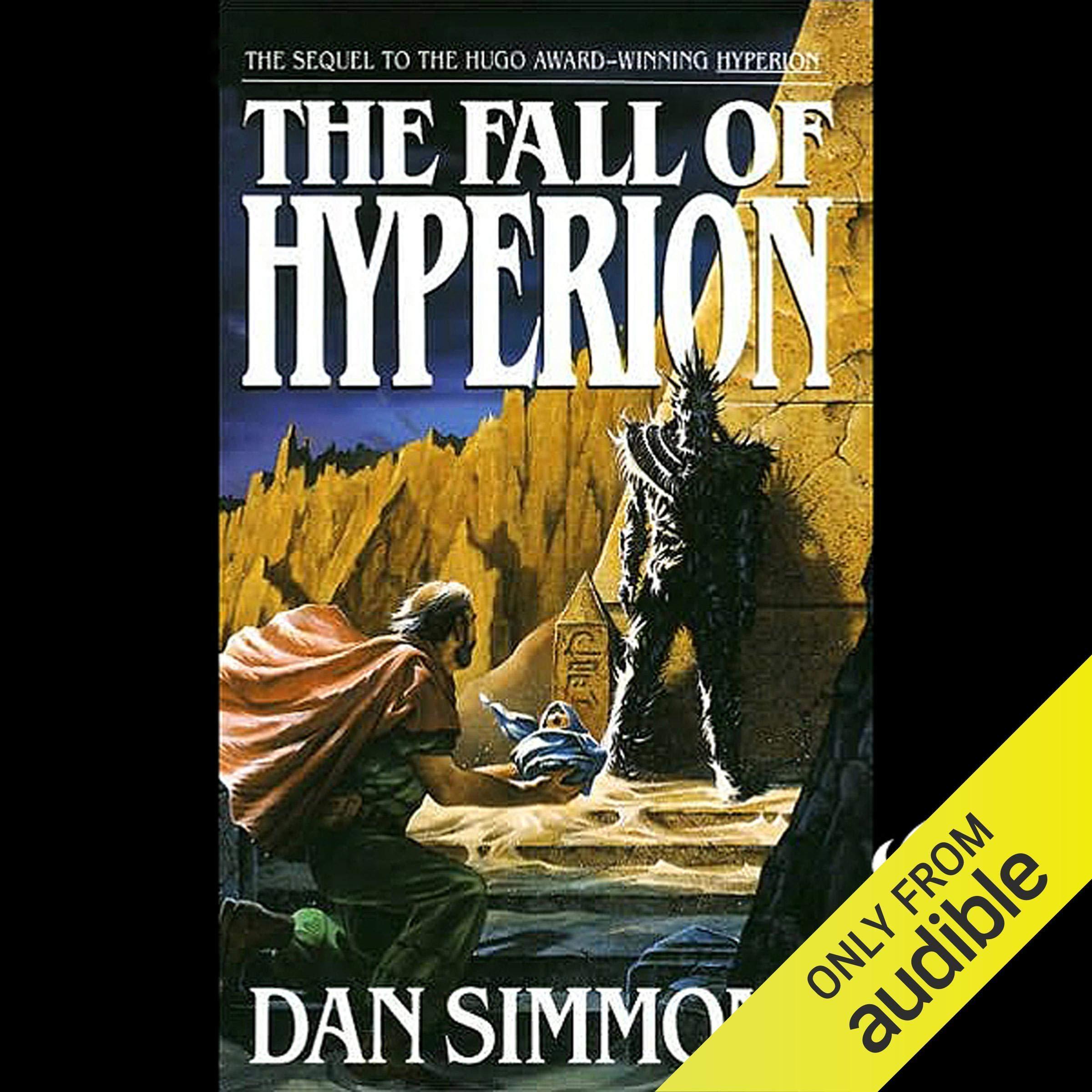
Cover of The Fall of Hyperion by Dan Simmons
№ 2 · Hyperion Cantos

The Fall of Hyperion,

by Dan Simmons

Ask AI
Rating4.2/ 5
Ratings760
Pages530
Reading Hours11h
Published2008
LanguageEnglish

§Synopsis

01

The mysterious Time Tombs are opening and the Shrike that has risen from them may well control the fate of all mankind. The Ousters are laying seige to the Hegemony of Man and the AIs we created have turned against us to build the Ultimate Intelligence: God. The God of Machines. His genesis could mean annihilation for man.

Something is drawing the hegemony, the Ousters, the AIs, the entire universe to the Shrike.

§Our take

The second half of Hyperion is less a conventional sequel than a change of tempo: the pilgrims' campfire tales give way to reconstructed John Keats, sequential action and a galaxy-scale war. Simmons has said the first two Cantos were one story split by publishing realities, so this book makes a persuasive case for reading them as a matched pair.

That form shift is the argument. Readers who prefer momentum may find the three-act plot and war easier to follow than Hyperion's nested novellas. Others will miss the first book's sharply distinct voices and struggle with tangled time travel or late revelations. Keats supplies the title and the governing metaphor of fallen Titans yielding to new gods, sharpening the human conflict with the AI Core. It is a rewarding bridge to the larger Cantos, but the gap since Hyperion matters: read them close together.

§Themes

The great form swap
Hyperion's linked pilgrim tales become Keats-centered dreams wrapped around a more sequential space-opera plot.
Fallen gods, new gods
Keats's unfinished poem supplies the title and an image of old powers yielding to new ones.
Machines with their own agenda
The TechnoCore serves humanity on the surface while pursuing goals of its own, sharpening the book's human-versus-AI conflict.
Adaptation versus control
The Ousters change humans to fit the environment, while the Core seeks control over humanity and the wider cosmos.
Payoff versus loose ends
Some readers say Hyperion's questions are answered, while others find the Shrike and the ending unresolved.

§How it was received

It won the 1991 Locus Award for SF novel and was a finalist for both the Hugo and Nebula; The Vor Game and Tehanu won instead. Kirkus judged it a complex far-future story of alien contact and galactic war, predicting rewards for readers who enjoy intricate storytelling and warning that newcomers to Hyperion would be lost. Readers divide over its change of form: some call it a satisfying conclusion to the first book, while others prefer Hyperion's nested stories and find the dream mechanism and late revelations hard to untangle.

§Read it if

  • You finished Hyperion and want the payoff to its pilgrims, Shrike and Core questions
  • You like science fiction that lets poetry, philosophy and galactic war occupy the same story
  • You prefer a clearer, sequential war plot after Hyperion's nested novellas

§Skip it if

  • You want a standalone novel. This book assumes you know Hyperion's pilgrims, Shrike, Hegemony and Core.
  • You need sharply distinct narrators or a fully untangled time-travel mechanism; some readers struggle with both.

§Before you start

Reading experience
The pace becomes more conventional and often easier to follow, but the new viewpoint characters, dream structure and time mechanics make it difficult without Hyperion fresh in mind.
Reading order
Book 2 of the Hyperion Cantos. Simmons regarded the first two books as two halves of one story, so read Hyperion (1989) immediately before this. Endymion (1996) and The Rise of Endymion (1997) follow as a second duology, set 274 years later.
Content notes
Wide-scale war and mass death; Gun violence and brutal action; Some body horror and confinement.

§Common questions

Is The Fall of Hyperion a standalone?
No. It begins where Hyperion stops and assumes knowledge of the pilgrims, Shrike, Hegemony and Core.
Do I need to read Hyperion first?
Yes. Read the books close together, preferably with Hyperion still fresh.
Is it better than Hyperion?
Readers are split. Some see this as the necessary, satisfying second half; others prefer the first book's nested structure.

§If you liked this

  • Dune by Frank Herbert — A philosophically rich far-future epic of empire and religion; Simmons's version is the more streamlined of the two.
  • Empire of Silence by Christopher Ruocchio — Christopher Ruocchio's Sun Eater opener shares the Cantos' grand scale and its religious ideas.
Sources
  • Wikipedia
  • Wikipedia
  • Kirkus Reviews
  • Science Fiction Awards Database (SFADB)
  • SFWA (Nebula Awards site)
  • From the Heart of Europe (Nicholas Whyte, personal blog)
  • Worlds Without End (reader review)
  • Novel Notions (book blog)
  • At Boundary's Edge (book blog)
  • Wikipedia

Track this book

Add to your library to track progress and write reviews

§Genres
dystopian1fantasy1fiction1science fiction1war1

§About the Author

Dan Simmons
Dan Simmons

16 books in catalog

Spanning epic space opera, historical horror, and hard-boiled crime fiction, multi-genre literature gained a distinct voice when speculative fiction found new breadth in the late twentieth century. Born on April 4, 1948, Dan Simmons established his reputation as an author capable of navigating complex literary structures across radically different genres, earning major awards in science fiction, fantasy, and horror.

His breakthrough work in science fiction, Hyperion, reimagined classical narrative structures within a rich far-future universe, earning widespread acclaim and cementing his position in modern speculative fiction.

Career & Background

Daniel Joseph Simmons grew up in Peoria, Illinois, and various towns across the Midwest. He earned a Bachelor of Arts in English from Wabash College in 1970, receiving a national Phi Beta Kappa Award for excellence in fiction, journalism, and art, followed by a Master's degree in Education from Washington University in St. Louis in 1971. Before becoming a full-time author, Simmons worked in elementary education for 18 years, teaching in Missouri, New York, and Colorado. His early career culminated in his debut novel Song of Kali (1985), which won the World Fantasy Award and launched a prolific publishing career that eventually spanned 27 countries.

Writing Style & Themes

Simmons is notable for combining rigorous genre tropes with deep literary allusions, frequently drawing inspiration from classical poetry, history, and mythology. His works seamlessly blend elements of sci-fi, dark fantasy, suspense, and historical detail into cohesive narratives. Beyond epic space operas like the Hyperion Cantos and the Ilium and Olympos duology, Simmons has written hard-hitting mystery thrillers featuring the recurring character Joe Kurtz, as well as horror classics such as Carrion Comfort and Summer of Night.

Major Works

  • Hyperion — Published in 1989, Hyperion won the Hugo Award and initiated the acclaimed Hyperion Cantos. Structure-wise, it frames a series of pilgrim tales against an impending galactic conflict, followed directly by The Fall of Hyperion.
  • The Fall of Hyperion — The direct sequel to Hyperion, The Fall of Hyperion concludes the story of the pilgrims and the fate of the Hegemony of Man.
  • Endymion — Set centuries after The Fall of Hyperion, Endymion and its sequel The Rise of Endymion expand the Hyperion universe into a new era of galactic resistance and spiritual discovery.
  • The Rise of Endymion — The final novel in the Hyperion Cantos, The Rise of Endymion brings the epic interstellar series to its definitive conclusion.
  • Ilium — In Ilium and its sequel Olympos, Simmons fuses Homer's Iliad with far-future science fiction, quantum mechanics, and literary homage.
  • Olympos — The concluding chapter of the duology that began with Ilium, Olympos resolves the war between post-human gods, resurrected mortals, and sentient biomechanical beings.
  • Carrion Comfort — A massive horror thriller exploring psychic vampires who manipulate human history and violence, Carrion Comfort won the Bram Stoker Award.
  • Prayers to Broken Stones — A major short fiction collection featuring early stories that demonstrate the author's range across horror, science fiction, and dark fantasy, including works tied to his broader fictional universes.

§Featured Series

Hyperion Cantos

Cover of Prayers to Broken Stones by Dan Simmons

Prayers to Broken Stones

Dan Simmons, 1990
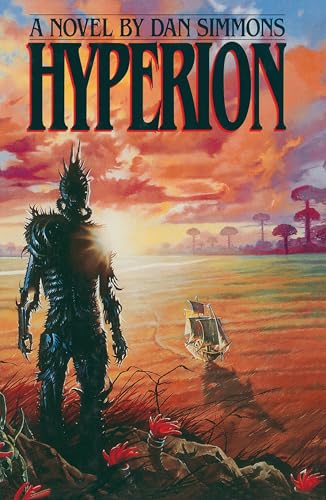
Cover of Hyperion by Dan Simmons

Hyperion

Dan Simmons, 1989
Cover of Hypérion 1 by Dan Simmons

Hypérion 1

Dan Simmons, 2000
Cover of Hypérion II by Dan Simmons

Hypérion II

Dan Simmons, 1989
Cover of The Fall of Hyperion by Dan Simmons

The Fall of Hyperion

Dan Simmons, 1990
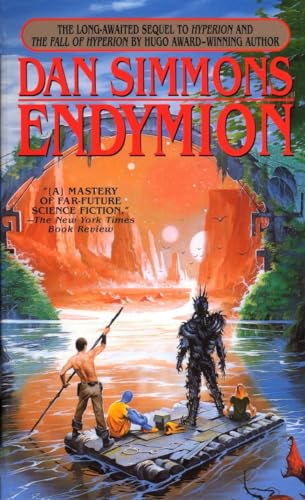
Cover of Endymion by Dan Simmons

Endymion

Dan Simmons, 21
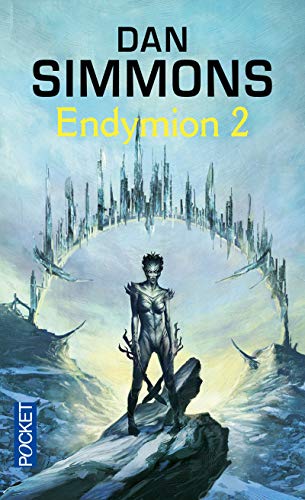
Cover of Endymion II by Dan Simmons

Endymion II

Dan Simmons, 1995
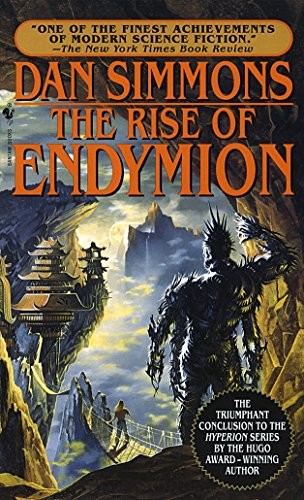
Cover of The Rise of Endymion by Dan Simmons

The Rise of Endymion

Dan Simmons, 1997
Cover of L'Éveil d'Endymion I by Dan Simmons

L'Éveil d'Endymion I

Dan Simmons, 1997
Cover of L'Éveil d'Endymion II by Dan Simmons

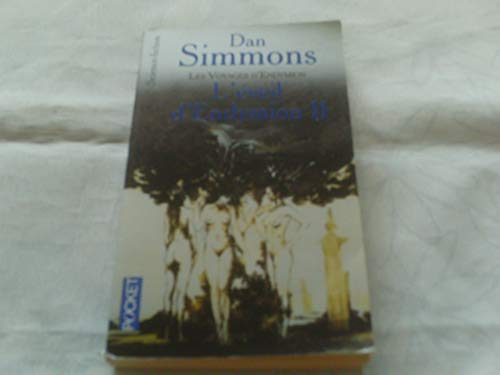
L'Éveil d'Endymion II

Dan Simmons, 1997
Cover of Huérfanos de la hélice by Dan Simmons

Huérfanos de la hélice

Dan Simmons, 1999

§Other Editions

Showing 2 of 42 editions
Cover of The Fall of Hyperion

The Fall of Hyperion

engKindle
Spectra2011B004G60FWM
Amazon
Cover of The Fall of Hyperion

The Fall of Hyperion

engMass Market PaperbackBantam Reissue
Bantam19909780553288209
§Genres
dystopian1fantasy1fiction1science fiction1war1

Metadata

ISBN-139781603933728
ISBN-100553288202
ASINB002V5D34W

Editions and availability

Find The Fall of Hyperion Dan Simmons in PDF, EPUB, ebook, audiobook, print, or library editions.

View on Amazon
Bookshop.orgGoogle Play BooksBarnes & NobleOpen Library

Featured In Lists

Book cover from this collectionBook cover from this collectionBook cover from this collectionBook cover from this collection
Book cover from this collection

Hugo Award Best Novel Nominees and Winners ( 1953 - present )

348 books
Book cover from this collectionBook cover from this collectionBook cover from this collectionBook cover from this collection
Book cover from this collection

Locus Award for Best Science Fiction Novel (1971 to 2025)

57 books
Book cover from this collectionBook cover from this collectionBook cover from this collectionBook cover from this collection
Book cover from this collection

Favorite Space Opera books

46 books