§Synopsis
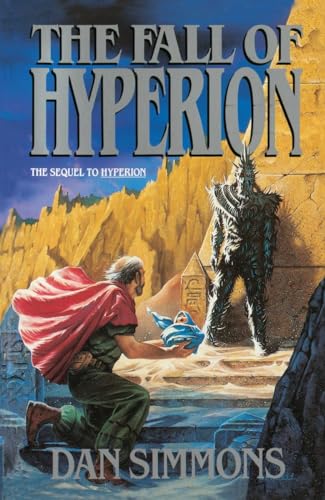
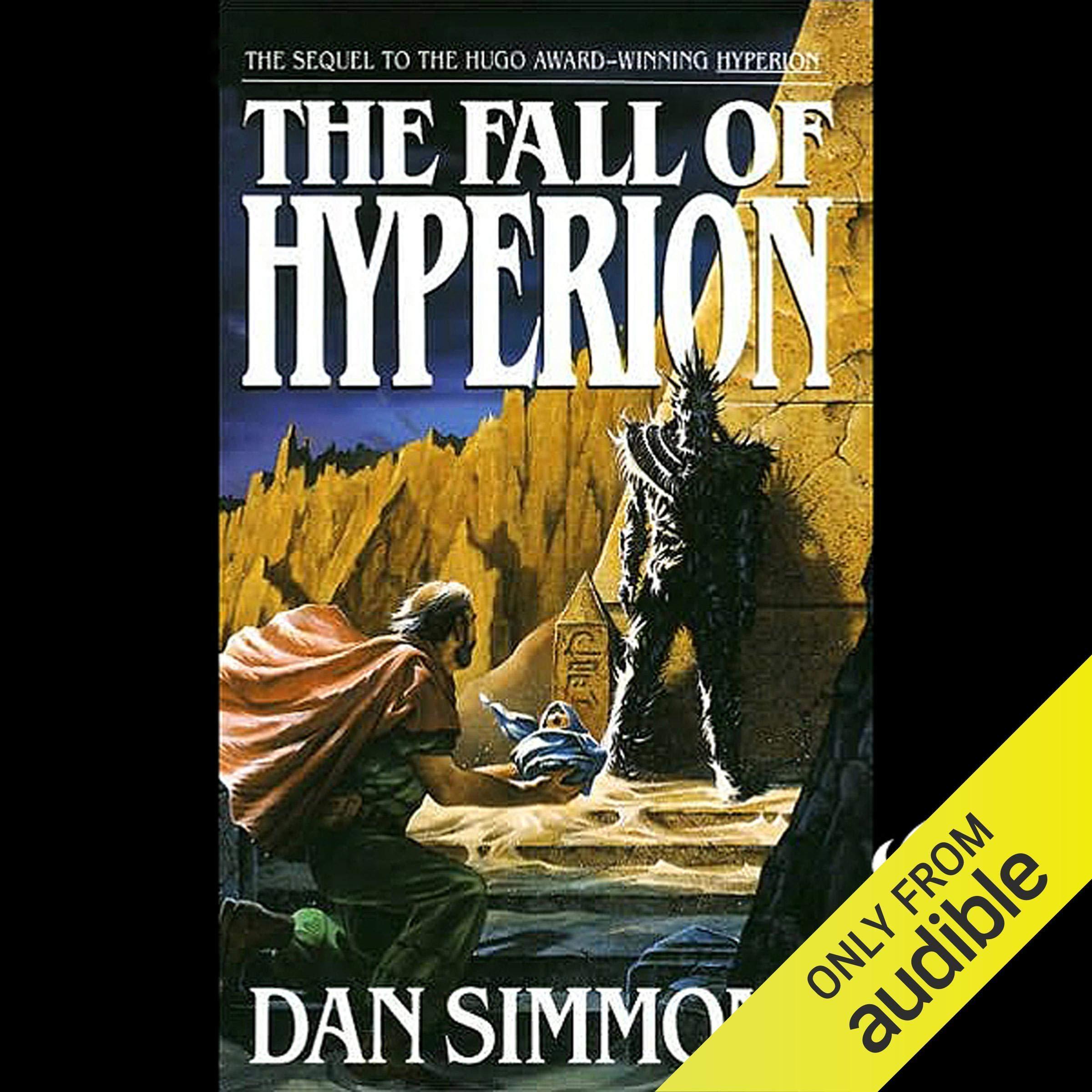
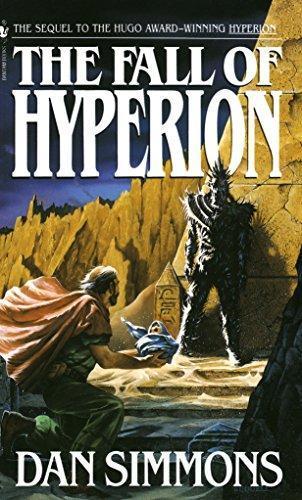
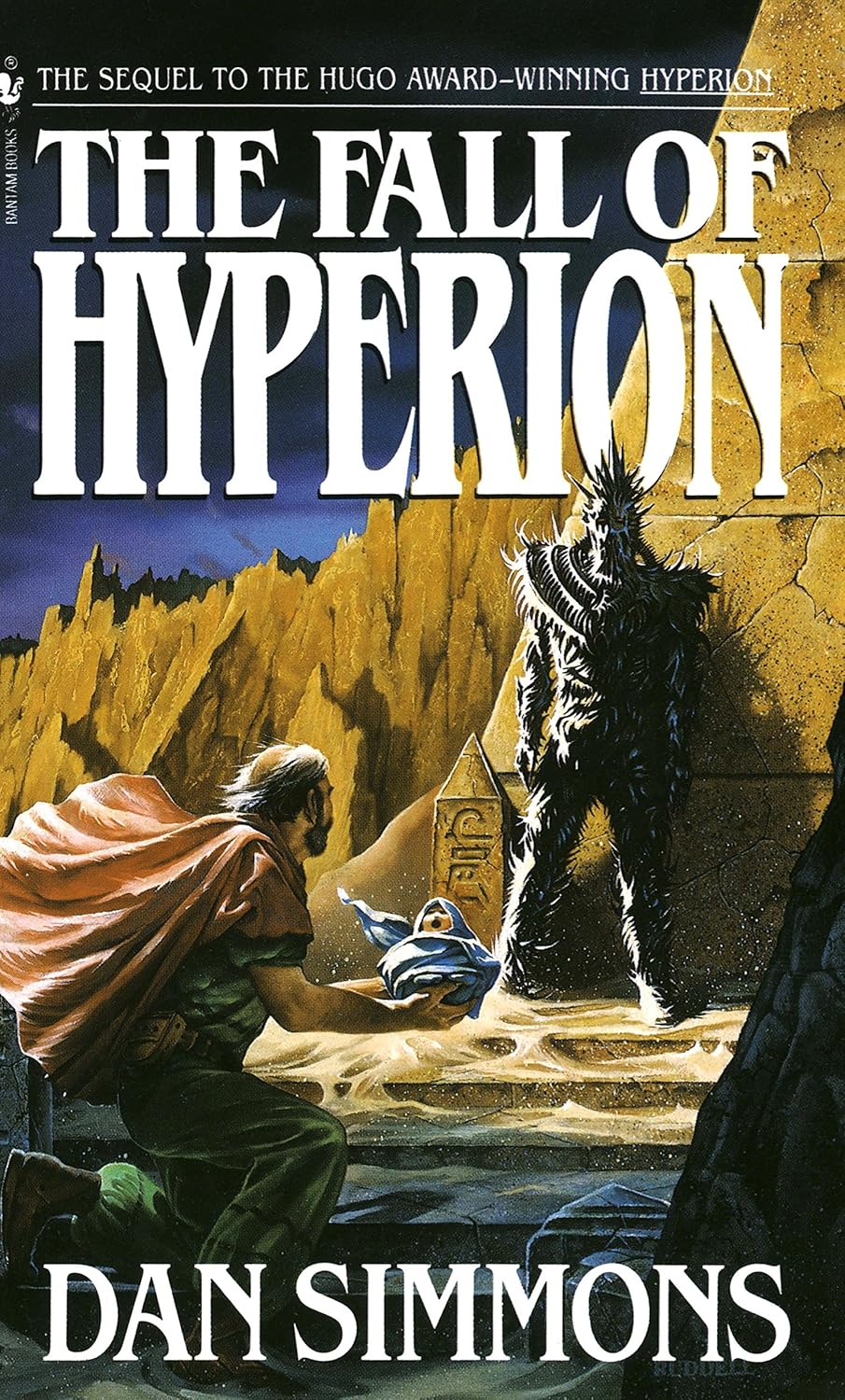
01The mysterious Time Tombs are opening and the Shrike that has risen from them may well control the fate of all mankind. The Ousters are laying seige to the Hegemony of Man and the AIs we created have turned against us to build the Ultimate Intelligence: God. The God of Machines. His genesis could mean annihilation for man.
Something is drawing the hegemony, the Ousters, the AIs, the entire universe to the Shrike.
§Our take
The second half of Hyperion is less a conventional sequel than a change of tempo: the pilgrims' campfire tales give way to reconstructed John Keats, sequential action and a galaxy-scale war. Simmons has said the first two Cantos were one story split by publishing realities, so this book makes a persuasive case for reading them as a matched pair.
That form shift is the argument. Readers who prefer momentum may find the three-act plot and war easier to follow than Hyperion's nested novellas. Others will miss the first book's sharply distinct voices and struggle with tangled time travel or late revelations. Keats supplies the title and the governing metaphor of fallen Titans yielding to new gods, sharpening the human conflict with the AI Core. It is a rewarding bridge to the larger Cantos, but the gap since Hyperion matters: read them close together.
§Themes
- The great form swap
- Hyperion's linked pilgrim tales become Keats-centered dreams wrapped around a more sequential space-opera plot.
- Fallen gods, new gods
- Keats's unfinished poem supplies the title and an image of old powers yielding to new ones.
- Machines with their own agenda
- The TechnoCore serves humanity on the surface while pursuing goals of its own, sharpening the book's human-versus-AI conflict.
- Adaptation versus control
- The Ousters change humans to fit the environment, while the Core seeks control over humanity and the wider cosmos.
- Payoff versus loose ends
- Some readers say Hyperion's questions are answered, while others find the Shrike and the ending unresolved.
§How it was received
It won the 1991 Locus Award for SF novel and was a finalist for both the Hugo and Nebula; The Vor Game and Tehanu won instead. Kirkus judged it a complex far-future story of alien contact and galactic war, predicting rewards for readers who enjoy intricate storytelling and warning that newcomers to Hyperion would be lost. Readers divide over its change of form: some call it a satisfying conclusion to the first book, while others prefer Hyperion's nested stories and find the dream mechanism and late revelations hard to untangle.
§Read it if
- You finished Hyperion and want the payoff to its pilgrims, Shrike and Core questions
- You like science fiction that lets poetry, philosophy and galactic war occupy the same story
- You prefer a clearer, sequential war plot after Hyperion's nested novellas
§Skip it if
- You want a standalone novel. This book assumes you know Hyperion's pilgrims, Shrike, Hegemony and Core.
- You need sharply distinct narrators or a fully untangled time-travel mechanism; some readers struggle with both.
§Before you start
- Reading experience
- The pace becomes more conventional and often easier to follow, but the new viewpoint characters, dream structure and time mechanics make it difficult without Hyperion fresh in mind.
- Reading order
- Book 2 of the Hyperion Cantos. Simmons regarded the first two books as two halves of one story, so read Hyperion (1989) immediately before this. Endymion (1996) and The Rise of Endymion (1997) follow as a second duology, set 274 years later.
- Content notes
- Wide-scale war and mass death; Gun violence and brutal action; Some body horror and confinement.
§Common questions
- Is The Fall of Hyperion a standalone?
- No. It begins where Hyperion stops and assumes knowledge of the pilgrims, Shrike, Hegemony and Core.
- Do I need to read Hyperion first?
- Yes. Read the books close together, preferably with Hyperion still fresh.
- Is it better than Hyperion?
- Readers are split. Some see this as the necessary, satisfying second half; others prefer the first book's nested structure.
§If you liked this
- Dune by Frank Herbert — A philosophically rich far-future epic of empire and religion; Simmons's version is the more streamlined of the two.
- Empire of Silence by Christopher Ruocchio — Christopher Ruocchio's Sun Eater opener shares the Cantos' grand scale and its religious ideas.
Track this book
Add to your library to track progress and write reviews