Modern fiction was reshaped by a monumental seven-volume novel exploring memory, psychology, and French high society across thousands of pages. French novelist, critic, and essayist Marcel Proust created this masterpiece, À la recherche du temps perdu (translated as In Search of Lost Time and earlier as Remembrance of Things Past), which was published in seven parts between 1913 and 1927.
Through intricate first-person narration, the multi-volume work begins with Swann's Way and traces the subtle mechanics of involuntary memory and social ambition.
Career & Background
Born Valentin Louis Georges Eugène Marcel Proust on July 10, 1871, in Auteuil, a suburb of Paris, he grew up in a wealthy bourgeois family as the son of Dr. Adrien Proust, a prominent physician, and Jeanne Weil, who came from a rich, cultured Jewish family. Suffering from severe chronic asthma attacks from the age of nine, Proust spent much of his youth managing his frail health while discovering his literary talents during his high school years at the lycée. He began frequenting elite Parisian salons, including that of Madame Arman, where he earned the patronage of author Anatole France and began publishing early essays and short fiction.
Transitioning from a salon figure and essayist into a dedicated novelist, Proust spent his later years largely sequestered to focus on writing his expansive life's work. The initial volume was published independently before the broader seven-part cycle gained widespread critical attention. Though Proust died in Paris on November 18, 1922, the remaining parts of his seven-volume novel continued to be published posthumously through 1927.
Writing Style & Themes
Proust departed from traditional dramatic action and conventional plot structures, choosing instead to structure his narrative around a first-person narrator confronting his inner world and memories. His writing blends classical literary traditions from French and European literature with modern psychological insight. Key themes across his work include the nature of involuntary memory, social vanity, snobbery, and human desire.
His acute psychological observations extend to the examination of both heterosexual and homosexual love, as well as the shifting structures of contemporary society. By projecting personal reflections and real-life salon figures into allegorical characters, Proust constructed a comprehensive exploration of time, art, and the human condition.
Major Works
- In Search of Lost Time — Published in seven volumes between 1913 and 1927, this monumental novel cycle explores memory, time, and society, standing as Proust's central literary achievement.
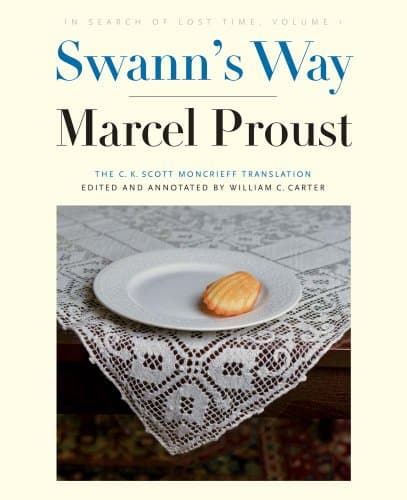
- Swann's Way — The first volume of the seven-part novel, introducing key themes of involuntary memory, childhood, and social observation.
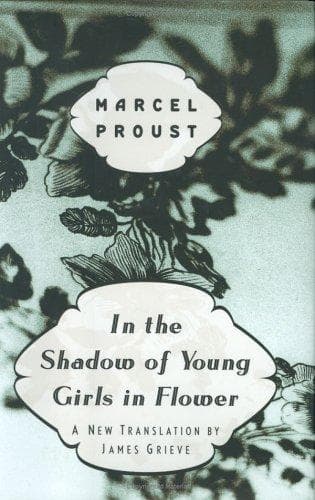
- In the Shadow of Young Girls in Flower — The second volume of the novel cycle, continuing the narrator's psychological development and social observations.
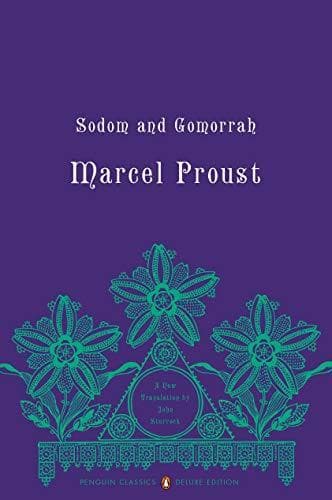
- Sodom and Gomorrah — A major volume in the sequence that delves deeply into themes of sexuality, social circles, and interpersonal relations.
- The Prisoner — A posthumously published installment focusing on intense psychological analysis, jealousy, and domestic confinement.
- The Fugitive — Also known as Albertine Gone, this volume addresses loss, grief, and the erosion of memory over time.
- Finding Time Again — The concluding volume of the cycle, bringing together the themes of art, time regained, and literary vocation.