BooksFinding Time Again

The long-awaited final volume in the acclaimed Penguin translation of Marcel Proust’s In Search of Lost Time—one of the world’s most beloved works of literature “The greatest literary work of the twentieth century.” —The New York Times A Penguin Classics Deluxe Edition with flaps and deckle-edged paper Ian Patterson’s acclaimed new translation of Finding Time Again introduces a new generation of American readers to the literary riches of Marcel Proust. The seventh and final volume in Penguin Classics' superb new edition of In Search of Lost Time—the first completely new translation of Proust's masterpiece since the 1920s—brings us a more comic and lucid prose than readers of English have previously been able to enjoy. In Finding Time Again, Marcel discovers his world destroyed by war and those he knew transformed by the march of time. An exquisite picture of France in the throes of the First World War, and containing, in the “Bal des têtes” sequence, one of Proust’s most devastating set pieces, Finding Time Again triumphantly describes the paradox of facing mortality yet overcoming it through the act of writing. As Marcel rediscovers his vocation, he realizes that he can live on by writing down the story of his own memories and of his quest to recapture the past.
The long-awaited final volume in the acclaimed Penguin translation of Marcel Proust’s In Search of Lost Time—one of the world’s most beloved works of literature “The greatest literary work of the twentieth century.” —The New York Times A Penguin Classics Deluxe Edition with flaps and deckle-edged paper Ian Patterson’s acclaimed new translation of Finding Time Again introduces a new generation of American readers to the literary riches of Marcel Proust. The seventh and final volume in Penguin Classics' superb new edition of In Search of Lost Time—the first completely new translation of Proust's masterpiece since the 1920s—brings us a more comic and lucid prose than readers of English have previously been able to enjoy. In Finding Time Again, Marcel discovers his world destroyed by war and those he knew transformed by the march of time. An exquisite picture of France in the throes of the First World War, and containing, in the “Bal des têtes” sequence, one of Proust’s most devastating set pieces, Finding Time Again triumphantly describes the paradox of facing mortality yet overcoming it through the act of writing. As Marcel rediscovers his vocation, he realizes that he can live on by writing down the story of his own memories and of his quest to recapture the past.
Add to your library to track progress and write reviews
Add to your library to track progress and write reviews
Find Finding Time Again Marcel Proust in PDF, EPUB, ebook, audiobook, print, or library editions.
Find Finding Time Again Marcel Proust in PDF, EPUB, ebook, audiobook, print, or library editions.

8 books in catalog
Modern fiction was reshaped by a monumental seven-volume novel exploring memory, psychology, and French high society across thousands of pages. French novelist, critic, and essayist Marcel Proust created this masterpiece, À la recherche du temps perdu (translated as In Search of Lost Time and earlier as Remembrance of Things Past), which was published in seven parts between 1913 and 1927.
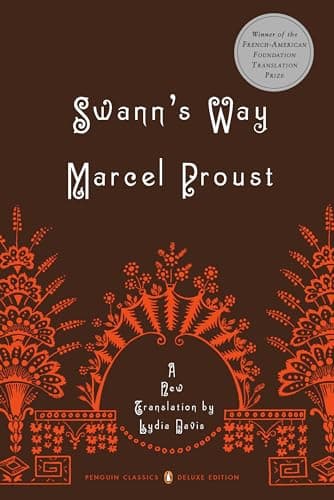
Through intricate first-person narration, the multi-volume work begins with Swann's Way and traces the subtle mechanics of involuntary memory and social ambition.
Born Valentin Louis Georges Eugène Marcel Proust on July 10, 1871, in Auteuil, a suburb of Paris, he grew up in a wealthy bourgeois family as the son of Dr. Adrien Proust, a prominent physician, and Jeanne Weil, who came from a rich, cultured Jewish family. Suffering from severe chronic asthma attacks from the age of nine, Proust spent much of his youth managing his frail health while discovering his literary talents during his high school years at the lycée. He began frequenting elite Parisian salons, including that of Madame Arman, where he earned the patronage of author Anatole France and began publishing early essays and short fiction.
Transitioning from a salon figure and essayist into a dedicated novelist, Proust spent his later years largely sequestered to focus on writing his expansive life's work. The initial volume was published independently before the broader seven-part cycle gained widespread critical attention. Though Proust died in Paris on November 18, 1922, the remaining parts of his seven-volume novel continued to be published posthumously through 1927.
Proust departed from traditional dramatic action and conventional plot structures, choosing instead to structure his narrative around a first-person narrator confronting his inner world and memories. His writing blends classical literary traditions from French and European literature with modern psychological insight. Key themes across his work include the nature of involuntary memory, social vanity, snobbery, and human desire.
His acute psychological observations extend to the examination of both heterosexual and homosexual love, as well as the shifting structures of contemporary society. By projecting personal reflections and real-life salon figures into allegorical characters, Proust constructed a comprehensive exploration of time, art, and the human condition.
8 books in catalog
Modern fiction was reshaped by a monumental seven-volume novel exploring memory, psychology, and French high society across thousands of pages. French novelist, critic, and essayist Marcel Proust created this masterpiece, À la recherche du temps perdu (translated as In Search of Lost Time and earlier as Remembrance of Things Past), which was published in seven parts between 1913 and 1927.
Through intricate first-person narration, the multi-volume work begins with Swann's Way and traces the subtle mechanics of involuntary memory and social ambition.
Born Valentin Louis Georges Eugène Marcel Proust on July 10, 1871, in Auteuil, a suburb of Paris, he grew up in a wealthy bourgeois family as the son of Dr. Adrien Proust, a prominent physician, and Jeanne Weil, who came from a rich, cultured Jewish family. Suffering from severe chronic asthma attacks from the age of nine, Proust spent much of his youth managing his frail health while discovering his literary talents during his high school years at the lycée. He began frequenting elite Parisian salons, including that of Madame Arman, where he earned the patronage of author Anatole France and began publishing early essays and short fiction.
Transitioning from a salon figure and essayist into a dedicated novelist, Proust spent his later years largely sequestered to focus on writing his expansive life's work. The initial volume was published independently before the broader seven-part cycle gained widespread critical attention. Though Proust died in Paris on November 18, 1922, the remaining parts of his seven-volume novel continued to be published posthumously through 1927.
Proust departed from traditional dramatic action and conventional plot structures, choosing instead to structure his narrative around a first-person narrator confronting his inner world and memories. His writing blends classical literary traditions from French and European literature with modern psychological insight. Key themes across his work include the nature of involuntary memory, social vanity, snobbery, and human desire.
His acute psychological observations extend to the examination of both heterosexual and homosexual love, as well as the shifting structures of contemporary society. By projecting personal reflections and real-life salon figures into allegorical characters, Proust constructed a comprehensive exploration of time, art, and the human condition.
In Search of Lost Time
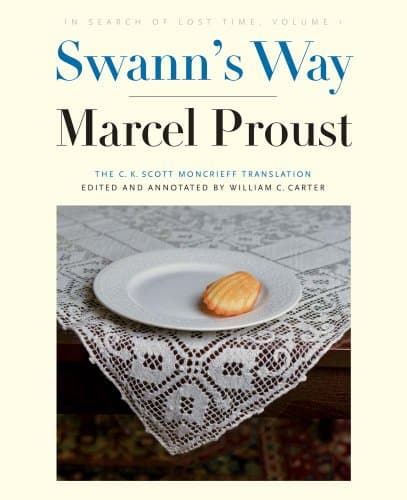
In Search of Lost Time