§Synopsis
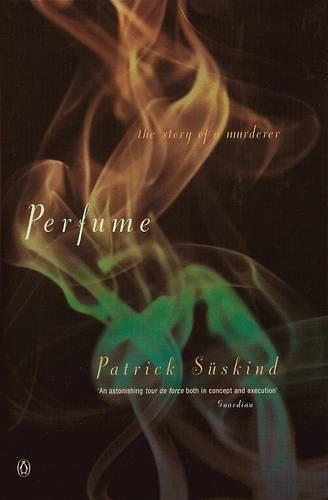
01Das Parfum, a contemporary novel, which at first sight stands out for the extensive and astonishing descriptions it contains, hides behind it the story of a young man who lives submerged in the misery of his own being due to his inability to love and the profound social and family rejection that has accompanied him throughout his life. The existential emptiness, the craving for power, the loneliness, the identity problem of the subject and many other aspects emerge from the work in a discreet but at the same time shocking way, where in any case it is not difficult to end up feeling.
§Our take
Perfume is less a serial-killer story than a demonstration of how completely a single appetite can organize a life. Grenouille reads desire, fear and ambition through scent, but the gift that makes him extraordinary gives him no moral ballast. The prose is lavish, sometimes showy, and still essential: cities arrive as odour maps, so even stillness carries tension.
The sharper argument is about literary ambition. Allusions to Flaubert, Balzac, Baudelaire, Hoffmann, Thomas Mann and Goethe reward attentive readers, while others hear pastiche or parody. That disagreement is one of the book's pleasures. Its best pages make scent strange and intimate, turning social hierarchy into something bodily. Read it for the sensory invention and moral discomfort, not as a puzzle requiring a literary reference key.
§Themes
- Scent as social power
- Grenouille reads desire, fear and ambition through smell, then turns what he knows into influence.
- The missing self
- His lack of any scent of his own makes his emptiness of identity unusually tangible.
- Genius without grace
- An extraordinary nose brings him mastery, but not the capacity to treat other people as anything more than material.
- A city through the nose
- Paris, Montpellier and Grasse are rendered as shifting maps of odours rather than places seen.
- Pastiche or literary depth
- The web of literary allusions can enrich the novel, or make it feel like a parade of borrowed voices.
§How it was received
The English translation by John E. Woods won the 1987 World Fantasy Award for Novel. Critical opinion divides over the intertextuality: some readers find a rewarding literary layer, while others call it showy pastiche or parody. Readers often call Perfume a modern classic while finding Grenouille thinner than the most memorable fictional monsters.
§Read it if
- You like a novel that turns one sensory idea into the whole architecture of the story
- You enjoy tracking literary allusions and don't mind when the prose becomes showy
- You want pre-Revolution France rendered in black comedy, grotesque imagery and moral discomfort
§Skip it if
- You need a charismatic, emotionally expansive villain. Grenouille can feel like a thin, one-note figure.
- You want a quick, transparent read. Some readers find the premise drawn out and the life-in-stages structure long and convoluted.
§Before you start
- Reading experience
- Short and generally well paced, though the dense, odour-heavy prose and literary echoes can slow some readers.
- Reading order
- Standalone novel. The 2018 German TV series Perfume is a modern-day reimagining, not a sequel.
- Content notes
- Murders of young women and a girl; Infanticide, child abandonment, neglect, harsh child abuse and exploitation; A mother's execution; Graphic descriptions of filth, decay and disease; A disturbing mass sexual scene; Graphic crowd violence.
§Common questions
- Is Perfume part of a series?
- No. It's a standalone novel; the 2018 German TV series is a modern-day reimagining, not a sequel.
- Is Perfume a horror novel?
- It uses horror, but also historical fantasy, black comedy and magical realism, with a tone that can be grotesque and darkly funny.
- Should I read the novel or the 2006 film?
- Start with the novel: its scent-driven prose is what the book is known for, and the 2006 film is a separate adaptation.
§If you liked this
- Frankenstein by Mary Shelley — Shelley's outcast monster is the tradition Perfume plays against, though Süskind denies readers the easy pity.
- American Psycho by Bret Easton Ellis — Both make a killer the lens for social satire, but Perfume pushes the joke toward crowds, science and reason.
- The Silence of the Lambs by Thomas Harris — Both give a killer an aesthetic-seeming motive; here scent becomes the medium for control.
- The Talented Mr. Ripley by Patricia Highsmith — Both invite readers into an amoral killer's viewpoint, though Ripley has more charm than Grenouille.
Track this book
Add to your library to track progress and write reviews