PS
§Author· 2 books
Patrick Süskind
Also known as Patrick Suskind
Exploring the sensory horrors of eighteenth-century France through an obsession with olfaction, Perfume: The Story of a Murderer became one of the most widely read German novels of the late twentieth century. German author and screenwriter Patrick Süskind constructed this celebrated narrative around Jean-Baptiste Grenouille, an unloved murderer possessing an extraordinary sense of smell who strives to create the ultimate perfume from human scents. First published in 1985 by Diogenes after initial publisher rejections, the novel remained on the bestseller list of the German weekly news magazine Der Spiegel for nine years and was translated into 49 languages.
Beyond his best-known novel, Süskind has created a distinct body of literature that includes theatrical plays, television screenplays, and compact novellas such as The Pigeon. His writings frequently focus on isolated, eccentric figures who live on the margins of society or grapple with overwhelming personal fixations.
Career & Background
Born on March 26, 1949, in Ambach am Starnberger See near Munich, Patrick Süskind grew up in a literary and intellectual household in the Bavarian village of Holzhausen. His father, Wilhelm Emanuel Süskind, was a prominent writer and journalist for the Süddeutsche Zeitung who co-authored Aus dem Wörterbuch des Unmenschen, an influential collection of critical essays analyzing the language of the Nazi era. His mother worked as a sports trainer, while his older brother, Martin E. Süskind, also pursued a career in journalism. Between 1968 and 1974, Süskind studied Medieval and Modern History at the University of Munich and in Aix-en-Provence, though he ultimately left without earning a degree.
Financially supported by his parents during the 1970s, Süskind relocated to Paris, where he spent years drafting short, unpublished fiction and longer screenplays that were initially not produced. His public literary breakthrough occurred in 1981 with his solo play Der Kontrabaß (The Double Bass), originally conceived as a radio play. During the 1984-85 theatrical season, the production was performed over 500 times, establishing his reputation in German theater. Süskind subsequently expanded into television and cinema, co-writing screenplays for popular television productions including Monaco Franze in 1983 and Kir Royal in 1987. For his work on the screenplay for the feature film Rossini, directed by Helmut Dietl, he was awarded the Screenplay Prize of the German Department for Culture in 1996.
Despite his commercial success and critical acclaim, Süskind has maintained an exceptionally reclusive lifestyle, dividing his time between Munich, Seeheim near Lake Starnberg, and France. He consistently rejects public attention, refuses to grant press interviews, and avoids public literary gatherings, with only a small number of authorized photographs in existence. Over the course of his career, he has systematically declined major literary distinctions, including the FAZ-Literaturpreis, the Tukan-Preis, and the Gutenbergpreis.
Writing Style & Themes
Süskind's prose combines meticulous historical detail with psychological observation, often incorporating elements of magic realism, dark irony, and grotesque satire. His narrative technique relies on immersive sensory descriptions—most famously the olfactory spectrum in Perfume: The Story of a Murderer—to evoke atmospheric settings and probe the darker dimensions of human obsession. Across his work, Süskind creates precise, economical sentences that balance classic storytelling discipline with surreal or Kafkaesque undertones.
A central thematic focus across Süskind's fiction and drama is the predicament of the outsider. His protagonists are typically antiheroes or recluses who withdraw from social norms, trapped in claustrophobic spaces or internal fixations. In works like The Pigeon, an ordinary security guard's meticulously structured existence collapses after a minor unexpected event, highlighting themes of vulnerability, isolation, and anxiety. Through these concentrated narratives, Süskind examines the tension between personal autonomy and unpredictable external forces.
Major Works
- Perfume: The Story of a Murderer — Published in 1985, this debut novel set in 18th-century France details the life of Jean-Baptiste Grenouille, an unloved perfumer's apprentice who commits murders to capture human scents. The bestseller spent nine years on the Der Spiegel list and was adapted into a 2006 feature film directed by Tom Tykwer.
- The Pigeon — This concise 1987 novella portrays Jonathan Noel, a solitary Parisian bank guard whose meticulously controlled routine collapses into existential crisis when a stray pigeon appears outside his room door.
- Der Kontrabaß — First staged in 1981, this single-actor theatrical monologue explores an aging double bass player who reflects on his love-hate relationship with his instrument, his social isolation, and his place within the orchestra.
- Rossini — A satirical film screenplay written with director Helmut Dietl, for which Süskind was awarded the Screenplay Prize of the German Department for Culture in 1996.
§All Books
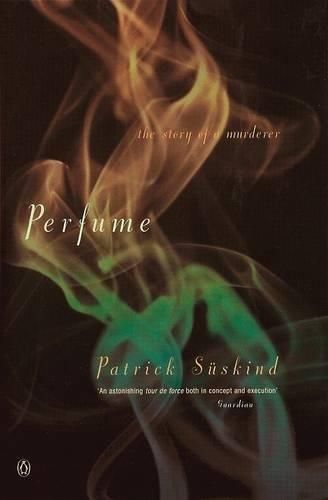
Perfume: The Story of a Murderer
Patrick Süskind, 1985
676 ratings

The Pigeon
Patrick Süskind, 1987
26 ratings
§ About Patrick Süskind's books
- Books on SansFiction
- 2
- Published
- 1985–1987
- Average rating
- 3.9 / 5 across 702 ratings
- Genres
- Murder, Adventure Thriller, Classique, Fiction Historique
Start here: Perfume: The Story of a Murderer (1985)
*Das Parfum*, a contemporary novel, which at first sight stands out for the extensive and astonishing descriptions it contains, hides behind it the story of a young man who lives submerged in the misery of his own being due to his inability to love and the profound social and family rejection that has accompanied him throughout his life.
Common questions about Patrick Süskind
- Who is Patrick Süskind?
- Born on March 26, 1949, in Ambach am Starnberger See near Munich, Patrick Süskind grew up in a literary and intellectual household in the Bavarian village of Holzhausen. His father, Wilhelm Emanuel Süskind, was a prominent writer and journalist for the Süddeutsche Zeitung who co-authored Aus dem Wörterbuch des Unmenschen, an influential collection of critical essays analyzing the language of the Nazi era.
- What is Patrick Süskind best known for?
- Patrick Süskind is best known for Perfume: The Story of a Murderer, published in 1985 with 676 ratings and a 3.9 average. It is the most-rated of Patrick Süskind's books on SansFiction.
- How many books has Patrick Süskind written?
- SansFiction lists 2 books by Patrick Süskind, published between 1985 and 1987. The most popular are Perfume: The Story of a Murderer and The Pigeon.
- Which Patrick Süskind book should I read first?
- Perfume: The Story of a Murderer is the usual place to start: it is Patrick Süskind's most-rated book here, with a 3.9 average.
- What genres does Patrick Süskind write?
- Patrick Süskind's books on SansFiction are tagged Murder, Adventure Thriller, Classique and Fiction Historique.
Explore: Murder · Adventure Thriller · Classique · Fiction Historique