SSansFiction
The libraryCollectionsJournalStatsFor authors
Sign inJoin now
Sansfiction,

A digital library for books. Made by readers, for readers.

v 2.0 · 2026
The library
  • Discover
  • Collections
  • Book tracker
  • Journal
  • Stats
For authors
  • SF Links
  • Analytics
  • How it works
  • FAQ
Elsewhere
  • X / @sansfiction
  • Privacy
  • Terms
  • Contact
© 2026 SansFiction · Digital · GlobalA quiet room for your reading life.
The libraryCollectionsJournalStatsFor authors
Sign inJoin now →
Navigation
Library
Bookshelf
Journal
Discover
Collections
Tierlists
Stats
Profile
Author Page
Link Builder
Account
Sign in
S
G
BooksadventureMoby Dick
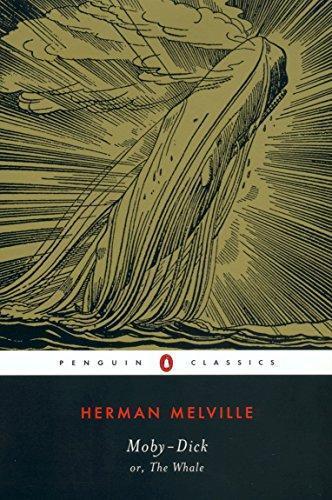
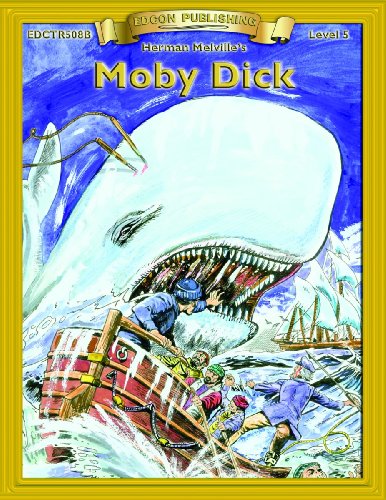
Cover of Moby Dick by Herman Melville
Will Eisner Classics

Moby Dick,

by Herman Melville, Lucien Jacques, Joan Smith, Jean Giono

Ask AI
Rating3.6/ 5
Ratings670
Pages731
Reading Hours15h
Published2003
LanguageEnglish

§Synopsis

01

"Command the murderous chalices! Drink ye harpooners! Drink and swear, ye men that man the deathful whaleboat's bow — Death to Moby Dick!" So Captain Ahab binds his crew to fulfil his obsession — the destruction of the great white whale.

Under his lordly but maniacal command the Pequod's commercial mission is perverted to one of vengeance. To Ahab, the monster that destroyed his body is not a creature, but the symbol of "some unknown but still reasoning thing." Uncowed by natural disasters, ill omens, even death, Ahab urges his ship towards "the undeliverable, nameless perils of the whale."

Key letters from Melville to Nathaniel Hawthorne are printed at the end of this volume.

§Our take

Moby-Dick rewards readers willing to let its strangeness accumulate; it is less a conventional sea story than an argument in seamen's clothes. The prose can be rich, funny and alive, but the old-fashioned syntax and allusions demand attention. About a fifth of the book is non-narrative whale study, with the plot concentrated near the beginning and end around a broad, digressive middle. Some readers call those chapters dead weight; others see them as the physical grounding beneath Ahab's metaphysical madness. The edition matters too: British readers first met The Whale, a shorter, expurgated text without the Epilogue, while modern English-language editions usually follow the American text. Choose the version before deciding whether the book is brilliant or a slog.

§Themes

Obsession commandeers the ship
Ahab redirects a commercial whaling mission toward revenge and makes his private grievance command everyone aboard.
Whales, books and blubber
Melville turns whale anatomy, behavior and the labor of whaling into comic set pieces that anchor the book's metaphysical questions.
Fellowship and its limits
Ishmael's bond with Queequeg gives the crew real warmth, while the stereotyping and subordination of non-white characters expose the limits of that fellowship.
A whale made meaningful
Ahab insists the whale conceals a reasoning will, turning his need to interpret nature into another form of violence.
Prose as obstacle and reward
Dense syntax, old diction and allusion can weary a reader, but the same style gives the book its vivid, eccentric life.

§How it was received

Early reviews were divided on both sides of the Atlantic: Henry Chorley called the book an ill-blended mix of romance and fact, while The Spectator's reviewer said Ahab's speeches could be skimmed. It sold poorly and was out of print by Melville's death, but Raymond Weaver's 1919 essay began the revival that carried Moby-Dick into canon during the 1920s. British readers had first met an altered text without the Epilogue, which complicated early judgments of the narrator and the ending.

§Read it if

  • You like big, unruly novels that let a voyage become a philosophical argument
  • You can sit with roughly a fifth of the book devoted to whale anatomy and whaling, and enjoy the argument it makes
  • You want an edition based on the American text, including the Epilogue, rather than an old British-derived reprint

§Skip it if

  • You need a steady plot. The action clusters near the ends, while the broad middle can feel like a seminar.
  • Dense, archaic prose or dated racist asides will pull you out quickly. Both are real obstacles.

§Before you start

Reading experience
Expect 135 short chapters, an uneven pace and demanding syntax, with the plot clustered near the beginning and end around a long digressive middle.
Reading order
Standalone. Typee and Omoo are earlier, unrelated sea-going works by Melville, not prequels or sequels.
Content notes
Graphic whaling violence, including harpooning, killing and flensing sea creatures, as well as the final catastrophe; Nineteenth-century racial stereotyping and racist asides, especially around non-white crew members; The real Essex disaster involved survivors resorting to cannibalism, though the novel only alludes to it.

§Common questions

Which edition of Moby-Dick should I read?
Choose a modern English-language edition that follows the American text and includes the Epilogue. Check before buying an old British-derived or very cheap reprint.
Can I skip the whale chapters?
Yes, though it costs some of the book's texture. About a fifth is non-narrative whale study, and Carl Zimmer calls the science writing of the highest order.
Is Moby-Dick based on a true story?
Partly. The 1820 sinking of the whalership Essex by a sperm whale was a major inspiration, and first mate Owen Chase's 1821 Narrative was a key source.

§If you liked this

  • In the Heart of the Sea by Nathaniel Philbrick — Philbrick's nonfiction account of the Essex disaster explores the real whalership tragedy that helped shape Melville's ending.
  • Invisible Man by Ralph Ellison — Ellison's Invisible Man echoes both Moby-Dick's first-person opening and an early church scene.
  • The Ice Schooner by Michael Moorcock — Moorcock bends the novel's obsessive pursuit into science fantasy, with the whale hunt recast as a different kind of voyage.
  • Narrative of the Most Extraordinary and Distressing Shipwreck of the Whale-Ship Essex by Owen Chase — Owen Chase's firsthand account of the Essex wreck is the primary source Melville drew on for the ending.
Sources
  • Wikipedia
  • Melville Electronic Library (Hofstra / scholarly editing project)
  • Library of America blog
  • Rosenbach Museum & Library
  • Lapham's Quarterly
  • Columbia Magazine
  • Discover Magazine (Carl Zimmer)
  • Wikipedia
  • Wikipedia
  • Goodreads
  • Open Culture

Track this book

Add to your library to track progress and write reviews

§Genres
adventure1classics1classique1comics1fiction1general1juvenile fiction1
§Moods
adventurous1challenging1cozy1funny1informative1inspiring1reflective1
§Tags
#diverse characters1#lgbtq+1#lost at sea1#loveable characters1#not diverse characters1#the sea1#weak character development1

§About the Author

Herman Melville
Herman Melville

2 books in catalog

Naval adventures, philosophical inquiry, and maritime realism converged in nineteenth-century American fiction through seminal sea narratives and allegories. Herman Melville emerged during the American Renaissance as an American novelist, short story writer, essayist, and poet whose works are often classified as part of dark romanticism. His epic novel Moby Dick established a unique literary blend of whaling lore, tragic drama, and metaphysical reflection.

Career & Background

Born in New York City on August 1, 1819, as Herman Melvill, he was raised in New York City and upstate New York. After his merchant father Allan died following a business failure, Melville left school and attempted to support his family by working as a clerk, teacher, and bank employee before taking to the sea. His experiences as a seaman inspired his writing, and his romanticized Polynesian adventure Typee became his first literary success in 1846. Though he published several sea narratives, his complex later works received little commercial success during his lifetime, leading him to work as a customs inspector in New York City until his death on September 28, 1891. A Melville revival beginning around the 1919 centennial of his birth ultimately brought his work widespread critical acclaim.

Writing Style & Themes

Associated with dark romanticism, Melville's writing features deep psychological investigation, rich symbolism, and an exploration of moral ambiguity. His prose combines detailed technical knowledge of seafaring with philosophical inquiry, tragic drama, and high-style literary allusion. Beyond his long sea novels, his short stories and novella investigate themes of obsession, authority, isolation, and tragic fate.

Major Works

  • Moby Dick — Published in 1851, this novel details Captain Ahab's obsessive hunt for a white whale, blending detailed accounts of the whaling industry with grand tragic drama.
  • Billy Budd, Sailor — Written toward the end of Melville's life and published posthumously, this novella recounts the tragic fate of an innocent young sailor aboard a British naval ship.
  • Typee — Published in 1846 as Melville's debut work, this popular narrative was based on his personal experiences in Polynesia.

§Featured Series

Will Eisner Classics

Cover of Moby Dick by Herman Melville

Moby Dick

Herman Melville, 1851

§Other Editions

Showing 2 of 732 editions
Cover of Moby Dick

Moby Dick

engPaperback
Borders Classics20069781587263361
Cover of Moby Dick

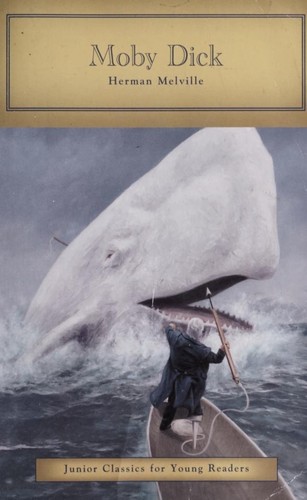
Moby Dick

engPaperbackJunior Classics for Young Readers, Large Print
Dalmation Press20059781453063163
§Genres
adventure1classics1classique1comics1fiction1general1juvenile fiction1
§Moods
adventurous1challenging1cozy1funny1informative1inspiring1reflective1
§Tags
#diverse characters1#lgbtq+1#lost at sea1#loveable characters1#not diverse characters1#the sea1#weak character development1

Metadata

ISBN-139781555763268
ISBN-10155576326X
ASINB0012TITU6

Editions and availability

Find Moby Dick Herman Melville in PDF, EPUB, ebook, audiobook, print, or library editions.

View on Amazon
Bookshop.orgGoogle Play BooksBarnes & NobleOpen Library

Featured In Lists

Book cover from this collectionBook cover from this collectionBook cover from this collectionBook cover from this collection
Book cover from this collection

100 Must Read Classics

99 books
Book cover from this collectionBook cover from this collectionBook cover from this collectionBook cover from this collection
Book cover from this collection

Gilmore Girls Reading List 🍂

407 books
Book cover from this collectionBook cover from this collectionBook cover from this collectionBook cover from this collection
Book cover from this collection

List 1001 Books Boxall

1000 books
Book cover from this collectionBook cover from this collectionBook cover from this collectionBook cover from this collection
Book cover from this collection

100 Greatest Books

98 books
Book cover from this collectionBook cover from this collectionBook cover from this collectionBook cover from this collection
Book cover from this collection

4lit

96 books
Book cover from this collectionBook cover from this collectionBook cover from this collectionBook cover from this collection
Book cover from this collection

200-ish Books to Read Before You Die

36 books