§Synopsis
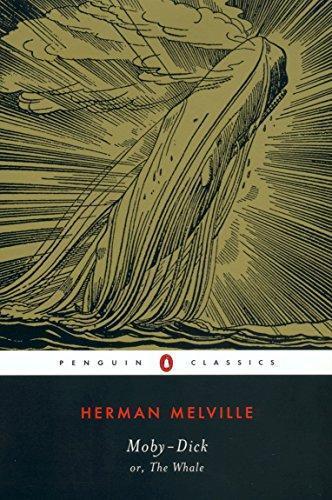
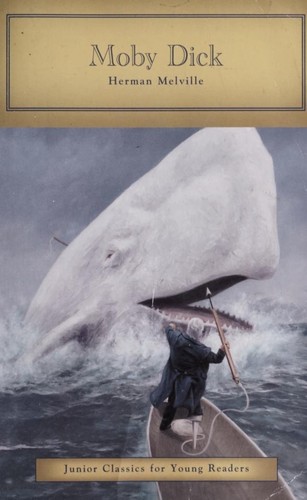
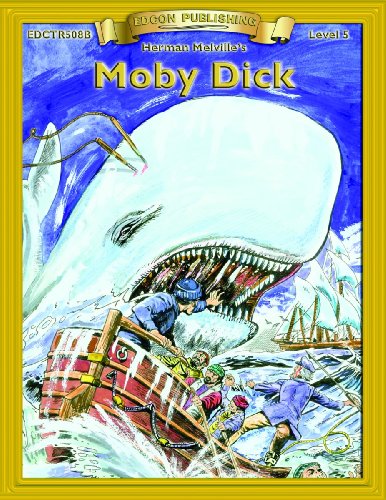
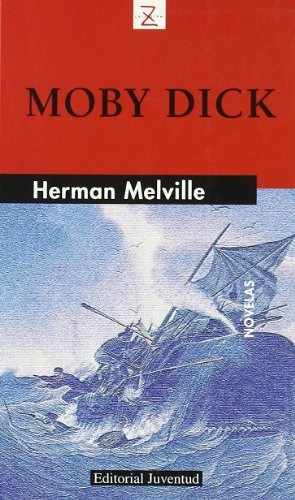
01"Command the murderous chalices! Drink ye harpooners! Drink and swear, ye men that man the deathful whaleboat's bow — Death to Moby Dick!" So Captain Ahab binds his crew to fulfil his obsession — the destruction of the great white whale.
Under his lordly but maniacal command the Pequod's commercial mission is perverted to one of vengeance. To Ahab, the monster that destroyed his body is not a creature, but the symbol of "some unknown but still reasoning thing." Uncowed by natural disasters, ill omens, even death, Ahab urges his ship towards "the undeliverable, nameless perils of the whale."
Key letters from Melville to Nathaniel Hawthorne are printed at the end of this volume.
§Our take
Moby-Dick rewards readers willing to let its strangeness accumulate; it is less a conventional sea story than an argument in seamen's clothes. The prose can be rich, funny and alive, but the old-fashioned syntax and allusions demand attention. About a fifth of the book is non-narrative whale study, with the plot concentrated near the beginning and end around a broad, digressive middle. Some readers call those chapters dead weight; others see them as the physical grounding beneath Ahab's metaphysical madness. The edition matters too: British readers first met The Whale, a shorter, expurgated text without the Epilogue, while modern English-language editions usually follow the American text. Choose the version before deciding whether the book is brilliant or a slog.
§Themes
- Obsession commandeers the ship
- Ahab redirects a commercial whaling mission toward revenge and makes his private grievance command everyone aboard.
- Whales, books and blubber
- Melville turns whale anatomy, behavior and the labor of whaling into comic set pieces that anchor the book's metaphysical questions.
- Fellowship and its limits
- Ishmael's bond with Queequeg gives the crew real warmth, while the stereotyping and subordination of non-white characters expose the limits of that fellowship.
- A whale made meaningful
- Ahab insists the whale conceals a reasoning will, turning his need to interpret nature into another form of violence.
- Prose as obstacle and reward
- Dense syntax, old diction and allusion can weary a reader, but the same style gives the book its vivid, eccentric life.
§How it was received
Early reviews were divided on both sides of the Atlantic: Henry Chorley called the book an ill-blended mix of romance and fact, while The Spectator's reviewer said Ahab's speeches could be skimmed. It sold poorly and was out of print by Melville's death, but Raymond Weaver's 1919 essay began the revival that carried Moby-Dick into canon during the 1920s. British readers had first met an altered text without the Epilogue, which complicated early judgments of the narrator and the ending.
§Read it if
- You like big, unruly novels that let a voyage become a philosophical argument
- You can sit with roughly a fifth of the book devoted to whale anatomy and whaling, and enjoy the argument it makes
- You want an edition based on the American text, including the Epilogue, rather than an old British-derived reprint
§Skip it if
- You need a steady plot. The action clusters near the ends, while the broad middle can feel like a seminar.
- Dense, archaic prose or dated racist asides will pull you out quickly. Both are real obstacles.
§Before you start
- Reading experience
- Expect 135 short chapters, an uneven pace and demanding syntax, with the plot clustered near the beginning and end around a long digressive middle.
- Reading order
- Standalone. Typee and Omoo are earlier, unrelated sea-going works by Melville, not prequels or sequels.
- Content notes
- Graphic whaling violence, including harpooning, killing and flensing sea creatures, as well as the final catastrophe; Nineteenth-century racial stereotyping and racist asides, especially around non-white crew members; The real Essex disaster involved survivors resorting to cannibalism, though the novel only alludes to it.
§Common questions
- Which edition of Moby-Dick should I read?
- Choose a modern English-language edition that follows the American text and includes the Epilogue. Check before buying an old British-derived or very cheap reprint.
- Can I skip the whale chapters?
- Yes, though it costs some of the book's texture. About a fifth is non-narrative whale study, and Carl Zimmer calls the science writing of the highest order.
- Is Moby-Dick based on a true story?
- Partly. The 1820 sinking of the whalership Essex by a sperm whale was a major inspiration, and first mate Owen Chase's 1821 Narrative was a key source.
§If you liked this
- In the Heart of the Sea by Nathaniel Philbrick — Philbrick's nonfiction account of the Essex disaster explores the real whalership tragedy that helped shape Melville's ending.
- Invisible Man by Ralph Ellison — Ellison's Invisible Man echoes both Moby-Dick's first-person opening and an early church scene.
- The Ice Schooner by Michael Moorcock — Moorcock bends the novel's obsessive pursuit into science fantasy, with the whale hunt recast as a different kind of voyage.
- Narrative of the Most Extraordinary and Distressing Shipwreck of the Whale-Ship Essex by Owen Chase — Owen Chase's firsthand account of the Essex wreck is the primary source Melville drew on for the ending.
Track this book
Add to your library to track progress and write reviews