SSansFiction
The libraryCollectionsJournalStatsFor authors
Sign inJoin now
Sansfiction,

A digital library for books. Made by readers, for readers.

v 2.0 · 2026
The library
  • Discover
  • Collections
  • Book tracker
  • Journal
  • Stats
For authors
  • SF Links
  • Analytics
  • How it works
  • FAQ
Elsewhere
  • X / @sansfiction
  • Privacy
  • Terms
  • Contact
© 2026 SansFiction · Digital · GlobalA quiet room for your reading life.
The libraryCollectionsJournalStatsFor authors
Sign inJoin now →
Navigation
Library
Bookshelf
Journal
Discover
Collections
Tierlists
Stats
Profile
Author Page
Link Builder
Account
Sign in
S
G
BooksdystopianLacero
Cover of Lacero by Andy Weir
Ready Player One

Lacero,

by Andy Weir

Ask AI
Rating4.0/ 5
Ratings8
Pages6
Reading Hours1h
Published2014
LanguageEnglish

§Synopsis

01

Before Nolan Sorrento became the high-ranking corporate executive of Innovative Online Industries, he was a man driven by a singular, destructive vision. In Lacero, Andy Weir explores the origins of one of modern science fiction’s most recognizable antagonists, framing the hunt for James Halliday’s Easter Egg not as a quest for pop-culture glory, but as a calculated act of systemic sabotage. This prequel shifts the perspective from the wide-eyed "gunters" to a cynical tactician who views the OASIS not as a digital paradise, but as a parasitic force draining the life out of a decaying real world.

Sorrento’s journey begins in the digital trenches, where he operates under the handle Lacero. While the rest of the world treats the Hunt as a game of nostalgia, Sorrento approaches it with the cold precision of a demolition expert. His motivation is rooted in a personal tragedy that mirrors the systemic collapse of society—a firm belief that the only way to save humanity is to force it to unplug. By focusing on the mechanical and ideological friction between the virtual and the physical, the narrative recontextualizes the stakes of the OASIS, presenting the hunt for the Egg as a battle for the soul of a civilization that has forgotten how to live outside of a simulation.

The Mechanics of a Virtual Dystopia

The world of Lacero is an extension of the OASIS, yet it feels fundamentally different due to the protagonist's clinical worldview. Where other characters see magic and wonder, Sorrento sees lines of code and sociological traps. The setting emphasizes the stark contrast between the "stacks"—the overcrowded, precarious housing of the real world—and the Star Trek-inspired sectors of the virtual universe. Weir highlights the "Genesis" elements of the simulation, showing how the environment reacts to players who are not there for the fun, but for the fundamental restructuring of reality. The atmosphere is one of intellectual tension, focusing on the "culture-blind" nature of Sorrento as he forced himself to master trivia he despised in order to navigate Halliday’s complex gates.

Main Characters

  • Nolan Sorrento (Lacero): A calculating and deeply disillusioned seeker who views the OASIS as a societal plague rather than a sanctuary.
  • The Wizard: A high-level OASIS inhabitant who encounters Lacero during his quest, serving as a skeptical witness to Sorrento's radical ideologies.
  • Sorrento’s Sister (Background): Though her story is told in retrospect, her fate serves as the primary emotional engine for Sorrento’s crusade against the virtual world.

The Architecture of a Zealot

The character development in this short story focuses on the hardening of Sorrento’s resolve. We see the protagonist not as a corporate puppet, but as a man whose grief has evolved into a rigid, military-grade philosophy. His initial arc is defined by "adaptational intelligence"—the ability to mimic the passions of his enemies to achieve a goal that would ultimately destroy their way of life. His dynamic with the OASIS is purely transactional; he seeks to master its rules only so he can gain the authority to delete them. This provides a deep dive into the mind of an antagonist who believes himself to be the hero of a much larger, more tragic story.

Subverting the Quest Trope

Lacero utilizes several major tropes while stripping away their traditional luster. It takes the "Great Hunt" trope—a staple of high fantasy and LitRPG—and reframes it as a search-and-destroy mission. Instead of the "Gunter" trope, where knowledge of the past is a sign of passion, Weir presents it as a tactical burden. The story also engages with the "Anti-Villain" origin, suggesting that Sorrento’s corporate rise was fueled by a genuine, albeit ruthless, desire to fix the world’s problems by removing its greatest distraction. By removing the whimsy usually associated with the OASIS, the narrative highlights the moral dilemma of whether a digital utopia is worth the cost of a neglected physical reality.

Track this book

Add to your library to track progress and write reviews

§Genres
dystopian1fantasy1science fiction1

§About the Author

Andy Weir
Andy Weir

4 books in catalog

Rigorous orbital mechanics, botanical survival calculations, and realistic physics form the backbone of modern hard science fiction that blends dense technical accuracy with fast-paced thriller narrative structures. Andy Weir brought this meticulous approach to popular literature through his serialized online writing, demonstrating that complex mathematical problem-solving can drive high-stakes survival stories. His fiction bridges the gap between technical reference manuals and accessible mainstream thrillers, establishing a distinct subgenre where human ingenuity and adherence to physical laws serve as the primary engines of dramatic tension.

With millions of copies sold globally, his work has achieved widespread commercial success and critical recognition. His debut novel The Martian was adapted into a 2015 feature film directed by Ridley Scott that earned seven Academy Award nominations, while his interstellar survival epic Project Hail Mary became a Hugo Award finalist. From a viral short story exploring cosmic philosophy to detailed depictions of lunar societies and deep-space missions, his bibliography consistently highlights human adaptability, scientific reasoning, and collaborative problem-solving under extreme environmental pressure.

Career & Background

Born on June 16, 1972, in Davis, California, Andy Weir developed an early fascination with computer science, relativistic physics, orbital mechanics, and the history of manned spaceflight. He was hired as a software programmer for a national laboratory at age fifteen and spent the next two decades working as a software engineer for technology and software companies, including AOL, Palm, and Blizzard. Throughout his twenty-five years in the software industry, he viewed writing as a serious passion, continuously publishing short stories, webcomics, and serialized fiction on his personal website while maintaining his full-time engineering career.

His early online publishing efforts gained significant traction in 2009 with the release of "The Egg," a brief philosophical short story about the nature of the universe and human consciousness. The story became a viral internet phenomenon, ultimately being translated into more than thirty languages and adapted into numerous short films, animations, and stage productions. Despite two early unpublished novels that failed to attract literary representation, he continued writing for his personal blog audience, focusing on a highly technical serialized tale about an astronaut stranded on Mars.

That serialized narrative became The Martian. After receiving rejections from multiple traditional literary agents, he made the full text available for free on his website, calculating realistic orbital trajectories and Martian soil chemistry for each chapter. To satisfy requests from readers who wanted to read the story on e-readers, he self-published a 99-cent edition on Amazon in 2011. The e-book quickly climbed Amazon's bestseller charts, attracting the attention of major traditional publishers and Hollywood producers. A major publishing contract followed, allowing him to transition from a full-time software engineer into a full-time novelist, even as he remained at his programming job through the early stages of the book's commercial breakout.

Following the international success of The Martian, he expanded his literary output across different formats and subgenres. In 2017, he released his second novel, Artemis, a sci-fi heist story set in a lunar colony that examined frontier economics and social hierarchy. He also authored Cheshire Crossing, a graphic novel that combined classic literary characters into a crossover narrative. In 2021, he published Project Hail Mary, returning to deep-space survival and first-contact science fiction. The novel became a finalist for the 2022 Hugo Award for Best Novel, cementing his reputation for hard science fiction.

Writing Style & Themes

The defining characteristic of Andy Weir's fiction is its commitment to scientific realism, often categorized within the hard science fiction subgenre. His plots rely on accurate chemistry, classical mechanics, thermodynamics, and engineering principles rather than speculative technology or unverified physics. This approach gives rise to narrative structures centered on expert protagonists systematically solving life-threatening technical problems. Readers experience procedural problem-solving where every obstacle is analyzed through logic, mathematics, and empirical experimentation.

Thematic elements across his body of work repeatedly center on isolated individuals confronting existential threats in severe, unforgiving environments. Whether trapped on the cold surface of Mars, navigating the social and industrial hazards of a lunar settlement, or waking up with amnesia aboard a solitary starship in a distant solar system, his characters must rely entirely on their technical intellect and resourcefulness. These scenarios underscore a core philosophy throughout his bibliography: human ingenuity, when combined with scientific methodology, offers a viable path toward survival against extreme odds.

To balance the density of technical explanations and scientific exposition, his narrative style relies heavily on a distinctive first-person log format infused with dry, irreverent, and self-deprecating humor. This conversational narrative voice humanizes complex topics—such as calculating botanical yield in a Martian habitat, managing life-support chemistry, or calculating delta-v for orbital maneuvers—making intricate engineering concepts engaging and easily understandable for general audiences. His writing demonstrates that rigorous adherence to physical laws enhances dramatic tension rather than slowing narrative momentum.

Major Works

  • The Martian — First self-published online and released on Amazon in 2011, this debut novel follows astronaut Mark Watney as he uses botany, chemistry, and mechanical engineering to survive isolation on Mars. It was adapted into an Oscar-nominated 2015 film directed by Ridley Scott and starring Matt Damon.
  • Artemis — Published in 2017, this hard science fiction novel takes place in a bustling lunar colony, combining high-stakes heist dynamics with detailed explorations of frontier economics, gravity-specific engineering, and environmental life support.
  • Project Hail Mary — Released in 2021, this deep-space survival story features a solitary astronaut working to prevent an extinction-level solar crisis using scientific deduction and unexpected interstellar collaboration. The book was named a finalist for the 2022 Hugo Award for Best Novel.
  • Cheshire Crossing — Originally serialized as a webcomic and published as a graphic novel with art by Sarah Andersen, this crossover story blends classic literary heroines from Alice's Adventures in Wonderland, The Wonderful Wizard of Oz, and Peter Pan into a shared adventure.
  • Lacero — A short story written by Andy Weir set in the universe of Ernest Cline's Ready Player One, exploring the backstory of the primary antagonist faction, which was later included as an official canonical addition in published editions of the novel.
  • Digitocracy — An early standalone science fiction short story authored by Weir, exploring themes of computing, society, and automated control, illustrating his long-standing interest in technological systems and futuristic digital structures.

§Featured Series

Ready Player One

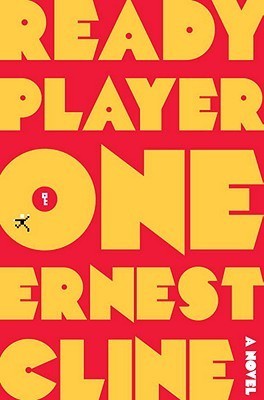
Cover of Ready Player One by Ernest Cline

Ready Player One

Ernest Cline, 2011
Cover of Ready Player Two by Ernest Cline

Ready Player Two

Ernest Cline, 2019
Cover of Lacero by Andy Weir

Lacero

Andy Weir, 2014

§Other Editions

Cover of Lacero

Lacero

engAudiobook
2014
§Genres
dystopian1fantasy1science fiction1