§Synopsis
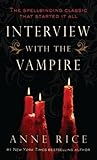
01In a darkened room a young man sits telling the macabre and eerie story of his life - the story of a vampire, gifted with eternal life, cursed with an exquisite craving for human blood.
Here are the confessions of a vampire. Hypnotic, shocking, and chillingly erotic, this is a novel of mesmerizing beauty and astonishing force --- a story of danger and flight, of love and loss, of suspense and resolution, and of the extraordinary power of the senses. It is a novel only Anne Rice could write.
§Our take
The voice is the book: Louis talks for nearly the whole of this vampire novel, and the reader must decide how much of his guilt to believe. The lush prose and sweep from the American South to Paris are the book's great luxuries, though they can also thicken into philosophical debate and static description. That was the split in 1976: Leo Braudy dismissed the inflated language and thin story, while Publishers Weekly and many readers found it eerie, macabre and spellbinding.
What endures is Rice's refusal to make vampirism a clean metaphor. She gives Louis a conscience, then leaves his self-justifying testimony open to doubt. The result is both a landmark of vampire fiction and a reread that can reverse, with readers split over whether age makes it richer or more overwrought. Readers who want a propulsive horror plot may quit; readers drawn to grief, appetite and the ethics of survival will keep turning pages.
§Themes
- A monster with a conscience
- Louis questions the morality of killing, making the vampire a moral and psychological study as well as a threat.
- Immortality as loneliness
- His endless life leaves him hungry for companionship, and the family he assembles cannot erase the cost of his survival.
- Desire with teeth
- LitCharts reads the Southern plantation section as a parallel between vampiric feeding and slaveholders living off the enslaved.
- Queer allegory
- Many readers have long taken the novel as an allegory for gay and outsider identity, a reading Rice later said she was honored by.
- Grief beneath the gothic
- Rice expanded the novel after the death of her young daughter, and Claudia becomes the book's most emotionally charged and disturbing figure.
§How it was received
Reception in 1976 was mixed, though readers embraced the novel and it became a bestseller. New York Times reviewer Leo Braudy found a chain of static scenes with inflated language and little story, while Publishers Weekly called it eerie, macabre and spellbinding. Later obituaries treat it as the book that recast the vampire as a tragic antihero and helped make room for later bestsellers such as Twilight.
§Read it if
- You want vampire fiction with a conscience, where the central question is not only how the monster kills but why it thinks it must
- You can tolerate a mostly single-narrator book with long passages of atmosphere, memory and moral reflection
- You want to begin The Vampire Chronicles without reading anything else first
§Skip it if
- You need a plot-driven horror novel. This is one long night of recollection, debate and description, with action in short bursts.
- Dense philosophical passages or a guilt-heavy, self-pitying narrator make you want to walk away
§Before you start
- Reading experience
- The pace is slow and atmospheric, with dense philosophical reflection, long descriptive passages and only brief bursts of action.
- Reading order
- Book 1 of The Vampire Chronicles. It can be read first because it closes its own frame story. The direct sequel is The Vampire Lestat (1985), followed by The Queen of the Damned (1988) and The Tale of the Body Thief (1992).
- Content notes
- Slavery, enslavement and forced servitude; Violence, blood and death; A child remains a child in a parental-style household with two adult vampires; Relationships between adults and minors; Death of a child and death of a parent or guardian; Kidnapping; Death of an animal; Sensual and erotic feeding.
§Common questions
- Is Interview with the Vampire part of a series?
- Yes. It's Book 1 of The Vampire Chronicles, and The Vampire Lestat is the direct sequel.
- Is it a conventional horror novel?
- Not quite. It's an adult literary-gothic confession, mixing blood, eroticism and atmosphere with long stretches of moral reflection.
- Is Interview with the Vampire suitable for teens?
- It has an adult literary-gothic register, with erotic feeding, enslavement, blood and adult-minor relationships. There is no clear official age rating.
§If you liked this
- Dracula by Bram Stoker — The Gothic baseline Interview answers, replacing external threat with an intimate study of appetite, guilt and grief.
- Frankenstein by Mary Shelley — Its sympathetic monster offers the same Gothic maneuver: letting the creature tell its own story.
- The Exorcist by William Peter Blatty — The 1970s horror bestseller the Times reviewer thought the fairer comparison, and a much more plot-driven fright.
- The Dracula Tape by Fred Saberhagen — Fred Saberhagen's novel also lets a vampire tell his own side of the story, and appeared just a year earlier.
- Twilight by Stephenie Meyer — A later bestseller that Publishers Weekly linked to Rice's success, carrying forward the sympathetic, tormented vampire.
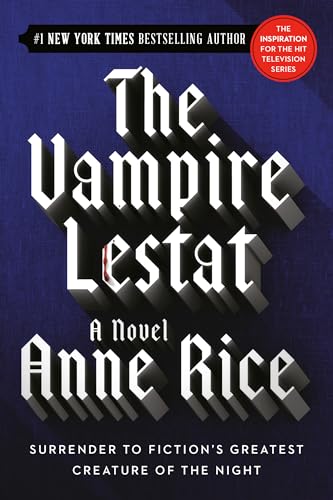
- The Vampire Lestat by Anne Rice — The direct sequel shifts the series from Louis's confession toward Lestat's origins.
Track this book
Add to your library to track progress and write reviews