SSansFiction
The libraryCollectionsJournalStatsFor authors
Sign inJoin now
Sansfiction,

A digital library for books. Made by readers, for readers.

v 2.0 · 2026
The library
  • Discover
  • Collections
  • Book tracker
  • Journal
  • Stats
For authors
  • SF Links
  • Analytics
  • How it works
  • FAQ
Elsewhere
  • X / @sansfiction
  • Privacy
  • Terms
  • Contact
© 2026 SansFiction · Digital · GlobalA quiet room for your reading life.
The libraryCollectionsJournalStatsFor authors
Sign inJoin now →
Navigation
Library
Bookshelf
Journal
Discover
Collections
Tierlists
Stats
Profile
Author Page
Link Builder
Account
Sign in
S
G
BooksclassicsInterview with the Vampire
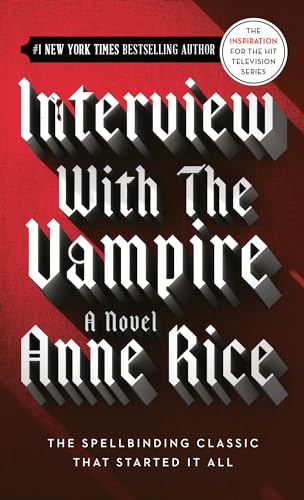
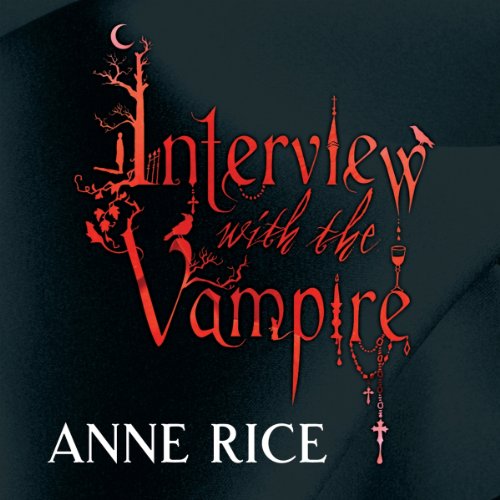
Cover of Interview with the Vampire by Anne Rice
№ 1 · The Vampire Chronicles

Interview with the Vampire,

by Anne Rice

Ask AI
Rating3.8/ 5
Ratings808
Pages356
Reading Hours7h
Published2013
LanguageEnglish

§Synopsis

01

In a darkened room a young man sits telling the macabre and eerie story of his life - the story of a vampire, gifted with eternal life, cursed with an exquisite craving for human blood.

Here are the confessions of a vampire. Hypnotic, shocking, and chillingly erotic, this is a novel of mesmerizing beauty and astonishing force --- a story of danger and flight, of love and loss, of suspense and resolution, and of the extraordinary power of the senses. It is a novel only Anne Rice could write.

§Our take

The voice is the book: Louis talks for nearly the whole of this vampire novel, and the reader must decide how much of his guilt to believe. The lush prose and sweep from the American South to Paris are the book's great luxuries, though they can also thicken into philosophical debate and static description. That was the split in 1976: Leo Braudy dismissed the inflated language and thin story, while Publishers Weekly and many readers found it eerie, macabre and spellbinding.

What endures is Rice's refusal to make vampirism a clean metaphor. She gives Louis a conscience, then leaves his self-justifying testimony open to doubt. The result is both a landmark of vampire fiction and a reread that can reverse, with readers split over whether age makes it richer or more overwrought. Readers who want a propulsive horror plot may quit; readers drawn to grief, appetite and the ethics of survival will keep turning pages.

§Themes

A monster with a conscience
Louis questions the morality of killing, making the vampire a moral and psychological study as well as a threat.
Immortality as loneliness
His endless life leaves him hungry for companionship, and the family he assembles cannot erase the cost of his survival.
Desire with teeth
LitCharts reads the Southern plantation section as a parallel between vampiric feeding and slaveholders living off the enslaved.
Queer allegory
Many readers have long taken the novel as an allegory for gay and outsider identity, a reading Rice later said she was honored by.
Grief beneath the gothic
Rice expanded the novel after the death of her young daughter, and Claudia becomes the book's most emotionally charged and disturbing figure.

§How it was received

Reception in 1976 was mixed, though readers embraced the novel and it became a bestseller. New York Times reviewer Leo Braudy found a chain of static scenes with inflated language and little story, while Publishers Weekly called it eerie, macabre and spellbinding. Later obituaries treat it as the book that recast the vampire as a tragic antihero and helped make room for later bestsellers such as Twilight.

§Read it if

  • You want vampire fiction with a conscience, where the central question is not only how the monster kills but why it thinks it must
  • You can tolerate a mostly single-narrator book with long passages of atmosphere, memory and moral reflection
  • You want to begin The Vampire Chronicles without reading anything else first

§Skip it if

  • You need a plot-driven horror novel. This is one long night of recollection, debate and description, with action in short bursts.
  • Dense philosophical passages or a guilt-heavy, self-pitying narrator make you want to walk away

§Before you start

Reading experience
The pace is slow and atmospheric, with dense philosophical reflection, long descriptive passages and only brief bursts of action.
Reading order
Book 1 of The Vampire Chronicles. It can be read first because it closes its own frame story. The direct sequel is The Vampire Lestat (1985), followed by The Queen of the Damned (1988) and The Tale of the Body Thief (1992).
Content notes
Slavery, enslavement and forced servitude; Violence, blood and death; A child remains a child in a parental-style household with two adult vampires; Relationships between adults and minors; Death of a child and death of a parent or guardian; Kidnapping; Death of an animal; Sensual and erotic feeding.

§Common questions

Is Interview with the Vampire part of a series?
Yes. It's Book 1 of The Vampire Chronicles, and The Vampire Lestat is the direct sequel.
Is it a conventional horror novel?
Not quite. It's an adult literary-gothic confession, mixing blood, eroticism and atmosphere with long stretches of moral reflection.
Is Interview with the Vampire suitable for teens?
It has an adult literary-gothic register, with erotic feeding, enslavement, blood and adult-minor relationships. There is no clear official age rating.

§If you liked this

  • Dracula by Bram Stoker — The Gothic baseline Interview answers, replacing external threat with an intimate study of appetite, guilt and grief.
  • Frankenstein by Mary Shelley — Its sympathetic monster offers the same Gothic maneuver: letting the creature tell its own story.
  • The Exorcist by William Peter Blatty — The 1970s horror bestseller the Times reviewer thought the fairer comparison, and a much more plot-driven fright.
  • The Dracula Tape by Fred Saberhagen — Fred Saberhagen's novel also lets a vampire tell his own side of the story, and appeared just a year earlier.
  • Twilight by Stephenie Meyer — A later bestseller that Publishers Weekly linked to Rice's success, carrying forward the sympathetic, tormented vampire.
  • The Vampire Lestat by Anne Rice — The direct sequel shifts the series from Louis's confession toward Lestat's origins.
Sources
  • Wikipedia
  • The Boston Globe (republished NYT obituary)
  • Publishers Weekly
  • Book Riot
  • LitCharts
  • PinkNews
  • Syfy Wire
  • Wikipedia

Track this book

Add to your library to track progress and write reviews

§Genres
classics1fantasy1fiction1foreign language study1general1gothic1horror fiction1
§Content Warnings
§Moods
adventurous1challenging1dark1emotional1melancholy1mysterious1reflective1
§Tags
#blood1#body horror1#diverse characters1#gaslighting1#loveable characters1

§About the Author

Anne Rice
Anne Rice

2 books in catalog

The revival of gothic fiction in the late twentieth century owed much to the reimagining of traditional monsters into complex, melancholic antiheroes. Author Anne Rice introduced this perspective in her 1976 debut novel Interview with the Vampire, establishing a literary universe that spans over 30 novels. Her famous saga continued with The Vampire Lestat and the broader series The Vampire Chronicles, earning both widespread mainstream recognition and dedicated cult followings across generations of readers.

Career & Background

Born Howard Allen Frances O'Brien in New Orleans, Louisiana, she grew up in a city whose historic French Quarter, elaborate cemeteries, and ante-bellum architecture deeply informed her creative vision. She earned a Bachelor's Degree in Political Science and a Master of Arts Degree in English and Creative Writing from San Francisco State University. Although she spent more of her life living in California than in Louisiana, New Orleans remained her true home and provided the backdrop for many of her signature novels. Her ante-bellum house in the Garden District served as the fictional home for her Mayfair Witches. Beyond her supernatural fiction, she wrote erotica under the pseudonyms A. N. Roquelaure and Anne Rampling during the early 1980s. Her historical novel Feast of All Saints, which explores the lives of free people of color in ante-bellum New Orleans, was adapted into a faithful 2001 Showtime mini-series scripted by John Wilder and released on DVD. In 1994, director Neil Jordan released a feature film adaptation of Interview with the Vampire starring Tom Cruise, Brad Pitt, Kirsten Dunst, and Antonio Banderas. Her career also included religious fiction such as Christ the Lord: Out of Egypt following her return to Catholicism, as well as later werewolf series including The Wolf Gift and The Wolves of Midwinter.

Writing Style & Themes

Her prose is characterized by lush descriptive detail, intense sensory atmosphere, and philosophical inquiries into immortality, morality, faith, and human longing. By shifting supernatural perspectives to internal first-person narrators, she allowed immortal characters to express profound existential angst and desire. New Orleans functions not merely as a setting in her work, but as an active sensory landscape shaping narratives such as The Witching Hour, Servant of the Bones, Merrick, Blackwood Farm, Blood Canticle, Violin, and Cry to Heaven. Her ability to blend historical realism with gothic romanticism created an enduring template for contemporary dark fantasy.

Major Works

  • Interview with the Vampire — Published in 1976, this best-selling debut novel set in the French Quarter launched The Vampire Chronicles and was adapted into a hit 1994 film.
  • The Vampire Lestat — The second entry in The Vampire Chronicles, expanding the backstory and internal worldview of the antihero Lestat de Lioncourt.
  • Feast of All Saints — A historical novel detailing the lives of free people of color in ante-bellum New Orleans, adapted into a 2001 television mini-series.
  • The Witching Hour — The foundational novel of the Mayfair Witches series, inspired by her ante-bellum home in the New Orleans Garden District.
  • Christ the Lord: Out of Egypt — A fictionalized exploration of the early life of Jesus Christ, marking a significant religious turn in her bibliography.

§Featured Series

The Vampire Chronicles

Cover of Interview with the Vampire by Anne Rice

Interview with the Vampire

Anne Rice, 1976
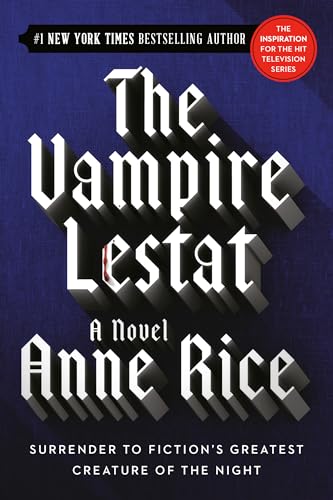
Cover of The Vampire Lestat by Anne Rice

The Vampire Lestat

Anne Rice, 1985

§Other Editions

Showing 2 of 75 editions
Cover of Interview with the Vampire

Interview with the Vampire

engMP3 CDUnabridged
Random House Audio19769780307914019
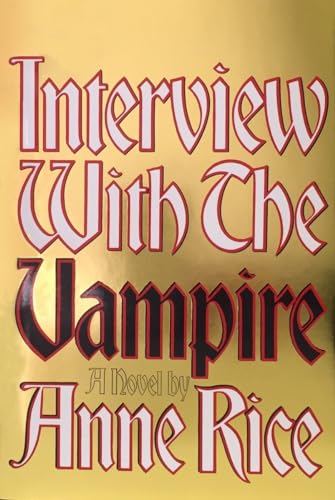
Cover of Interview with the Vampire

Interview with the Vampire

engHardcover
Knopf19769780394498218
§Genres
classics1fantasy1fiction1foreign language study1general1gothic1horror fiction1
§Content Warnings
§Moods
adventurous1challenging1dark1emotional1melancholy1mysterious1reflective1
§Tags
#blood1#body horror1#diverse characters1#gaslighting1#loveable characters1

Metadata

ISBN-139780307914019
ISBN-100307914011
ASINB075NPGFZ3

Editions and availability

Find Interview with the Vampire Anne Rice in PDF, EPUB, ebook, audiobook, print, or library editions.

View on Amazon
Bookshop.orgGoogle Play BooksBarnes & NobleOpen Library

Featured In Lists

Book cover from this collectionBook cover from this collectionBook cover from this collectionBook cover from this collection
Book cover from this collection

Sword&Laser 2025 Picks (Unofficial)

12 books
Book cover from this collectionBook cover from this collectionBook cover from this collectionBook cover from this collection
Book cover from this collection

Mother Horror's 101 Horror Books to Read Before You're Murdered

239 books
Book cover from this collectionBook cover from this collectionBook cover from this collectionBook cover from this collection
Book cover from this collection

List 1001 Books Boxall

1000 books