§Synopsis
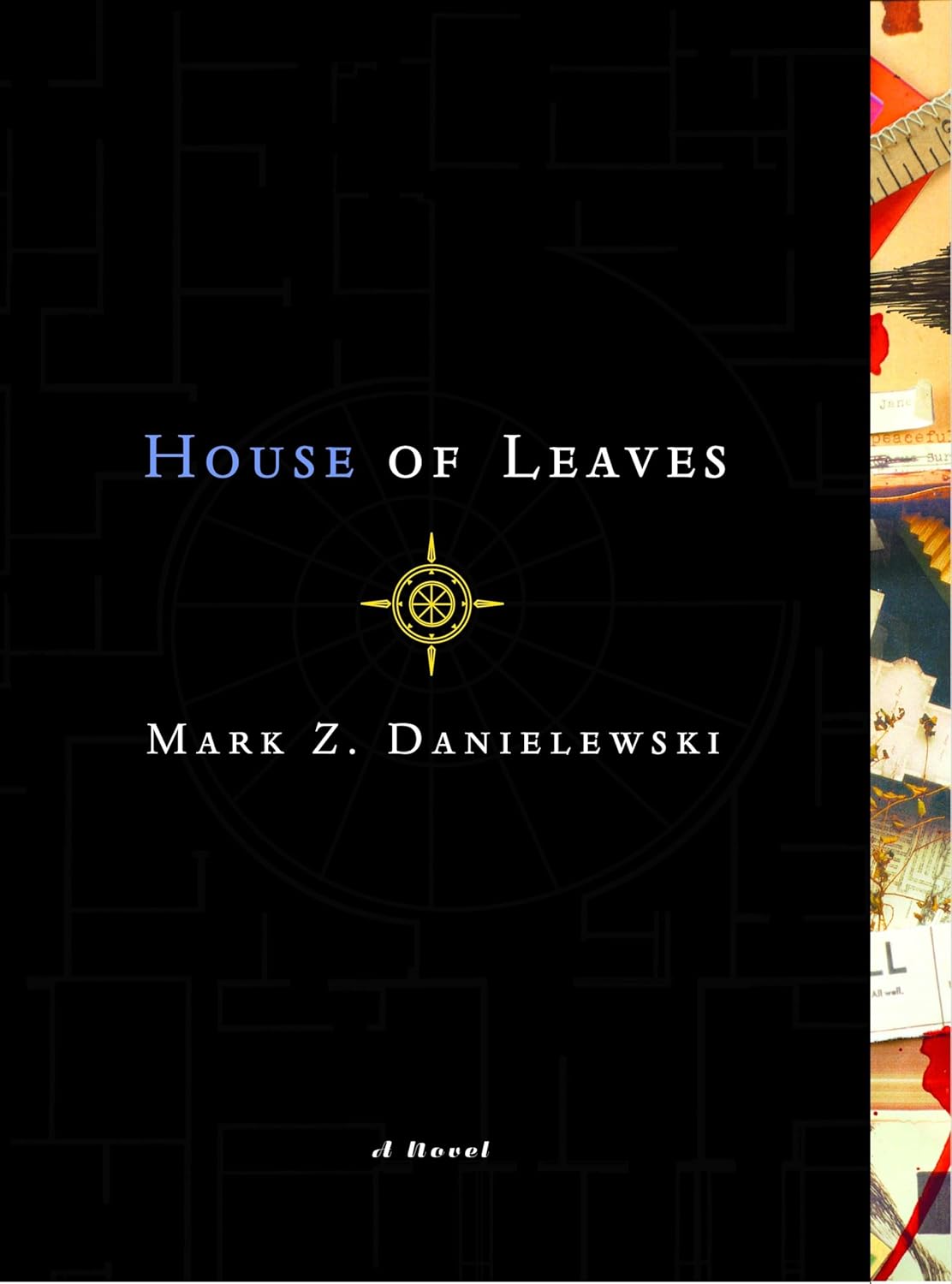
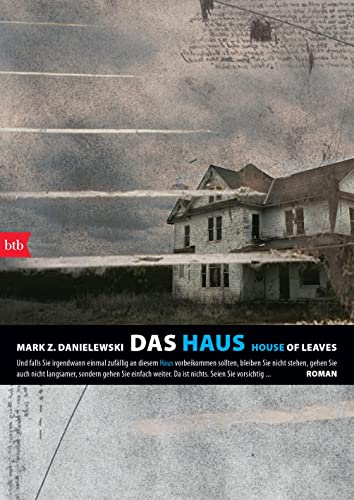
01House of Leaves is an epistolary fiction and metafiction novel focusing on a fictional documentary film titled the Navidson Record, presented as a story within a story discussed in a handwritten monograph recovered by the primary narrator, Johnny Truant. The narrative makes heavy use of multiperspectivity as Truant's footnotes chronicle his efforts to transcribe the manuscript, which itself reveals the Navidson Record's supposed narrative through transcriptions and analysis depicting a story of a family who discovers a larger-on-the-inside labyrinth in their house.
§Our take
House of Leaves is less a conventional horror novel than a trapdoor built from footnotes, typefaces and unreliable documents. The physical book does the work of the house: text scatters, changes face and once tunnels backward through the page. At its best, that design turns reading into dread rather than merely describing it.
The weak point is Johnny Truant's commentary. Publishers Weekly found it weaker than the Navidson material, and readers still divide over whether it supplies emotional weight or dead weight. Edition matters: the Remastered Full-Color Edition shows the blue 'house,' red Minotaur and struck-through text, and adds vertical footnotes and two extra appendices without changing the story. Read it in print, slowly, because the typography is not trim.
§Themes
- The page as labyrinth
- Changing typefaces and scattered layouts make reading feel like navigating the impossible house.
- Footnotes with teeth
- A long note tunnels across pages and prints backward, making the sheet itself part of the story.
- Scholarship as nightmare
- Invented citations and mock-academic commentary expose the machinery of scholarship while deepening the dread.
- Maze and Minotaur
- The house's inner labyrinth gives the Minotaur myth a place in the book's visual language.
- Love beneath the horror
- Family grief and estrangement sit beneath the story of a home that keeps unfolding.
§How it was received
Kirkus was emphatic, calling the nested texts, footnotes and appendices a fresh approach to horror built around a house and treating the ambiguity as dread rather than flaw. Publishers Weekly admired the Navidson story as a tour de force but found the Johnny Truant half weaker and questioned Danielewski's character voices. The debut has since become a cult and academic fixture, with readers still divided over whether the typography is brilliant or pretentious and whether the ambiguity pays off.
§Read it if
- You want horror in which the physical book carries the fear
- You enjoy layered fiction, invented citations and footnotes that do real narrative work
- You like slow, demanding fiction and don't need every mystery answered
§Skip it if
- You need a linear plot, firm answers and a tidy payoff
- Long annotation digressions and typographic stunts sound like clutter rather than craft
§Before you start
- Reading experience
- Expect a deliberately slow, demanding read, with dense footnote blocks, pages that may need rotating and one long note that runs backward across the sheet.
- Reading order
- Standalone. The novella-length Whalestoe Letters, taken from the novel, was also published separately, and Poe's Haunted is a companion album. Neither is a sequel.
- Content notes
- Sexual abuse and rape are depicted; Child abuse and neglect are depicted; Psychosis, panic attacks and hallucinations are depicted; Drug and alcohol abuse and sexual content appear.
§Common questions
- Why does House of Leaves sometimes get dated 1999?
- It was first published in 2000: a signed Pantheon hardcover on February 29, then the general hardback and paperback on March 7. Some catalog listings carry a stray 1999.
- Which edition should I buy?
- If you have a choice, the Remastered Full-Color Edition shows the blue 'house', the red Minotaur and the struck-through text, and adds vertical footnotes and two extra appendices; the story itself is unchanged. Readers disagree on whether colour is essential.
- Do I have to read every footnote?
- Not strictly, but read them if you want the full design. They carry shifts between narrative layers and contain some of the physical tricks.
§If you liked this
- Infinite Jest by David Foster Wallace — Dense footnotes and mock-scholarly apparatus make it the natural formal comparison; Publishers Weekly also invoked David Foster Wallace when questioning the voices here.
- Moby-Dick by Herman Melville — Stephen King and Joe Hill were reported to have argued over whether House of Leaves is horror's Moby-Dick.
Track this book
Add to your library to track progress and write reviews