
Fifteen hundred years have passed since the death of Leto II, the God Emperor. The stagnation of his 3,500-year reign has been shattered by "The Scattering," a massive outward explosion of humanity into the deep reaches of unmapped space. Now, the descendants of those who fled are returning to the Old Empire, bringing with them strange new technologies, evolved biological powers, and a ruthless desire for dominance. The traditional power structures—the Bene Gesserit, the Spacing Guild, and the Tleilaxu—find themselves struggling to maintain control over a universe that has grown vastly more complex and unpredictable than the one they once manipulated.
On the planet Rakis, formerly Arrakis, the ecological transformation is complete; the desert has returned, and with it, the great sandworms that hold the secret of the spice melange. The discovery of a young girl named Sheeana, who possesses the inexplicable ability to command these behemoths, sends shockwaves through the galaxy. Her existence threatens to ignite a new wave of religious fervor that the Bene Gesserit Sisterhood views as both a tool and a catastrophe. To survive this shifting landscape, the Sisterhood must confront their own rigid orthodoxies, contemplating "heresies" of emotion and adaptation that were previously forbidden.
The world of Rakis is no longer the center of a centralized theocracy but a pivotal piece in a much larger, decentralized game of survival. The return of the "Lost Ones" from the Scattering introduces the Honored Matres, a violent and mysterious shadow-mirror of the Bene Gesserit, whose motives remain opaque but whose power is undeniable. Within this setting, the Tleilaxu have also evolved, perfecting their biological technologies in secret, while the Bene Gesserit are forced to operate with a degree of desperation, realizing that their long-term breeding programs may have been rendered obsolete by the very chaos the God Emperor intended to unleash.
The narrative focuses heavily on the initial friction between Miles Teg and his charge, the young Duncan Idaho. Teg is tasked with awakening the ghola's memories while navigating the political minefield of the Sisterhood’s internal politics. Simultaneously, Darwi Odrade’s arc centers on her "heretical" leanings—her ability to feel genuine connection and her willingness to question the Sisterhood’s ancient prohibitions against love and attachment. This internal struggle mirrors the external conflict: the characters must decide whether to cling to the safety of old rules or evolve into something fundamentally different to survive an era of unprecedented change.
Frank Herbert utilizes the "Chosen One" trope only to dissect it through a lens of political necessity and biological engineering. While Sheeana and Duncan Idaho both appear to fit the mold of messianic figures, the story treats them as tactical assets rather than divine saviors. The book subverts the typical space opera narrative of clear-cut rebellion by focusing on the "administrative" side of power—how institutions like the Bene Gesserit attempt to manage chaos through bureaucracy, education, and the strategic deployment of myth. The stakes are not merely the fate of a planet, but the biological and philosophical direction of the entire human species.
Fifteen hundred years have passed since the death of Leto II, the God Emperor. The stagnation of his 3,500-year reign has been shattered by "The Scattering," a massive outward explosion of humanity into the deep reaches of unmapped space. Now, the descendants of those who fled are returning to the Old Empire, bringing with them strange new technologies, evolved biological powers, and a ruthless desire for dominance. The traditional power structures—the Bene Gesserit, the Spacing Guild, and the Tleilaxu—find themselves struggling to maintain control over a universe that has grown vastly more complex and unpredictable than the one they once manipulated.
On the planet Rakis, formerly Arrakis, the ecological transformation is complete; the desert has returned, and with it, the great sandworms that hold the secret of the spice melange. The discovery of a young girl named Sheeana, who possesses the inexplicable ability to command these behemoths, sends shockwaves through the galaxy. Her existence threatens to ignite a new wave of religious fervor that the Bene Gesserit Sisterhood views as both a tool and a catastrophe. To survive this shifting landscape, the Sisterhood must confront their own rigid orthodoxies, contemplating "heresies" of emotion and adaptation that were previously forbidden.
The world of Rakis is no longer the center of a centralized theocracy but a pivotal piece in a much larger, decentralized game of survival. The return of the "Lost Ones" from the Scattering introduces the Honored Matres, a violent and mysterious shadow-mirror of the Bene Gesserit, whose motives remain opaque but whose power is undeniable. Within this setting, the Tleilaxu have also evolved, perfecting their biological technologies in secret, while the Bene Gesserit are forced to operate with a degree of desperation, realizing that their long-term breeding programs may have been rendered obsolete by the very chaos the God Emperor intended to unleash.
The narrative focuses heavily on the initial friction between Miles Teg and his charge, the young Duncan Idaho. Teg is tasked with awakening the ghola's memories while navigating the political minefield of the Sisterhood’s internal politics. Simultaneously, Darwi Odrade’s arc centers on her "heretical" leanings—her ability to feel genuine connection and her willingness to question the Sisterhood’s ancient prohibitions against love and attachment. This internal struggle mirrors the external conflict: the characters must decide whether to cling to the safety of old rules or evolve into something fundamentally different to survive an era of unprecedented change.
Frank Herbert utilizes the "Chosen One" trope only to dissect it through a lens of political necessity and biological engineering. While Sheeana and Duncan Idaho both appear to fit the mold of messianic figures, the story treats them as tactical assets rather than divine saviors. The book subverts the typical space opera narrative of clear-cut rebellion by focusing on the "administrative" side of power—how institutions like the Bene Gesserit attempt to manage chaos through bureaucracy, education, and the strategic deployment of myth. The stakes are not merely the fate of a planet, but the biological and philosophical direction of the entire human species.
Add to your library to track progress and write reviews

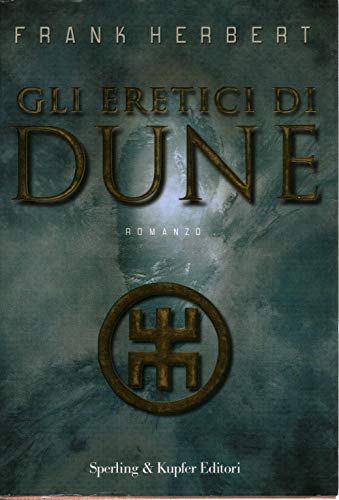
Find Gli eretici di Dune Frank Herbert in PDF, EPUB, ebook, audiobook, print, or library editions.

22 books in catalog
The desert planet of Arrakis, with its giant sandworms, complex ecology, and political factions vying for control over the spice melange, remains one of the most thoroughly detailed world-building achievements in speculative fiction. American author Frank Herbert introduced this setting in his seminal 1965 novel Dune, creating an expansive universe that transformed epic science fiction by weaving together ecology, philosophy, religion, and political intrigue.
Born in Tacoma, Washington in 1920, Herbert spent his youth in the Pacific Northwest and worked on local newspapers as a teenager. He attended the University of Washington in Seattle and worked a wide variety of jobs throughout his early adult life, including time as a TV cameraman, radio commentator, oyster diver, jungle survival instructor, lay analyst, and creative writing teacher. He also worked as a reporter and later editor of a number of West Coast newspapers before becoming a full-time writer. Herbert began publishing science fiction in 1952 with his short story 'Looking for Something?' in Startling Stories. His research into the Oregon Dunes during the 1950s served as a primary catalyst for his ecological themes. He achieved widespread fame more than ten years later following the serial publication in Analog of 'Dune World' and 'The Prophet of Dune', which were amalgamated into the novel Dune in 1965.
Herbert's fiction is distinguished by its intricate world-building, ecological awareness, and deep examination of human potential and institutional vulnerability. Rather than relying solely on technological advancement, his narrative focus often centers on human adaptability, psychological conditioning, religious mythmaking, and the perilous consequences of messianic leadership. He frequently explored how harsh environments shape cultures, social structures, and survival strategies, a focus prominently displayed in novels such as Destination: Void and The Jesus Incident alongside his desert sagas.

22 books in catalog
The desert planet of Arrakis, with its giant sandworms, complex ecology, and political factions vying for control over the spice melange, remains one of the most thoroughly detailed world-building achievements in speculative fiction. American author Frank Herbert introduced this setting in his seminal 1965 novel Dune, creating an expansive universe that transformed epic science fiction by weaving together ecology, philosophy, religion, and political intrigue.
Born in Tacoma, Washington in 1920, Herbert spent his youth in the Pacific Northwest and worked on local newspapers as a teenager. He attended the University of Washington in Seattle and worked a wide variety of jobs throughout his early adult life, including time as a TV cameraman, radio commentator, oyster diver, jungle survival instructor, lay analyst, and creative writing teacher. He also worked as a reporter and later editor of a number of West Coast newspapers before becoming a full-time writer. Herbert began publishing science fiction in 1952 with his short story 'Looking for Something?' in Startling Stories. His research into the Oregon Dunes during the 1950s served as a primary catalyst for his ecological themes. He achieved widespread fame more than ten years later following the serial publication in Analog of 'Dune World' and 'The Prophet of Dune', which were amalgamated into the novel Dune in 1965.
Herbert's fiction is distinguished by its intricate world-building, ecological awareness, and deep examination of human potential and institutional vulnerability. Rather than relying solely on technological advancement, his narrative focus often centers on human adaptability, psychological conditioning, religious mythmaking, and the perilous consequences of messianic leadership. He frequently explored how harsh environments shape cultures, social structures, and survival strategies, a focus prominently displayed in novels such as Destination: Void and The Jesus Incident alongside his desert sagas.
Dune
Dune