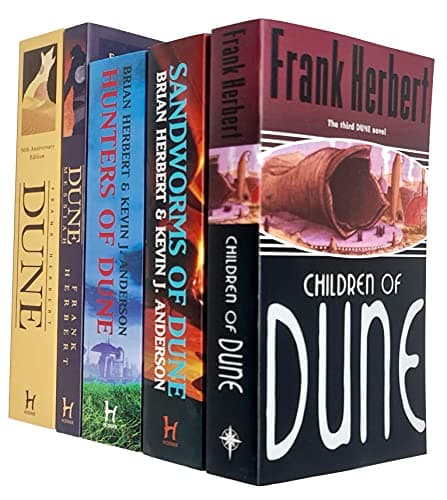
The universe of the Imperium is built upon a foundation of absolute scarcity and rigid feudal hierarchy. At the center of this galactic power struggle is the planet Arrakis, a desolate wasteland of sand and heat known as Dune. It is the only source of the "Spice Melange," a substance that extends human life, grants limited prescience, and is the essential fuel for interstellar travel. Without the spice, the machinery of the empire would collapse, making the control of this single, hostile world the ultimate prize for any Great House.
When House Atreides is ordered by the Padishah Emperor to leave their lush homeworld of Caladan and assume stewardship of Arrakis, they do so knowing they are walking into a political deathtrap. The previous stewards, the ruthless House Harkonnen, have spent decades harvesting the spice and brutalizing the indigenous Fremen population. Now, the young Paul Atreides finds himself at the nexus of a conspiracy that spans the stars, forced to navigate the lethal ecology of the deep desert and the even more dangerous intricacies of imperial court politics.
The world-building of the Dune series is centered on the concept of "ecopolitics." Arrakis is a character in its own right, defined by its extreme lack of water and the presence of colossal sandworms that dominate the landscape. To survive, the inhabitants utilize "stillsuits," sophisticated technology designed to reclaim every drop of moisture from the human body. This setting creates a unique atmosphere where biological survival is inextricably linked to economic value; the very planet that provides the universe's most precious resource is also the one most capable of destroying those who attempt to claim it.
The initial character development focuses on the tension between destiny and choice. Paul Atreides is not merely a protagonist; he is the product of centuries of selective breeding and intense conditioning. As he begins to experience visions of possible futures, his arc revolves around the terrifying realization that his actions could trigger a religious war across the stars. The relationship between Paul and his mother, Jessica, serves as a focal point for the series’ exploration of how personal affection often clashes with grand, multi-generational political agendas.
While the series initially appears to follow the traditional "Chosen One" trope, it serves more as a subversion and a warning. Instead of a standard tale of good versus evil, the narrative explores the mechanics of power and the dangers of placing absolute faith in charismatic leaders. By utilizing the framework of a space opera, the series examines how religion can be manufactured as a tool for control and how the environment itself dictates the rise and fall of civilizations. It eschews simple moral victories in favor of complex dilemmas involving survival, genetic legacy, and the high cost of maintaining an empire.
Add to your library to track progress and write reviews
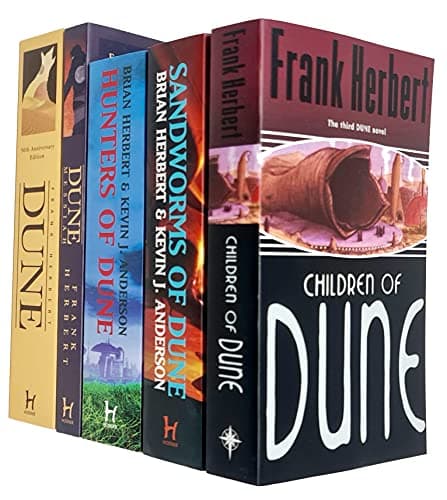
Find Frank Herbert Dune Series 6 Books Collection Set By Frank Herbert Frank Herbert in PDF, EPUB, ebook, audiobook, print, or library editions.

22 books in catalog
The desert planet of Arrakis, with its giant sandworms, complex ecology, and political factions vying for control over the spice melange, remains one of the most thoroughly detailed world-building achievements in speculative fiction. American author Frank Herbert introduced this setting in his seminal 1965 novel Dune, creating an expansive universe that transformed epic science fiction by weaving together ecology, philosophy, religion, and political intrigue.
Born in Tacoma, Washington in 1920, Herbert spent his youth in the Pacific Northwest and worked on local newspapers as a teenager. He attended the University of Washington in Seattle and worked a wide variety of jobs throughout his early adult life, including time as a TV cameraman, radio commentator, oyster diver, jungle survival instructor, lay analyst, and creative writing teacher. He also worked as a reporter and later editor of a number of West Coast newspapers before becoming a full-time writer. Herbert began publishing science fiction in 1952 with his short story 'Looking for Something?' in Startling Stories. His research into the Oregon Dunes during the 1950s served as a primary catalyst for his ecological themes. He achieved widespread fame more than ten years later following the serial publication in Analog of 'Dune World' and 'The Prophet of Dune', which were amalgamated into the novel Dune in 1965.
Herbert's fiction is distinguished by its intricate world-building, ecological awareness, and deep examination of human potential and institutional vulnerability. Rather than relying solely on technological advancement, his narrative focus often centers on human adaptability, psychological conditioning, religious mythmaking, and the perilous consequences of messianic leadership. He frequently explored how harsh environments shape cultures, social structures, and survival strategies, a focus prominently displayed in novels such as Destination: Void and The Jesus Incident alongside his desert sagas.
Dune