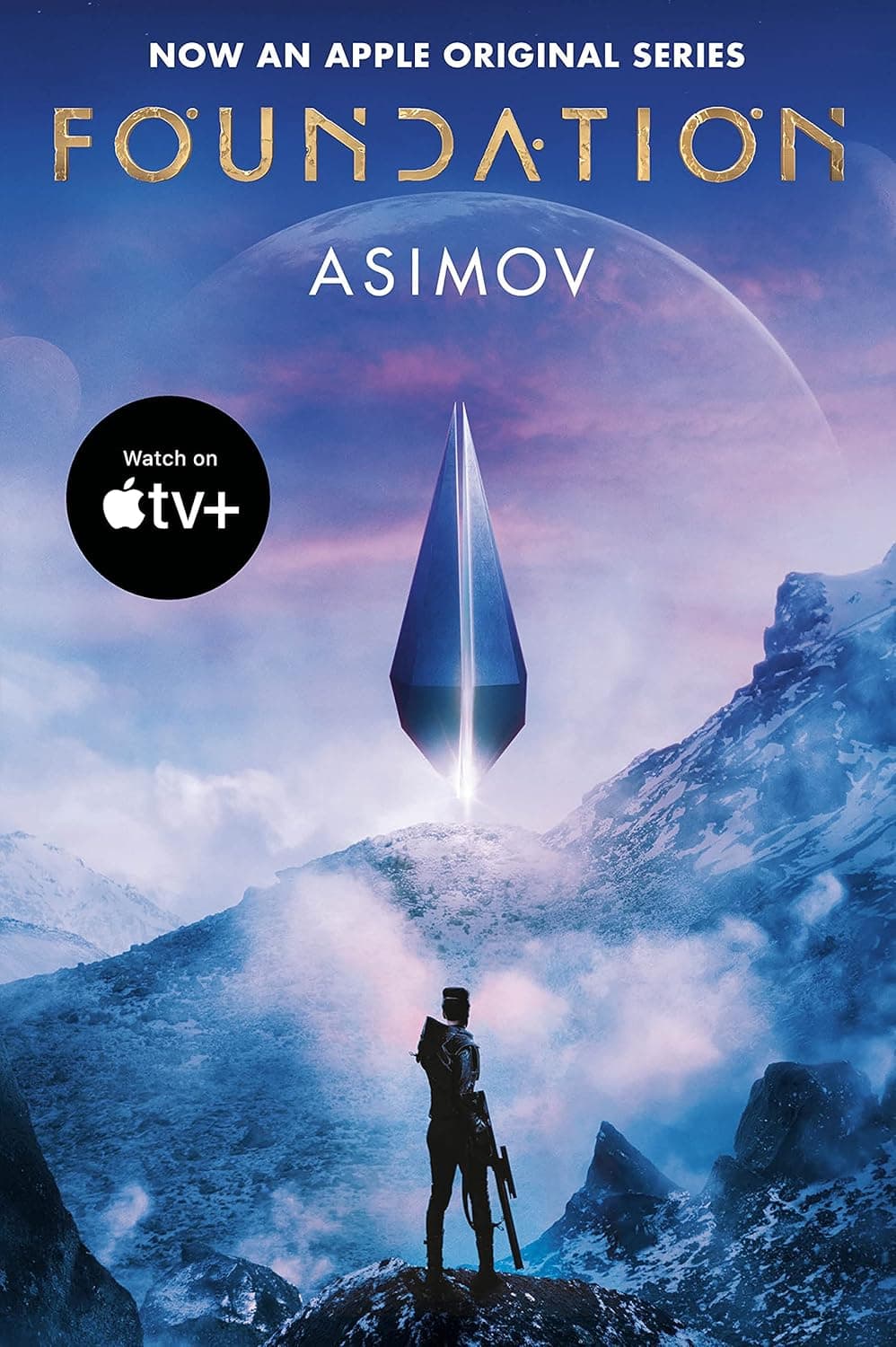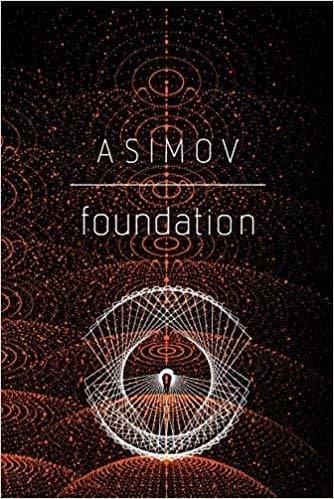
One of the great masterworks of science fiction, the Foundation novels of Isaac Asimov are unsurpassed for their unique blend of nonstop action, daring ideas, and extensive world-building.
The story of our future begins with the history of Foundation and its greatest psychohistorian: Hari Seldon. For twelve thousand years the Galactic Empire has ruled supreme. Now it is dying. Only Hari Seldon, creator of the revolutionary science of psychohistory, can see into the future--a dark age of ignorance, barbarism, and warfare that will last thirty thousand years. To preserve knowledge and save mankind, Seldon gathers the best minds in the Empire--both scientists and scholars--and brings them to a bleak planet at the edge of the Galaxy to serve as a beacon of hope for future generations. He calls his sanctuary the Foundation.
But soon the fledgling Foundation finds itself at the mercy of corrupt warlords rising in the wake of the receding Empire. And mankind's last best hope is faced with an agonizing choice: submit to the barbarians and live as slaves--or take a stand for freedom and risk total destruction.
Add to your library to track progress and write reviews
Find Foundation Isaac Asimov in PDF, EPUB, ebook, audiobook, print, or library editions.

16 books in catalog
The Three Laws of Robotics and the vast interstellar narrative of the Foundation saga redefined mid-twentieth-century speculative fiction. Isaac Asimov (1920–1992) established an enduring legacy in hard science fiction and popular science exposition through hundreds of books that made complex scientific concepts accessible to general readers.
Born in Petrovichi, Russia, in 1920, Asimov immigrated with his family to the United States in 1923 and grew up in Brooklyn, New York, where he discovered science fiction through magazines sold in his father's candy store. He published his first short story, 'Marooned off Vesta,' in 1939 while contributing to science fiction pulp periodicals. During World War II, he worked at the Naval Aviation Experimental Station in Philadelphia alongside fellow authors Robert A. Heinlein and L. Sprague de Camp. Asimov earned his Ph.D. in biochemistry from Columbia University and went on to teach at Boston University School of Medicine. His debut novel, Pebble in the Sky, appeared in 1950, launching a prolific literary career that ultimately encompassed more than 500 written or edited books across science, history, literature, and religion before his death in 1992.
Renowned as one of the 'Big Three' science fiction writers of the twentieth century alongside Arthur C. Clarke and Robert A. Heinlein, Asimov pioneered rational, hard science fiction rooted in logical problem-solving and sociological systems. His fiction frequently explored artificial intelligence, robotics, and the mathematical prediction of future history through the discipline of psychohistory. In classic titles such as I, Robot and The Caves of Steel, he introduced structured ethical frameworks and science fiction mystery hybrids, while standalone works like The Gods Themselves examined parallel universes and human intellect. Beyond fiction, his clear, engaging prose style extended to non-fiction, spanning nine out of ten major categories in the Dewey Decimal Classification system.
Foundation (Publication Order)