SSansFiction
The libraryCollectionsJournalStatsFor authors
Sign inJoin now
Sansfiction,

A digital library for books. Made by readers, for readers.

v 2.0 · 2026
The library
  • Discover
  • Collections
  • Book tracker
  • Journal
  • Stats
For authors
  • SF Links
  • Analytics
  • How it works
  • FAQ
Elsewhere
  • X / @sansfiction
  • Privacy
  • Terms
  • Contact
© 2026 SansFiction · Digital · GlobalA quiet room for your reading life.
The libraryCollectionsJournalStatsFor authors
Sign inJoin now →
Navigation
Library
Bookshelf
Journal
Discover
Collections
Tierlists
Stats
Profile
Author Page
Link Builder
Account
Sign in
S
G
BooksadulteFlowers for Algernon
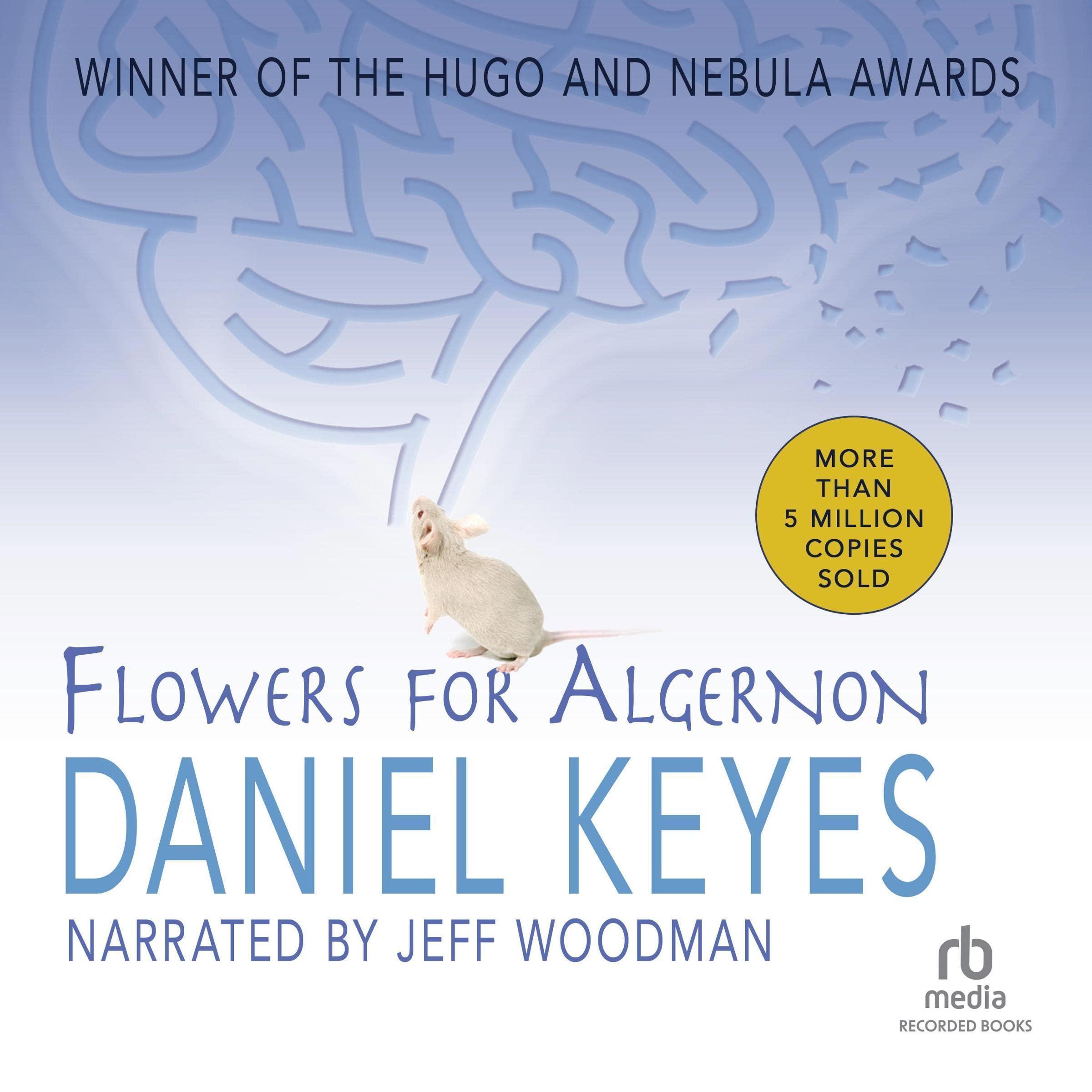
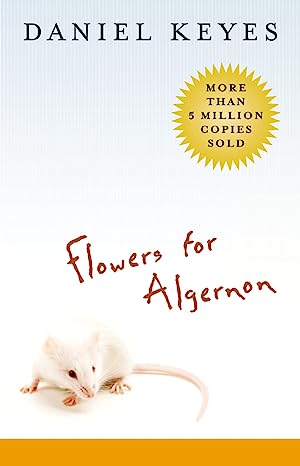
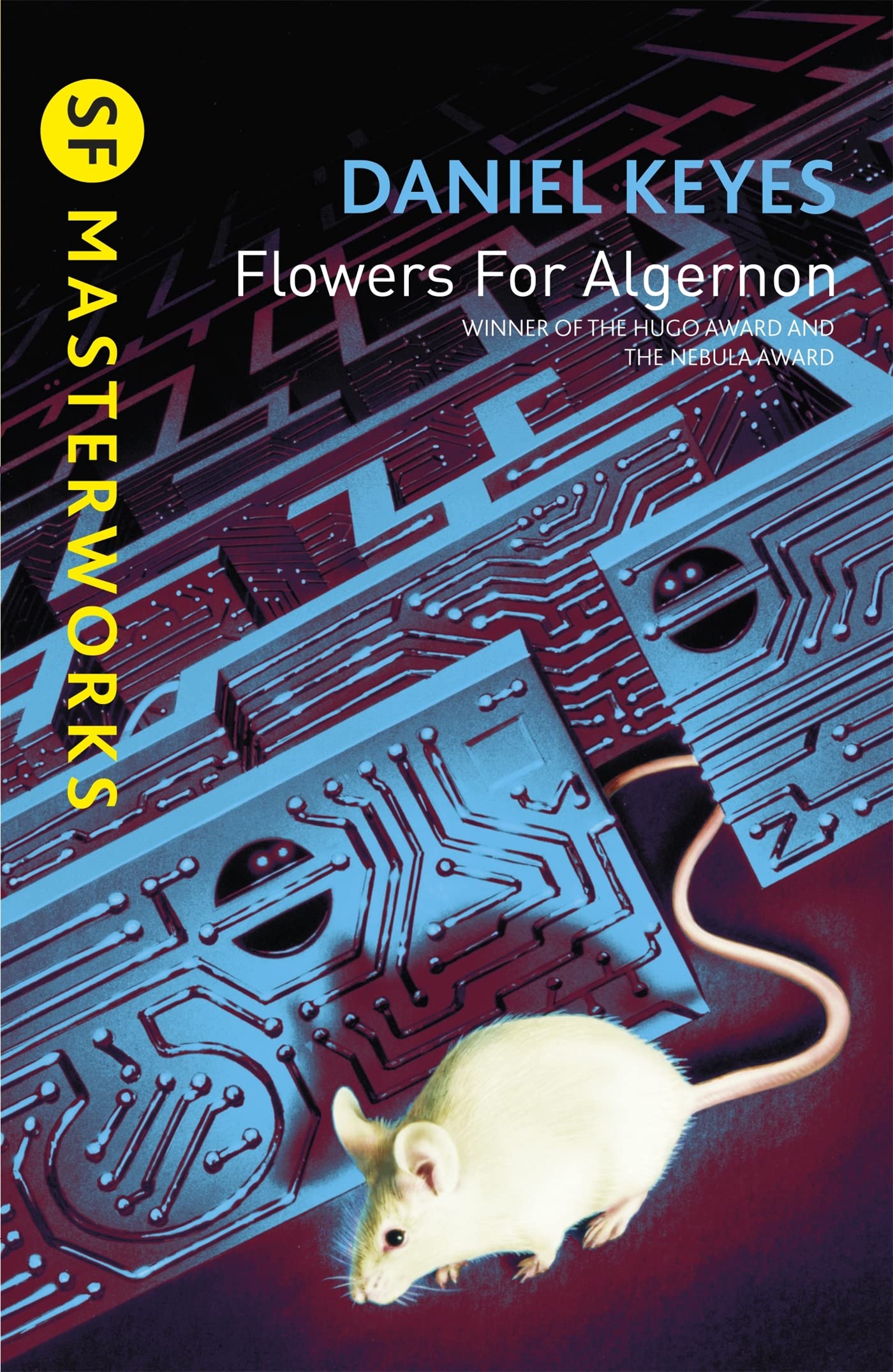
Cover of Flowers for Algernon by Daniel Keyes

Flowers for Algernon,

by Daniel Keyes

Ask AI
Rating4.3/ 5
Ratings1,586
Pages311
Reading Hours6h
Published2012
LanguageEnglish

§Synopsis

01

Flowers for Algernon is the beloved, classic story of a mentally disabled man whose experimental quest for intelligence mirrors that of Algernon, an extraordinary lab mouse. In poignant diary entries, Charlie tells how a brain operation increases his IQ and changes his life. As the experimental procedure takes effect, Charlie's intelligence expands until it surpasses that of the doctors who engineered his metamorphosis. The experiment seems to be a scientific breakthrough of paramount importance--until Algernon begins his sudden, unexpected deterioration. Will the same happen to Charlie?

§Our take

Most novels describe a mind changing. This one makes you watch it happen in the prose, sentence by sentence, as Charlie's spelling and syntax rise with his IQ, and the form becomes the book's most admired feature. The trade-off is that genius arrives without emotional maturity, and readers keep coming back to that gap between what Charlie can now understand and what he can't yet feel.

Know the two versions before you pick one. The 1959 novelette is tighter; the 1966 novel adds Charlie's childhood, an abusive mother and his sister, which Kirkus called a regrettable expansion while many readers value the extra emotional depth. Either way, Keyes refused every editor's push for a happier outcome, and that stubbornness is part of the book's identity. The last third is heavy. People cry at this book. And it earns every tear, which is rarer than it sounds.

§Themes

Intellect versus emotion
Charlie's intelligence arrives without emotional maturity, and the gap drives the book's sadness.
How the world treats the vulnerable
The story is as much about how others treat Charlie before the operation as after it.
Unproven science
Algernon the mouse stands in for the unknown: the operation worked on a mouse, and its long-term effects on people are anyone's guess.
Prose as character
The progress reports change with Charlie's mind, making the reading itself part of the story.

§How it was received

Kirkus admired the original idea and the emotionally moving ending but found expanding the story into a novel regrettable, blaming heavy Freudian psychology and Hollywood-style scenes in the middle. Readers split the same way: some prefer the tighter novelette, others the novel's added family history. This thing has legs: still in print, translated into 27 languages by 2004, and it gave Cliff Robertson an Oscar when he played Charlie in the 1968 film Charly.

§Read it if

  • You want science fiction that's approachable and quick, with no technical jargon
  • Formal experiments in narration appeal to you, where the writing itself changes
  • You don't mind a book that aims straight for the tear ducts

§Skip it if

  • Dated 1960s attitudes toward disability, gender and sexuality will sour the book for you. Readers flag all three.
  • Slow or padded stretches in the middle test your patience, especially in the novel.

§Before you start

Reading experience
Quick and approachable at about 311 pages, but the early pages are written in childlike spelling and the last third is emotionally punishing.
Content notes
Passages about Charlie's sexual feelings and confusion, the main reason the book has been challenged in schools; Childhood abuse and a resentful, abusive family, including his mother; Outdated terminology for intellectual disability and dated 1960s gender attitudes.

§Common questions

Should I read the short story or the novel?
Both exist under the same title. The 1959 novelette is tighter; the 1966 novel adds Charlie's childhood and family history. Kirkus preferred the short version; many readers value the novel's emotional depth.
Why has Flowers for Algernon been challenged in schools?
Mainly over passages about Charlie's sexual feelings and confusion. The ALA ranked it 43rd among the most-challenged books of 1990-1999, and some removals succeeded in Pennsylvania and Texas.
Is it sad?
Yes. Readers consistently call the ending heartbreaking, and Keyes refused editors' requests for a happier outcome.

§If you liked this

  • Babel-17 by Samuel R. Delany — The Delany novel that was up for the same prize the same year — read the competition.
  • The Minds of Billy Milligan by Daniel Keyes — Keyes's nonfiction account of a real mind in extremis, for readers who want his method applied to a real person.
  • Algernon, Charlie and I: A Writer's Journey by Daniel Keyes — Keyes's own 2000 account of how the story took shape over fourteen years.
Sources
  • Wikipedia
  • Kirkus Reviews (1 March 1966)
  • Goodreads
  • American Library Association
  • Mental Floss
  • Wikipedia (author article)
  • Hugo Awards (official site)

Track this book

Add to your library to track progress and write reviews
§Genres
adulte1classics1classique1fiction1jeune adulte1literature1psychologie1
§Content Warnings
§Moods
adventurous1challenging1dark1emotional1hopeful1informative1inspiring1
§Tags
#adapted to film1#bullying1#diverse characters1#loveable characters1#male author1

§About the Author

Daniel Keyes

1 books in catalog

Exploring the profound boundaries of human intelligence, psychological identity, and empathy, speculative fiction gained one of its most enduring classics with the publication of the award-winning narrative Flowers for Algernon. Daniel Keyes crafted this compelling story of Charlie Gordon, a man with an intellectual disability who undergoes an experimental surgical procedure to dramatically boost his IQ, alongside a laboratory mouse named Algernon who undergoes the same transformation.

Career & Background

Born on August 9, 1927, in Brooklyn, New York, Keyes served as a ship's purser in the U.S. Maritime Service at age seventeen before earning a bachelor's degree in psychology from Brooklyn College. He worked as an associate editor for Marvel Science Stories, entered fashion photography, and taught English in New York City public schools while pursuing graduate studies in literature. Keyes later enjoyed a long academic career, teaching at Wayne State University and serving as a professor of English at Ohio University from 1966 until 1999, where he was appointed professor emeritus. In 2000, the Science Fiction and Fantasy Writers of America recognized his lasting legacy by honoring him as Author Emeritus prior to his death on June 15, 2014.

Writing Style & Themes

Keyes's writing frequently examines the intricate inner workings of the human mind, psychological fragmentation, and the social consequences of cognitive shifts. He relied on epistolary narrative structures, intimate first-person journals, and detailed psychological research to convey complex mental states. In addition to speculative fiction, Keyes produced notable works of true crime and psychological nonfiction, exploring real-world cases of multiple personality disorder and criminal consciousness with empathetic narrative depth.

Major Works

  • Flowers for Algernon — Originally published as an award-winning novella in 1959 before expanding into a landmark 1966 novel, this narrative details the dramatic rise and tragic decline of Charlie Gordon's intellect following an experimental operation, selling millions of copies and inspiring the feature film Charly.
  • The Touch — Published in 1968, this psychological novel examines the personal tragedy and emotional fallout experienced by a couple exposed to industrial radioactive contamination.
  • The Fifth Sally — Released in 1980, this novel centers on a woman living with multiple distinct personalities who attempts to achieve mental integration through psychological therapy.
  • The Minds of Billy Milligan — A prominent 1981 nonfiction study investigating the complex legal and mental history of Billy Milligan, the first person in United States legal history acquitted of major crimes due to a diagnosis of dissociative identity disorder.
  • Algernon, Charlie and I: A Writer's Journey — Published in 1999, this memoir details Keyes's creative process and the personal experiences that inspired his signature masterpiece.

§Other Editions

Showing 2 of 116 editions
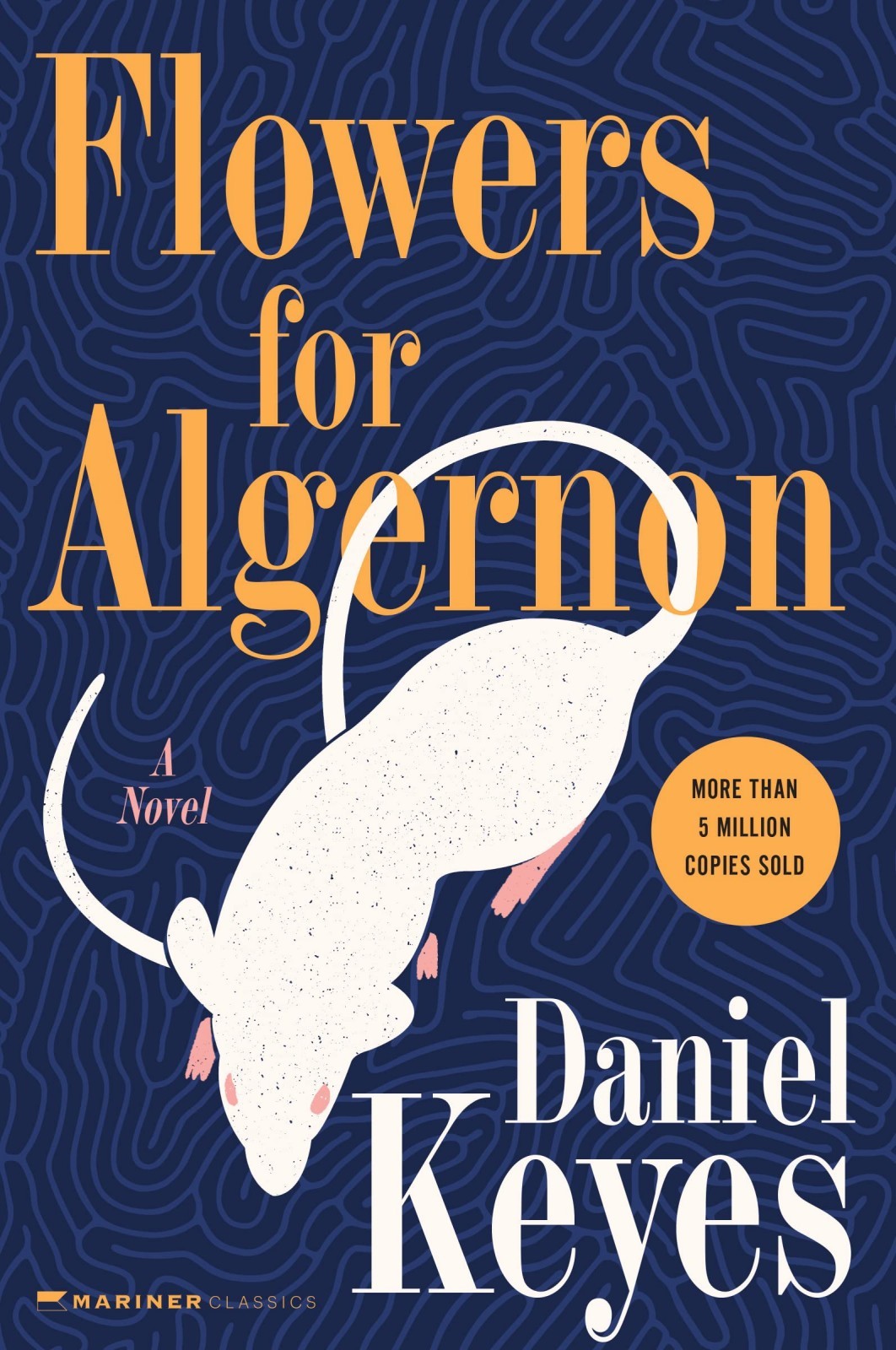
Cover of Flowers for Algernon

Flowers for Algernon

engebook
Houghton Mifflin Harcourt20079780547539638
Amazon
Cover of Flowers for Algernon

Flowers for Algernon

engAudiobookUnabridged
Recorded Books20099781440773433
Amazon
§Genres
adulte1classics1classique1fiction1jeune adulte1literature1psychologie1
§Content Warnings
§Moods
adventurous1challenging1dark1emotional1hopeful1informative1inspiring1
§Tags
#adapted to film1#bullying1#diverse characters1#loveable characters1#male author1

Metadata

ISBN-139780575088498
ISBN-100575088494
ASINB009ZG6YPU

Editions and availability

Find Flowers for Algernon Daniel Keyes in PDF, EPUB, ebook, audiobook, print, or library editions.

View on Amazon
Bookshop.orgGoogle Play BooksBarnes & NobleOpen Library

Featured In Lists

Book cover from this collectionBook cover from this collectionBook cover from this collectionBook cover from this collection
Book cover from this collection

NPRs Top 100 Science-Fiction and Fantasy Books of All Time

100 books
Book cover from this collectionBook cover from this collectionBook cover from this collectionBook cover from this collection
Book cover from this collection

Hugo Award Best Novel Nominees and Winners ( 1953 - present )

348 books
Book cover from this collectionBook cover from this collectionBook cover from this collectionBook cover from this collection
Book cover from this collection

Gilmore Girls Reading List 🍂

407 books
Book cover from this collectionBook cover from this collectionBook cover from this collectionBook cover from this collection
Book cover from this collection

Nebula Award for Best Novel (1965 to 2024)

61 books
Book cover from this collectionBook cover from this collectionBook cover from this collectionBook cover from this collection
Book cover from this collection

Rory Gilmore Reading Challenge

36 books
Book cover from this collectionBook cover from this collectionBook cover from this collectionBook cover from this collection
Book cover from this collection

Sf Masterworks

71 books
Book cover from this collectionBook cover from this collectionBook cover from this collectionBook cover from this collection
Book cover from this collection

NPR Top 100 Science Fiction Fantasy

68 books