SSansFiction
The libraryCollectionsJournalStatsFor authors
Sign inJoin now
Sansfiction,

A digital library for books. Made by readers, for readers.

v 2.0 · 2026
The library
  • Discover
  • Collections
  • Book tracker
  • Journal
  • Stats
For authors
  • SF Links
  • Analytics
  • How it works
  • FAQ
Elsewhere
  • X / @sansfiction
  • Privacy
  • Terms
  • Contact
© 2026 SansFiction · Digital · GlobalA quiet room for your reading life.
The libraryCollectionsJournalStatsFor authors
Sign inJoin now →
Navigation
Library
Bookshelf
Journal
Discover
Collections
Tierlists
Stats
Profile
Author Page
Link Builder
Account
Sign in
S
G
BooksadventureEnder's Game
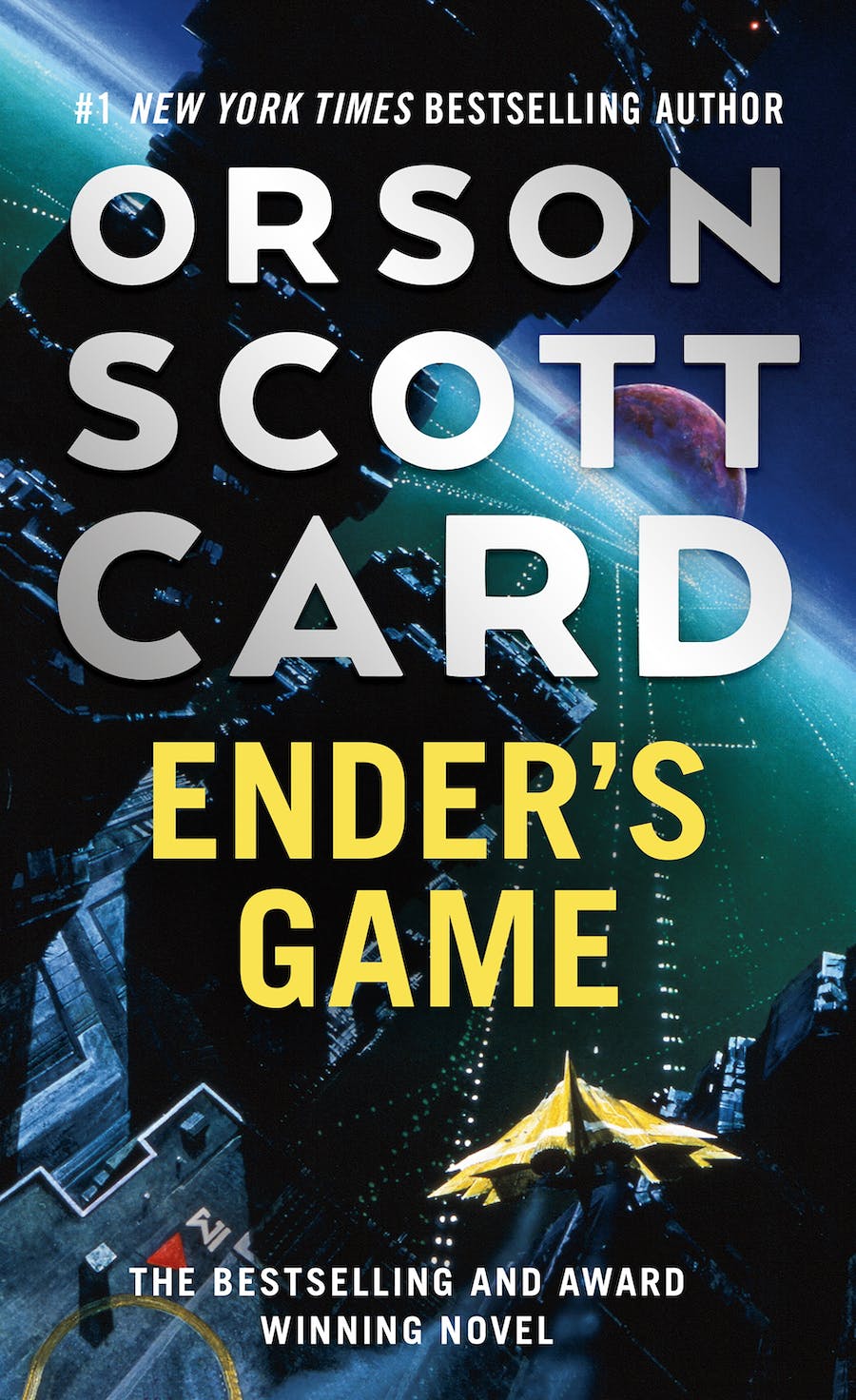
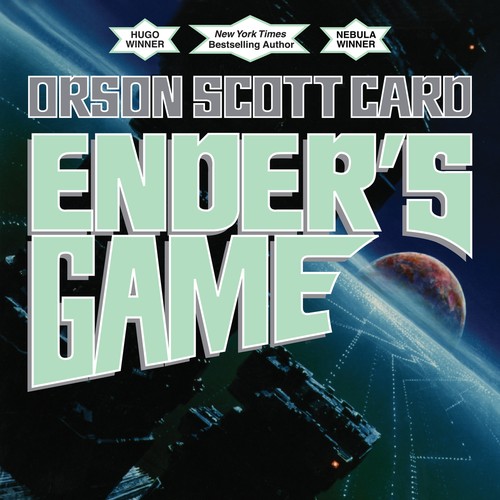
Cover of Ender's Game by Orson Scott Card
№ 1 · Ender's Saga

Ender's Game,

by Orson Scott Card

Ask AI
Rating4.3/ 5
Ratings3,056
Pages324
Reading Hours7h
Published2004
LanguageEnglish

§Synopsis

01

In order to develop a secure defense against a hostile alien race's next attack, government agencies breed child geniuses and train them as soldiers. A brilliant young boy, Andrew "Ender" Wiggin lives with his kind but distant parents, his sadistic brother Peter, and the person he loves more than anyone else, his sister Valentine. Peter and Valentine were candidates for the soldier-training program but didn't make the cut—young Ender is the Wiggin drafted to the orbiting Battle School for rigorous military training.

Ender's skills make him a leader in school and respected in the Battle Room, where children play at mock battles in zero gravity. Yet growing up in an artificial community of young soldiers Ender suffers greatly from isolation, rivalry from his peers, pressure from the adult teachers, and an unsettling fear of the alien invaders. His psychological battles include loneliness, fear that he is becoming like the cruel brother he remembers, and fanning the flames of devotion to his beloved sister.

Is Ender the general Earth needs? But Ender is not the only result of the genetic experiments. The war with the Buggers has been raging for a hundred years, and the quest for the perfect general has been underway for almost as long. Ender's two older siblings are every bit as unusual as he is, but in very different ways. Between the three of them lie the abilities to remake a world. If, that is, the world survives.

§Our take

Adults isolate a child on purpose, and critics have argued for decades about what he does under the pressure. Some say the book lets its hero commit violence while staying morally clean; scholar Mike Ryder reads it instead as a condemnation of the manipulation itself. Kirkus, reviewing it at the time, found the training passages skillful but the adult subplots distracting and the hero thin. Readers tend to describe a protagonist with real psychological depth and plain, fast prose, though some find the zero-gravity battle sequences hard to picture. The moral stance stays contested, and that argument is a big part of why the book is still read.

§Themes

Kids as instruments
The military breeds and manages gifted children, and keeps Ender isolated on purpose.
Who's responsible
A live scholarly debate: does the book excuse a manipulated child's violence or condemn the manipulators?
Pseudonymous influence
Ender's siblings sway world opinion with political essays under fake names. Some readers find that prescient, others implausible.
Alone, with rivals
Loneliness, peer rivalry and adult pressure inside a program built to keep him by himself.

§How it was received

It won the 1985 Nebula for Best Novel and the 1986 Hugo, over a field that included Greg Bear's Blood Music, David Brin's The Postman and Niven and Pournelle's Footfall. Kirkus praised the training scenes but called the hero one-dimensional; readers, by contrast, credit Ender with psychological depth. Critics have kept arguing over the book's moral stance.

§Read it if

  • You like stories where a gifted kid is treated as a full person facing adult dilemmas
  • You want fast, plain prose built around tactical training sequences
  • You like books whose moral stance critics actively dispute

§Skip it if

  • Repeated battle-room set pieces frustrate you. Some readers find them hard to picture or repetitive.
  • Slurs, gender stereotypes and child-on-child violence will bother you. Common Sense Media flags them seriously.

§Before you start

Reading experience
fast pace. easy to read. Straightforward prose that moves quickly through the training sequences, though some readers struggle to picture the zero-gravity battles. Common Sense Media's reviewer found it engaging even for reluctant readers.
Reading order
The first published book of the Ender series, followed by Speaker for the Dead, Xenocide and Children of the Mind. A parallel Shadow saga starts with Ender's Shadow, and prequels began appearing in 2012. There's no single preferred order, except that Xenocide should be read right before Children of the Mind.
Content notes
Frequent brutal violence, including child-on-child fights with deaths and some graphic imagery; Strong profanity plus racist and antisemitic slurs; Common Sense Media notes some later editions edit them; Non-sexual nudity among children in the dorms, which some readers find excessive; Central themes of adult manipulation, bullying and isolation of children.

§Common questions

What age is it right for?
Common Sense Media recommends 12 and up, with parent discussion advisable because of violence, language and stereotypes.
Is it part of a series?
Yes. It's the first published book of the Ender series, followed by Speaker for the Dead, Xenocide and Children of the Mind, with a parallel Shadow saga and Formic Wars prequels.
Are the battle scenes hard to follow?
Some readers find the zero-gravity battle-room sequences difficult to visualize or repetitive, while others count the training passages among the book's strengths.

§If you liked this

  • Ender's Shadow by Orson Scott Card — Retells the same events from another character's side and opens the parallel Shadow saga.
  • Speaker for the Dead by Orson Scott Card — The direct sequel. It also won the Hugo and Nebula, shifting from military action to moral questions.
Sources
  • nebulas.sfwa.org
  • thehugoawards.org
  • kirkusreviews.com
  • en.wikipedia.org
  • commonsensemedia.org
  • en.wikipedia.org
  • sf-encyclopedia.com
  • goodreads.com

Track this book

Add to your library to track progress and write reviews

§Genres
adventure1aliens1dystopian1fantasy1fiction1murder1science fiction1
§Moods
medium-paced2adventurous1emotional1hopeful1reflective1
§Tags
#loveable characters2#diverse characters1#not diverse characters1#plot driven1#sci-fi1#strong character development1

§About the Author

Orson Scott Card
Orson Scott Card

10 books in catalog

Science fiction literature was profoundly shaped by the publication of landmark speculative novels exploring military strategy, moral responsibility, and empathy across alien species. American novelist, critic, public speaker, essayist, and columnist Orson Scott Card achieved widespread acclaim with his novel Ender's Game in 1985 and its sequel Speaker for the Dead in 1986. Both books won the Hugo and Nebula Awards, making Card the only author to win both of science fiction's top U.S. prizes in consecutive years.

Beyond the main narrative sequence of The Ender Quintet and parallel storylines like Ender's Shadow, Card's extensive bibliography spans science fiction, frontier fantasy, biblical historical fiction, contemporary fantasy, and stage plays.

Career & Background

Born in Richland, Washington, in 1951, Card grew up in Utah and California. While attending Brigham Young University, his original plays were performed on stage, starting a long period of theatrical work that included dozens of plays and musical comedies produced throughout the 1960s and 1970s. After serving as an LDS Church missionary in Brazil, where he directed a community theater for two summers, Card made his fiction debut in 1977 with the short story 'Gert Fram' and the original novelet version of 'Ender's Game' in Analog magazine. He published 27 short stories between 1978 and 1979, won the John W. Campbell Award for Best New Writer in 1978, and completed a master's degree in English at the University of Utah in 1981.

Writing Style & Themes

Card's writing often focuses on exceptionally intelligent, emotionally burdened young protagonists who must navigate high-stakes ethical dilemmas, military training, and societal demands. His speculative fiction emphasizes empathy, redemption, and the complexities of human and alien interaction, combining tactical precision with character-driven reflection. In addition to space opera, he developed American frontier fantasy in The Tales of Alvin Maker series—including Seventh Son, Red Prophet, and Prentice Alvin—as well as contemporary fantasy novels such as Lost Boys and Enchantment.

Major Works

  • Ender's Game — The 1985 Hugo and Nebula Award-winning science fiction novel detailing child prodigy Ender Wiggin's preparation at Battle School to defend humanity against an alien force.
  • Speaker for the Dead — The 1986 Hugo and Nebula Award-winning sequel in which an older Ender travels to Lusitania to investigate a newly discovered sentient species and advocate for understanding.
  • Xenocide — A prominent entry in The Ender Quintet exploring complex philosophical, biological, and political tensions on Lusitania.
  • Ender's Shadow — A parallel novel retelling the events of Battle School through the perspective of the brilliant street orphan Bean.
  • Seventh Son — The first novel in The Tales of Alvin Maker series, establishing an alternate 19th-century American frontier filled with folk magic.
  • Red Prophet — The second book in The Tales of Alvin Maker series, deepening the alternate historical fantasy and Alvin's mystical calling.
  • Prentice Alvin — The third installment in The Tales of Alvin Maker sequence, following Alvin's journey to master his abilities as a Maker.

§Featured Series

Ender's Saga

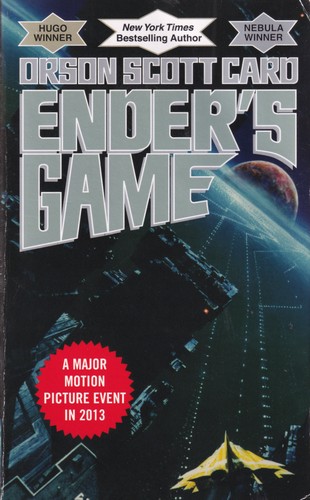
Cover of Ender's Game by Orson Scott Card

Ender's Game

Orson Scott Card, 1985
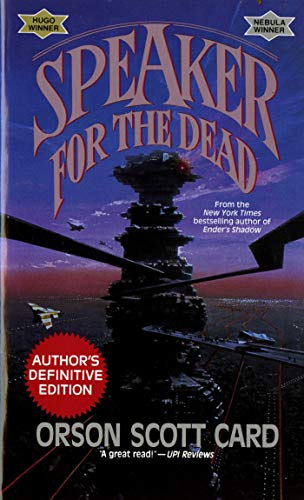
Cover of Speaker for the Dead by Orson Scott Card

Speaker for the Dead

Orson Scott Card, 1986
Cover of Xenocide by Orson Scott Card

Xenocide

Orson Scott Card, 1991
Cover of The Ender Quintet by Orson Scott Card

The Ender Quintet

Orson Scott Card, 2013

§Also part of

The Enderverse

§Other Editions

Showing 2 of 141 editions
Cover of Ender's Game

Ender's Game

engKindleRevised, Author's Definitive
TOR20109781429963930
Amazon
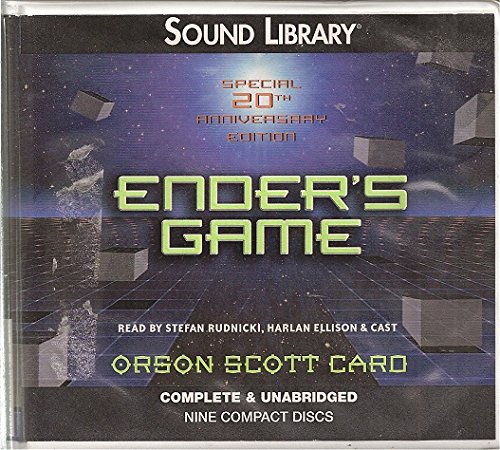
Cover of Ender's Game

Ender's Game

engAudio CDUnabridged
Sound Library19859780792733591
Amazon
§Genres
adventure1aliens1dystopian1fantasy1fiction1murder1science fiction1
§Moods
medium-paced2adventurous1emotional1hopeful1reflective1
§Tags
#loveable characters2#diverse characters1#not diverse characters1#plot driven1#sci-fi1#strong character development1

Metadata

ISBN-139781593974756
ISBN-101593974752
ASIN1593974752

Editions and availability

Find Ender's Game Orson Scott Card in PDF, EPUB, ebook, audiobook, print, or library editions.

View on Amazon
Bookshop.orgGoogle Play BooksBarnes & NobleOpen Library

Featured In Lists

Book cover from this collectionBook cover from this collectionBook cover from this collectionBook cover from this collection
Book cover from this collection

NPRs Top 100 Science-Fiction and Fantasy Books of All Time

100 books
Book cover from this collectionBook cover from this collectionBook cover from this collectionBook cover from this collection
Book cover from this collection

Hugo Award for Best Novel (1953 to 2025)

75 books
Book cover from this collectionBook cover from this collectionBook cover from this collectionBook cover from this collection
Book cover from this collection

Books everyone should read

23 books
Book cover from this collectionBook cover from this collectionBook cover from this collectionBook cover from this collection
Book cover from this collection

Nebula Award for Best Novel (1965 to 2024)

61 books
Book cover from this collectionBook cover from this collectionBook cover from this collectionBook cover from this collection
Book cover from this collection

NPR Top 100 Science Fiction Fantasy

68 books