BooksDune Series (5 book collection)
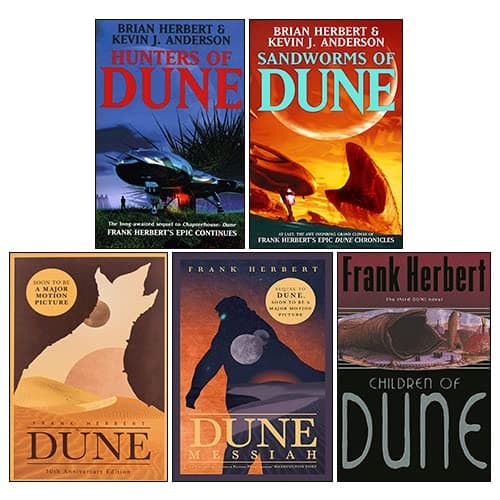
№ 1 · Dune
Dune Series (5 book collection),
by Frank Herbert, Dune By Frank Herbert, Children of Dune By Frank Herbert
by Frank Herbert, Dune By Frank Herbert, Children of Dune By Frank Herbert
by Frank Herbert, Dune By Frank Herbert, Children of Dune By Frank Herbert
In the far future of Frank Herbert’s sprawling saga, humanity has spread across the stars, yet remains bound by a rigid feudal system of Great Houses, ancient religious orders, and a total reliance on a single substance: the spice melange. Found only on the inhospitable desert planet of Arrakis, the spice grants extended life and the prescient vision necessary for interstellar travel. When House Atreides is commanded by the Padishah Emperor to seize control of this valuable world from their sworn enemies, the Harkonnens, they enter a labyrinth of political treachery where every step on the sand is a gamble with galactic stability.
At the center of this shift is young Paul Atreides, a scion of nobility who finds himself caught between the rigid expectations of his ducal heritage and the mysterious, ancient plans of his mother’s sisterhood, the Bene Gesserit. As the Atreides family attempts to secure their footing on a world that actively rejects human life, they must navigate a landscape of giant sandworms, hidden tribal cultures, and a looming messianic prophecy. The series follows the consequences of this move across generations, examining how the control of a single resource can reshape the biological and psychological destiny of the human race.
The world-building of the Dune series is anchored in the concept of "techno-feudalism" and ecological realism. Following an ancient crusade against thinking machines, humanity has developed its own mental capacities to replace computers, resulting in specialized classes like the Mentats (human computers) and the Spacing Guild navigators. Arrakis itself—known as Dune—is a character in its own right; its extreme water scarcity dictates the culture, religion, and technology of its inhabitants. Herbert meticulously details the survival gear, the biology of the spice-producing sandworms, and the socio-economic ties that bind the survival of the Empire to the preservation of a single, hostile ecosystem.
The protagonist’s initial arc is defined by the tension between free will and the weight of inherited destiny. Paul Atreides is not merely a young man coming into power; he is the product of a centuries-long genetic breeding program designed to produce a mind capable of bridging space and time. His relationship with his mother, Jessica, is a complex mix of mentorship and mutual caution, as they both realize his abilities may exceed the control of the organizations that created him. The narrative focuses on Paul’s struggle to find a path through his visions that does not lead to universal chaos, highlighting the psychological toll of seeing the potential consequences of every choice before it is made.
The series is famous for utilizing and then subverting the "Chosen One" trope. While the first book sets up a familiar narrative of a displaced noble reclaiming his right, the broader collection serves as a cautionary tale about the dangers of charismatic leadership and the canonization of individuals. Herbert moves away from traditional science fiction tropes of "good versus evil," instead focusing on the friction between institutional survival and individual agency. By blending religious mysticism with hard political science, the books examine how myths are manufactured and how heroes can become the most dangerous figures in history.
In the far future of Frank Herbert’s sprawling saga, humanity has spread across the stars, yet remains bound by a rigid feudal system of Great Houses, ancient religious orders, and a total reliance on a single substance: the spice melange. Found only on the inhospitable desert planet of Arrakis, the spice grants extended life and the prescient vision necessary for interstellar travel. When House Atreides is commanded by the Padishah Emperor to seize control of this valuable world from their sworn enemies, the Harkonnens, they enter a labyrinth of political treachery where every step on the sand is a gamble with galactic stability.
At the center of this shift is young Paul Atreides, a scion of nobility who finds himself caught between the rigid expectations of his ducal heritage and the mysterious, ancient plans of his mother’s sisterhood, the Bene Gesserit. As the Atreides family attempts to secure their footing on a world that actively rejects human life, they must navigate a landscape of giant sandworms, hidden tribal cultures, and a looming messianic prophecy. The series follows the consequences of this move across generations, examining how the control of a single resource can reshape the biological and psychological destiny of the human race.
The world-building of the Dune series is anchored in the concept of "techno-feudalism" and ecological realism. Following an ancient crusade against thinking machines, humanity has developed its own mental capacities to replace computers, resulting in specialized classes like the Mentats (human computers) and the Spacing Guild navigators. Arrakis itself—known as Dune—is a character in its own right; its extreme water scarcity dictates the culture, religion, and technology of its inhabitants. Herbert meticulously details the survival gear, the biology of the spice-producing sandworms, and the socio-economic ties that bind the survival of the Empire to the preservation of a single, hostile ecosystem.
The protagonist’s initial arc is defined by the tension between free will and the weight of inherited destiny. Paul Atreides is not merely a young man coming into power; he is the product of a centuries-long genetic breeding program designed to produce a mind capable of bridging space and time. His relationship with his mother, Jessica, is a complex mix of mentorship and mutual caution, as they both realize his abilities may exceed the control of the organizations that created him. The narrative focuses on Paul’s struggle to find a path through his visions that does not lead to universal chaos, highlighting the psychological toll of seeing the potential consequences of every choice before it is made.
The series is famous for utilizing and then subverting the "Chosen One" trope. While the first book sets up a familiar narrative of a displaced noble reclaiming his right, the broader collection serves as a cautionary tale about the dangers of charismatic leadership and the canonization of individuals. Herbert moves away from traditional science fiction tropes of "good versus evil," instead focusing on the friction between institutional survival and individual agency. By blending religious mysticism with hard political science, the books examine how myths are manufactured and how heroes can become the most dangerous figures in history.
Add to your library to track progress and write reviews
Add to your library to track progress and write reviews
Find Dune Series (5 book collection) Frank Herbert in PDF, EPUB, ebook, audiobook, print, or library editions.
Find Dune Series (5 book collection) Frank Herbert in PDF, EPUB, ebook, audiobook, print, or library editions.
Dune


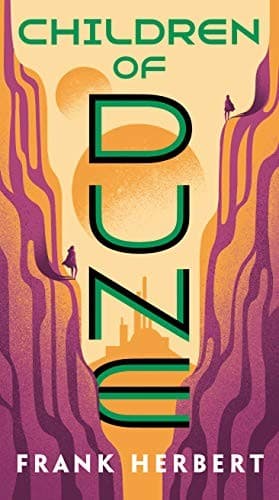
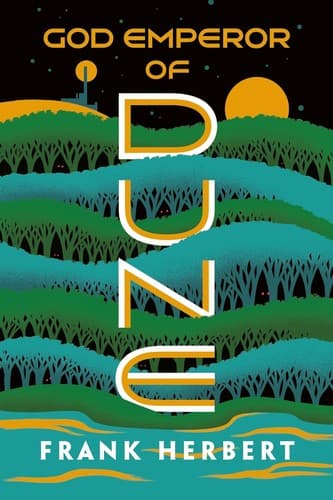
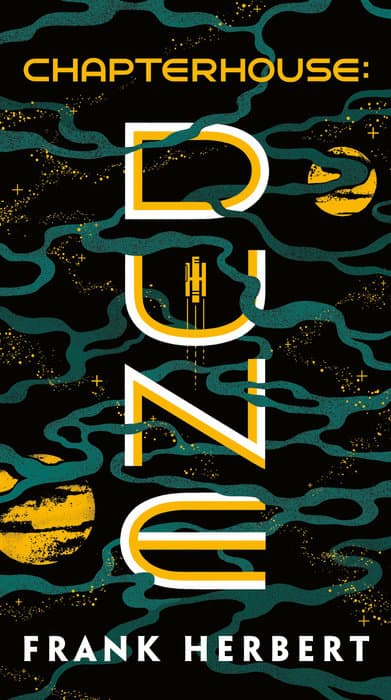
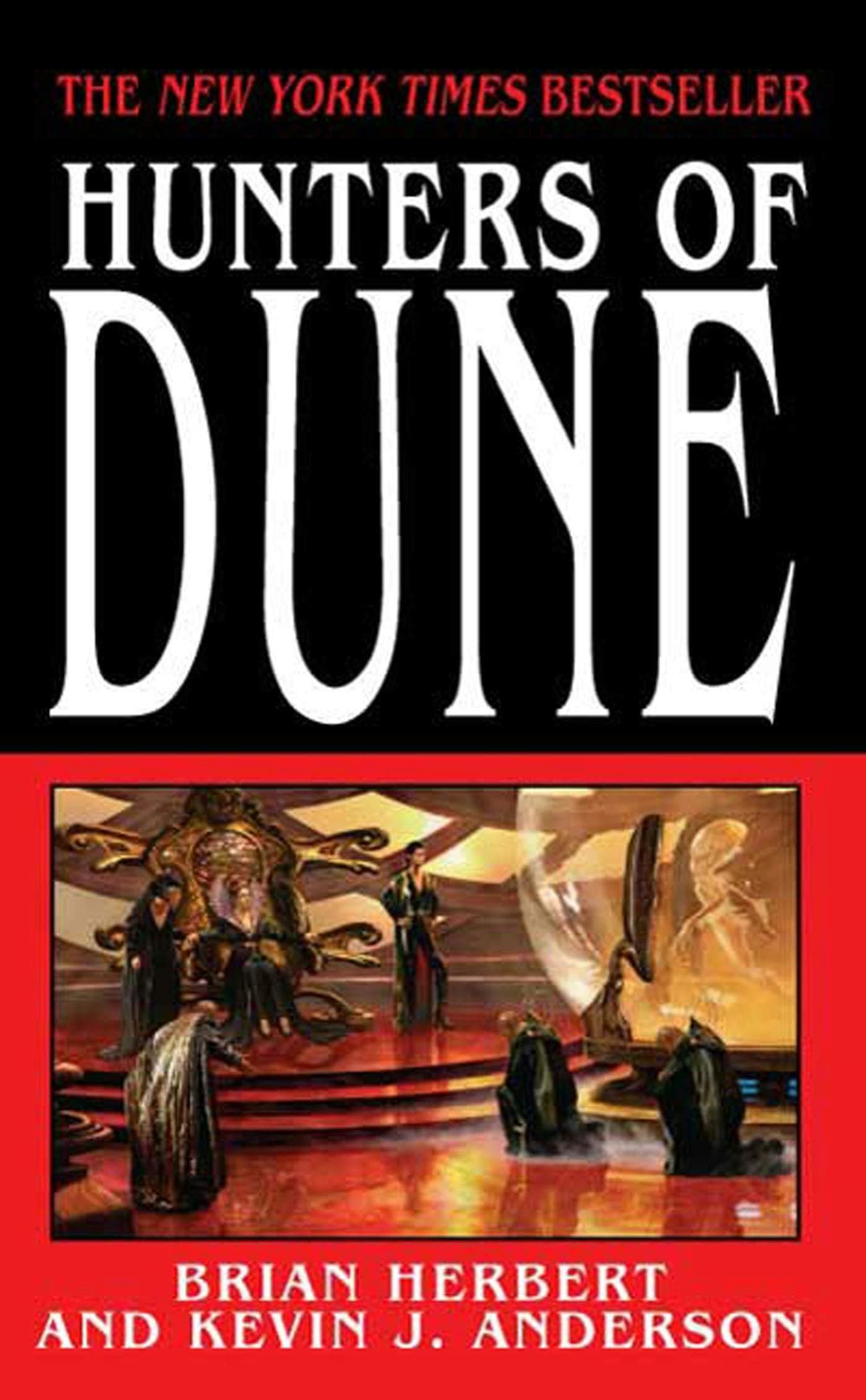
Dune

22 books in catalog
The desert planet of Arrakis, with its giant sandworms, complex ecology, and political factions vying for control over the spice melange, remains one of the most thoroughly detailed world-building achievements in speculative fiction. American author Frank Herbert introduced this setting in his seminal 1965 novel Dune, creating an expansive universe that transformed epic science fiction by weaving together ecology, philosophy, religion, and political intrigue.
Born in Tacoma, Washington in 1920, Herbert spent his youth in the Pacific Northwest and worked on local newspapers as a teenager. He attended the University of Washington in Seattle and worked a wide variety of jobs throughout his early adult life, including time as a TV cameraman, radio commentator, oyster diver, jungle survival instructor, lay analyst, and creative writing teacher. He also worked as a reporter and later editor of a number of West Coast newspapers before becoming a full-time writer. Herbert began publishing science fiction in 1952 with his short story 'Looking for Something?' in Startling Stories. His research into the Oregon Dunes during the 1950s served as a primary catalyst for his ecological themes. He achieved widespread fame more than ten years later following the serial publication in Analog of 'Dune World' and 'The Prophet of Dune', which were amalgamated into the novel Dune in 1965.
Herbert's fiction is distinguished by its intricate world-building, ecological awareness, and deep examination of human potential and institutional vulnerability. Rather than relying solely on technological advancement, his narrative focus often centers on human adaptability, psychological conditioning, religious mythmaking, and the perilous consequences of messianic leadership. He frequently explored how harsh environments shape cultures, social structures, and survival strategies, a focus prominently displayed in novels such as Destination: Void and The Jesus Incident alongside his desert sagas.
22 books in catalog
The desert planet of Arrakis, with its giant sandworms, complex ecology, and political factions vying for control over the spice melange, remains one of the most thoroughly detailed world-building achievements in speculative fiction. American author Frank Herbert introduced this setting in his seminal 1965 novel Dune, creating an expansive universe that transformed epic science fiction by weaving together ecology, philosophy, religion, and political intrigue.
Born in Tacoma, Washington in 1920, Herbert spent his youth in the Pacific Northwest and worked on local newspapers as a teenager. He attended the University of Washington in Seattle and worked a wide variety of jobs throughout his early adult life, including time as a TV cameraman, radio commentator, oyster diver, jungle survival instructor, lay analyst, and creative writing teacher. He also worked as a reporter and later editor of a number of West Coast newspapers before becoming a full-time writer. Herbert began publishing science fiction in 1952 with his short story 'Looking for Something?' in Startling Stories. His research into the Oregon Dunes during the 1950s served as a primary catalyst for his ecological themes. He achieved widespread fame more than ten years later following the serial publication in Analog of 'Dune World' and 'The Prophet of Dune', which were amalgamated into the novel Dune in 1965.
Herbert's fiction is distinguished by its intricate world-building, ecological awareness, and deep examination of human potential and institutional vulnerability. Rather than relying solely on technological advancement, his narrative focus often centers on human adaptability, psychological conditioning, religious mythmaking, and the perilous consequences of messianic leadership. He frequently explored how harsh environments shape cultures, social structures, and survival strategies, a focus prominently displayed in novels such as Destination: Void and The Jesus Incident alongside his desert sagas.