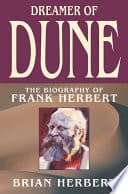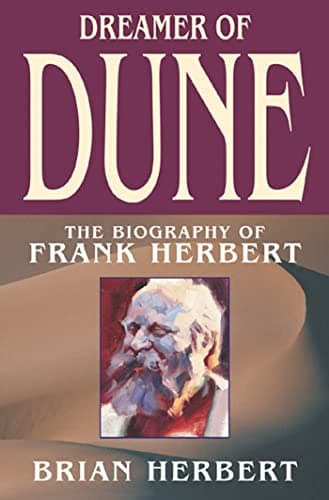
Everyone knows Frank Herbert's Dune. This amazing and complex epic, combining politics, religion, human evolution, and ecology, has captured the imagination of generations of readers. One of the most popular science fiction novels ever written, it has become a worldwide phenomenon, winning awards, selling millions of copies around the world. In the prophetic year of 1984, Dune was made into a motion picture directed by David Lynch, and it has recently been produced as a three-part miniseries on the Sci-Fi Channel. Though he is best remembered for Dune, Frank Herbert was the author of more than twenty books at the time of his tragic death in 1986, including such classic novels as The Green Brain, The Santaroga Barrier, The White Plague and Dosadi Experiment. Brian Herbert, Frank Herbert's eldest son, tells the provocative story of his father's extraordinary life in this honest and loving chronicle. He has also brought to light all the events in Herbert's life that would find their way into speculative fiction's greatest epic. From his early years in Tacoma, Washington, and his education at the University of Washington, Seattle, and in the Navy, through the years of trying his hand as a TV cameraman, radio commentator, reporter, and editor of several West Coast newspaper, to the difficult years of poverty while struggling to become a published writer, Herbert worked long and hard before finding success after the publication of Dune in 1965. Brian Herbert writes about these years with a truthful intensity that brings every facet of his father's brilliant, and sometimes troubled, genius to full light. Insightful and provocative, containing family photos never published anywhere, this absorbing biography offers Brian Herbert' unique personal perspective on one of the most enigmatic and creative talents of our time. Dreamer of Dune is a 2004 Hugo Award Nominee for Best Related Work.
Add to your library to track progress and write reviews
Find Dreamer of Dune Brian Herbert in PDF, EPUB, ebook, audiobook, print, or library editions.

29 books in catalog
The expansion of one of science fiction's most enduring epic sagas owes much of its modern continuation to the detailed world-building and archival additions to the Dune universe. Brian Herbert, born June 29, 1947, took on the responsibility of developing his father Frank Herbert's seminal literary universe while also establishing his own distinct voice in speculative fiction.
Brian Herbert began his literary career in the early 1980s, debuting in science fiction with the satirical novel Sidney's Comet in 1983, which inaugurated the Garbage Chronicles series, followed by The Garbage Chronicles in 1985. He went on to write standalone works such as Sudanna, Sudanna, Prisoners of Arionn, and The Race for God, as well as co-authoring Man of Two Worlds alongside his father in 1986. Following his father's passing, Herbert embarked on an exhaustive biographical and archival project, publishing Dreamer of Dune in 2003, a deeply personal memoir and chronicle that became a finalist for the Hugo Award.
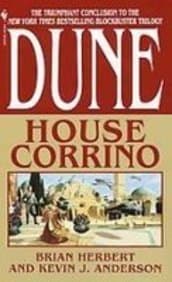
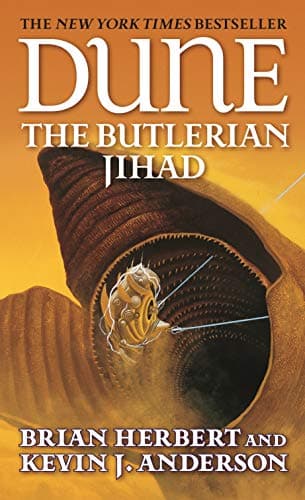
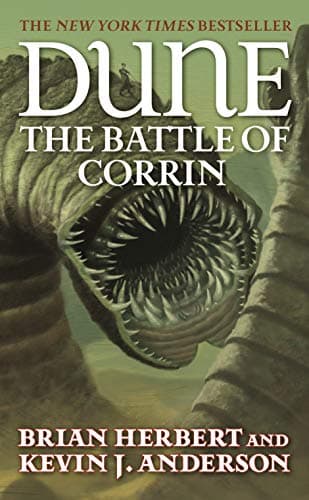
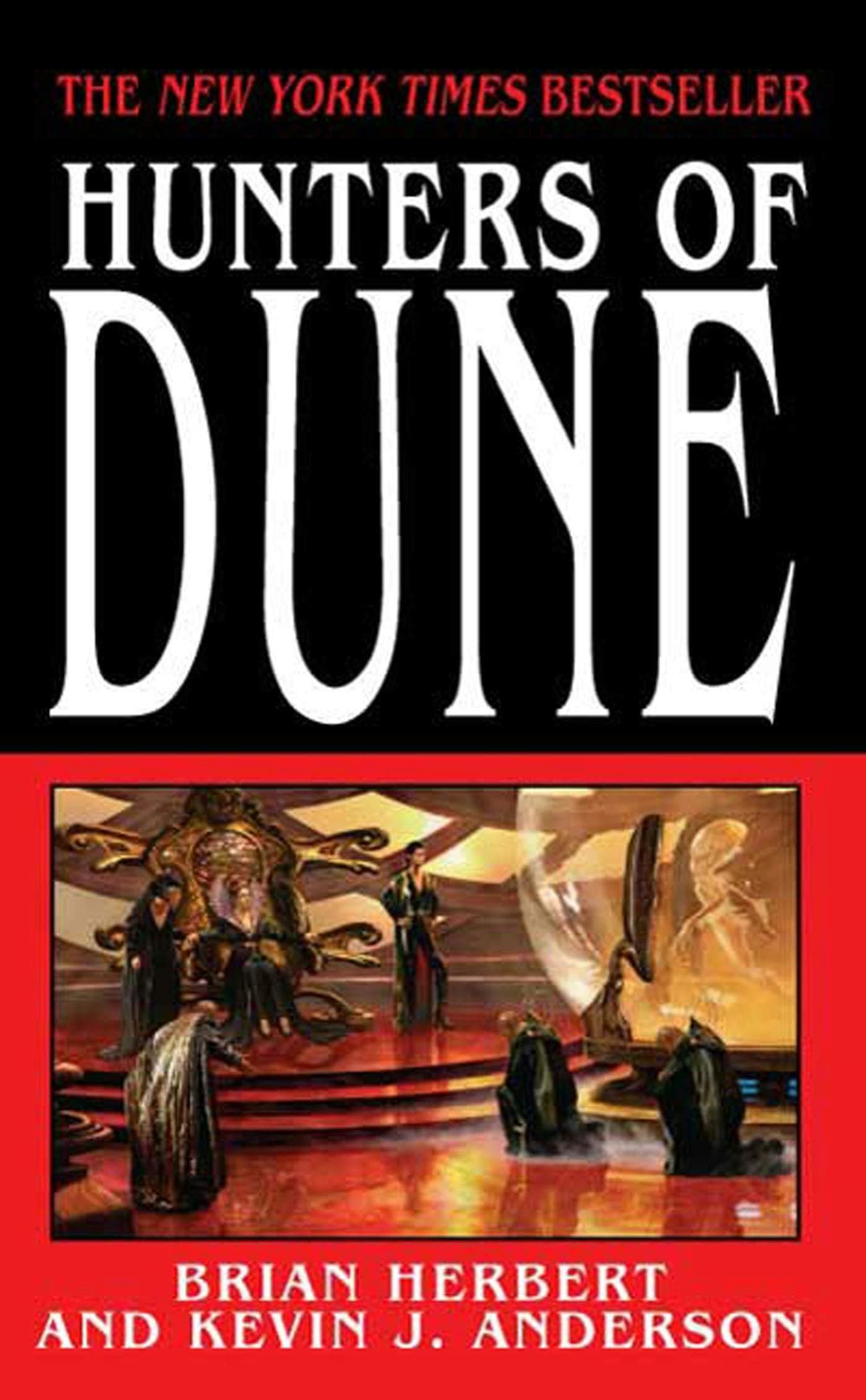
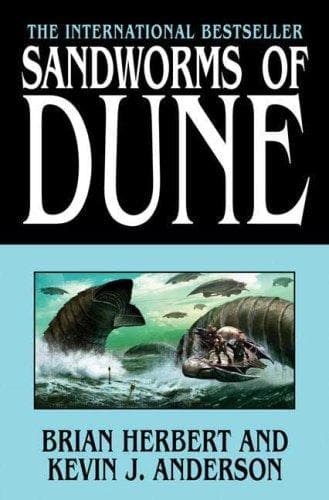
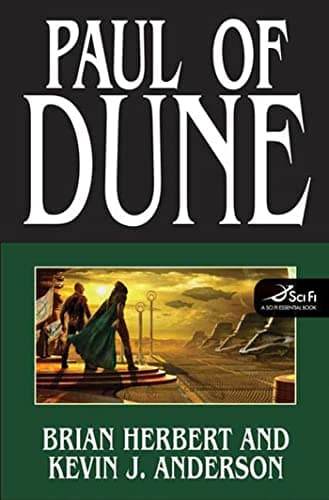
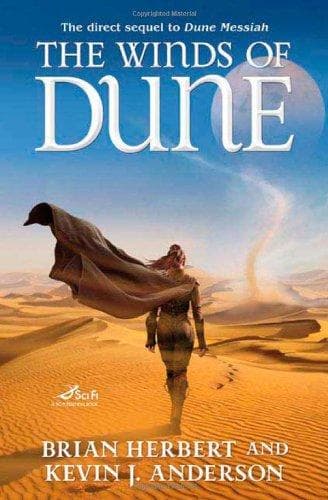
To bring new life to the Arrakis saga, Herbert partnered with science fiction author Kevin J. Anderson to craft multi-volume prequel and sequel series based on extensive notes and outline materials left by Frank Herbert. Their collaboration produced bestselling series including the Prelude to Dune trilogy, beginning with Dune: House Atreides, Dune: House Harkonnen, and House Corrino, as well as the Legends of Dune trilogy starting with Dune: The Butlerian Jihad, Dune: The Machine Crusade, and Dune: The Battle of Corrin. They completed the original saga's narrative arc with Hunters of Dune and Sandworms of Dune, while expanding character lore in novels like Paul of Dune and The Winds of Dune. Beyond print publishing, Herbert serves as president of the entity managing Frank Herbert's literary estate and acts as an executive producer on major film and television adaptations, including the cinematic releases and streaming series Dune: Prophecy.
Herbert's writing combines satirical social commentary, ecological speculative concepts, and grand-scale galactic politics. His early solo works frequently employed humor and absurdist premises to critique technological waste and human bureaucracy. When expanding epic space opera settings, his approach emphasizes detailed historical backstories, complex dynastic rivalries, and the philosophical struggles between humanity and artificial intelligence. Through works like The Road to Dune and various short fiction collections, Herbert blends archival preservation with collaborative storytelling, maintaining the intricate sociopolitical and ecological frameworks that define broad-canvas science fiction.
Dune Universe (Publication Order)