SSansFiction
The libraryCollectionsJournalStatsFor authors
Sign inJoin now
Sansfiction,

A digital library for books. Made by readers, for readers.

v 2.0 · 2026
The library
  • Discover
  • Collections
  • Book tracker
  • Journal
  • Stats
For authors
  • SF Links
  • Analytics
  • How it works
  • FAQ
Elsewhere
  • X / @sansfiction
  • Privacy
  • Terms
  • Contact
© 2026 SansFiction · Digital · GlobalA quiet room for your reading life.
The libraryCollectionsJournalStatsFor authors
Sign inJoin now →
Navigation
Library
Bookshelf
Journal
Discover
Collections
Tierlists
Stats
Profile
Author Page
Link Builder
Account
Sign in
S
G
BooksadventureDo Androids Dream of Electric Sheep? 2
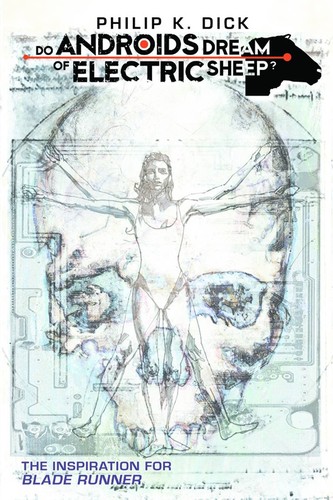
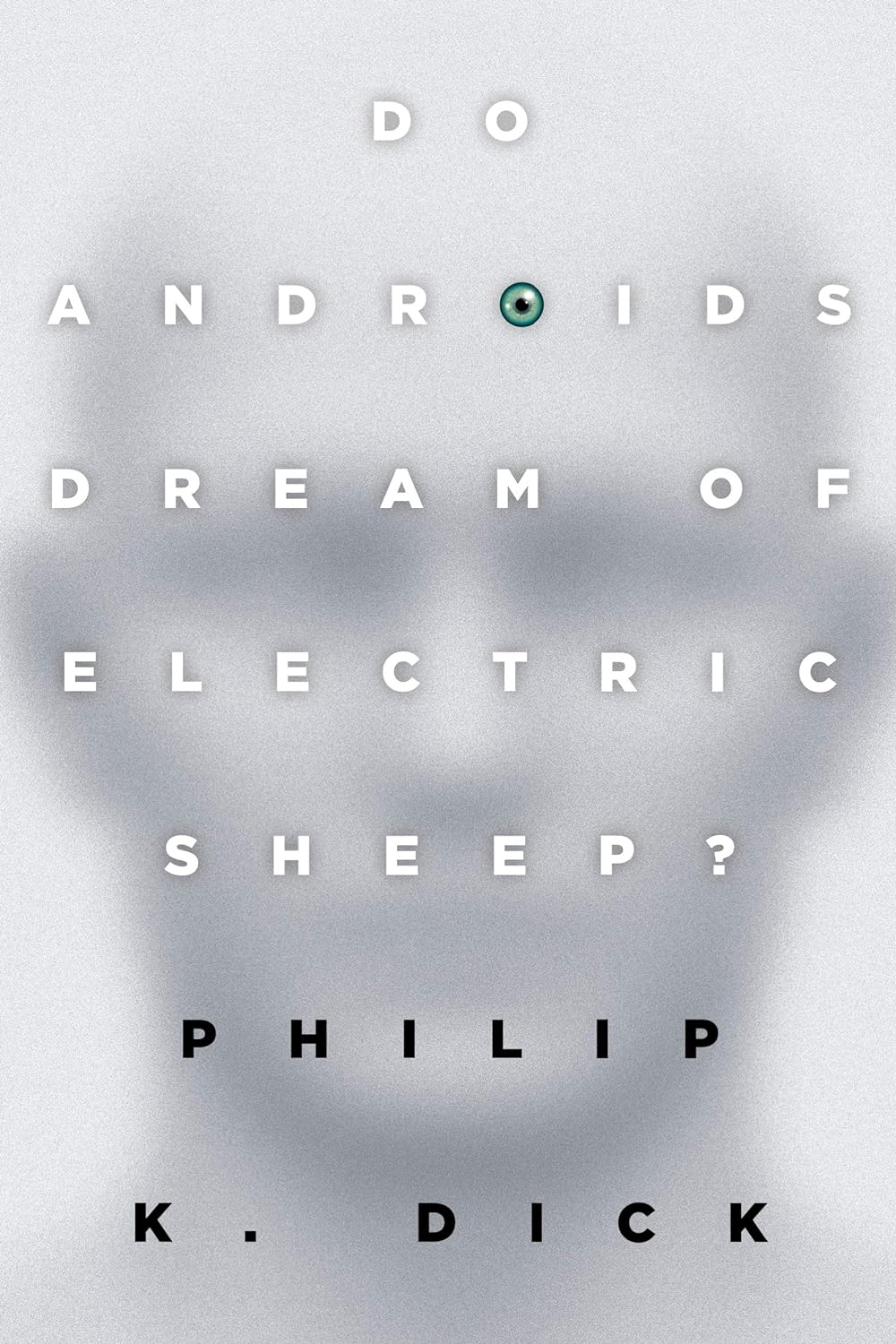
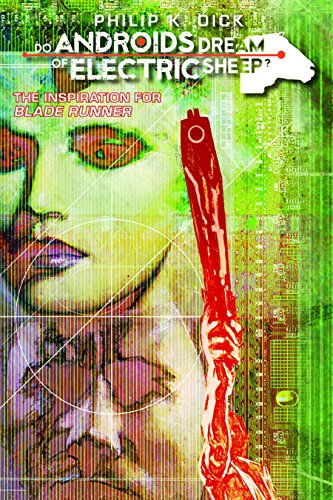
Cover of Do Androids Dream of Electric Sheep? 2 by Philip K. Dick

Do Androids Dream of Electric Sheep? 2,

by Philip K. Dick

Ask AI
Rating4.0/ 5
Ratings1,481
Pages223
Reading Hours5h
Published2009
LanguageEnglish

§Synopsis

01

By 2021, the World War has killed millions, driving entire species into extinction and sending mankind off-planet. Those who remain covet any living creature, and for people who can’t afford one, companies built incredibly realistic simulacra: horses, birds, cats, sheep. They’ve even built humans. Immigrants to Mars receive androids so sophisticated they are indistinguishable from true men or women. Fearful of the havoc these artificial humans can wreak, the government bans them from Earth. Driven into hiding, unauthorized androids live among human beings, undetected. Rick Deckard, an officially sanctioned bounty hunter, is commissioned to find rogue androids and “retire” them. But when cornered, androids fight back—with lethal force.

§Our take

Read the book before you trust your memory of the film. Blade Runner changed so much that critics writing after 1982 often review the wrong thing, and the novel has a whole layer the movie dropped: Mercerism, a religion built around an empathy box, plus the electric animals and the status anxiety of owning something real. The empathy test is supposed to mark the line between human and android, but the book keeps undermining its own rule, showing human empathy as selective and performative. Even admirers call the prose lumpy and the structure hard to follow in places, and some treat the clumsiness as a sign of depth rather than a flaw. The setting is a nearly emptied San Francisco, not the film's rain-soaked Los Angeles, and the noir bones are there: a hard-boiled investigator in a corrupt world. It's short, fast, and hypnotic despite the pulpy surfaces. If you want polished sentences, look elsewhere. If you want big questions in a plot you can finish in a sitting, this is the one.

§Themes

Empathy as a weapon
The Voigt-Kampff test makes empathy the mark of humanity, yet the novel shows humans wielding it to exclude androids and 'specials'.
Animals as status
With real creatures scarce, owning a live one confers prestige, and Deckard's longing for a goat reads as keeping up with the neighbours.
Religion and fraud
Mercerism, built on shared empathy rituals, gets read by essayists as a critique of organized religion.
Real versus simulated
The android becomes a figure for humans turning mechanical, and the line between real and artificial keeps blurring.

§How it was received

It got a Nebula nomination in 1968 and landed 51st on the 1998 Locus Poll of pre-1990 SF — honours, sure, but the real case for this book is what the critics keep arguing about. They call the prose clumsy and the structure hard to follow while finding the ideas inventive, and they link Dick to Kafka, Dickens and Camus. Its reputation is now tangled up with the 1982 film, so pre-1982 criticism is the safer guide to the book itself.

§Read it if

  • You loved Blade Runner and want the layer the film dropped: Mercerism, electric animals, 'specials' and a postapocalyptic San Francisco
  • You like noir structure with a philosophical payoff and don't mind a dreamlike, unsettling ending
  • You want big ideas in a book you can finish in one sitting

§Skip it if

  • You want polished prose. Even fans call the writing lumpy and the structure loose.
  • Dated treatment of female characters and sexual content will pull you out of the story

§Before you start

Reading experience
Short and quick, about 210 pages in one edition, with lumpy prose that's easy to follow even where the structure wobbles.
Content notes
A bounty hunter kills androids, who fight back with lethal force; Sexual references and dated treatment of female characters, including sex with an android.

§Common questions

Is Do Androids Dream of Electric Sheep the same as Blade Runner?
No. The 1982 film is a loose adaptation that changed much of the story, and later editions were retitled Blade Runner even though the term isn't in the original. The book has Mercerism, electric animals and a San Francisco setting the film doesn't.
Do I need to read the Blade Runner sequels?
No. K. W. Jeter's three authorized novels follow the film, not the book, and this novel is standalone.
Is the book better than the film?
Genuinely split verdicts. Some readers swear the film lets its themes breathe; others say almost nothing of the novel survives on screen and both come out fine. The book wins on depth.

§If you liked this

  • More Than Human by Theodore Sturgeon — The Sturgeon novel that shaped Dick's own writing — read it to see where some of this came from.
  • We Can Build You by Philip K. Dick — Dick's own earlier novel on simulated humans; one scholar argues this book works as its sequel.
  • The Trial by Franz Kafka — Critics compare Deckard to Joseph K., and the Kafka comparison is the one that sticks.
  • Blade Runner 2: The Edge of Human by K. W. Jeter — An authorized sequel, but it follows the film's continuity, not the novel's.
Sources
  • Wikipedia
  • Encyclopedia.com (reference-work critical overview)
  • Edinburgh Student Literary Journal, Rachel Jones (2025)
  • Electric Literature, Court Merrigan, 2 Nov 2016
  • University of Sydney open journal (Michael Berman essay per search summary)
  • LitCharts

Track this book

Add to your library to track progress and write reviews

§Genres
adventure1classics1cyberpunk1dream1fantasy1fiction1foreign language study1
§Moods
dark gray2adventurous1challenging1dark1emotional1funny1mind-bending1
§Tags
#ai fiction2#androids2#empathy2#identity2#animal cruelty1#diverse characters1#dystopian1

§About the Author

Philip K. Dick
Philip K. Dick

14 books in catalog

Speculative fiction that questions the nature of reality and human identity lies at the heart of iconic science fiction like Do Androids Dream of Electric Sheep? and The Man in the High Castle. Author Philip K. Dick crafted dozens of novels and over a hundred short stories during a career spanning three decades, creating narrative worlds where human perception is routinely altered by technology, authoritarian states, or psychological illusion.

Career & Background

Born in Chicago on December 16, 1928, Philip Kindred Dick lived most of his life in California. Before committing full-time to writing, he worked briefly in radio broadcasting and attended the University of California, Berkeley for one year. His professional publishing career launched in 1952 with the short story "Beyond Lies the Wub." Over the following thirty years, Dick maintained an extraordinary output, publishing regularly in science fiction magazines and completing dozens of novels prior to his death in Santa Ana, California, on March 2, 1982.

Writing Style & Themes

Throughout his career, Dick explored complex sociological, political, and metaphysical themes. His narratives frequently center on ordinary characters trapped in illusory environments, struggling against monopolistic corporations, oppressive government regimes, and altered states of consciousness. In his later years, his thematic focus shifted heavily toward theology and metaphysics, strongly reflecting his personal experiences with paranoia, drug abuse, schizophrenia, and transcendental visions. These deeply personal struggles directly informed semi-autobiographical works such as A Scanner Darkly and VALIS.

Major Works

  • The Man in the High Castle — An alternate history novel exploring a world where the Axis powers won World War II, notable for its examination of reality, fate, and cultural identity.
  • Do Androids Dream of Electric Sheep? — A dystopian story set in a post-apocalyptic future that explores empathy and human nature through a bounty hunter tracking artificial humans.
  • Ubik — A narrative focused on psychic abilities, shifting states of reality, and temporal decay.
  • A Scanner Darkly — A semi-autobiographical examination of drug culture, identity disintegration, and state surveillance.
  • VALIS — A theological novel drawing upon the author's unexplained visions and metaphysical inquiries.
  • Flow My Tears, the Policeman Said — A novel depicting a famous television star who awakens in a police state where all official records of his existence have vanished.

§Other Editions

Showing 2 of 48 editions
Cover of Do Androids Dream of Electric Sheep? 4

Do Androids Dream of Electric Sheep? 4

engHardcoverFirst Edition
BOOM! Studios20119781608866151
Cover of Do Androids Dream of Electric Sheep?

Do Androids Dream of Electric Sheep?

engPaperback
Oxford University20009780194230636
§Genres
adventure1classics1cyberpunk1dream1fantasy1fiction1foreign language study1
§Moods
dark gray2adventurous1challenging1dark1emotional1funny1mind-bending1
§Tags
#ai fiction2#androids2#empathy2#identity2#animal cruelty1#diverse characters1#dystopian1

Metadata

ISBN-139781608865093
ISBN-101608865096

Editions and availability

Find Do Androids Dream of Electric Sheep? 2 Philip K. Dick in PDF, EPUB, ebook, audiobook, print, or library editions.

Bookshop.orgGoogle Play BooksBarnes & NobleOpen Library

Featured In Lists

Book cover from this collectionBook cover from this collectionBook cover from this collectionBook cover from this collection
Book cover from this collection

NPRs Top 100 Science-Fiction and Fantasy Books of All Time

100 books
Book cover from this collectionBook cover from this collectionBook cover from this collectionBook cover from this collection
Book cover from this collection

Sword And Laser

134 books
Book cover from this collectionBook cover from this collectionBook cover from this collectionBook cover from this collection
Book cover from this collection

List 1001 Books Boxall

1000 books
Book cover from this collectionBook cover from this collectionBook cover from this collectionBook cover from this collection
Book cover from this collection

Sf Masterworks

71 books
Book cover from this collectionBook cover from this collectionBook cover from this collectionBook cover from this collection
Book cover from this collection

Favorite Space Opera books

46 books
Book cover from this collectionBook cover from this collectionBook cover from this collectionBook cover from this collection
Book cover from this collection

AI Fiction 1951-1989: Mainframes, Androids & Cybernetic Minds

25 books•@sansfictionbot
Book cover from this collectionBook cover from this collectionBook cover from this collectionBook cover from this collection
Book cover from this collection

NPR Top 100 Science Fiction Fantasy

68 books
Book cover from this collectionBook cover from this collectionBook cover from this collectionBook cover from this collection
Book cover from this collection

The Future, Foretold: Sci‑Fi That Predicted Our World

10 books
Book cover from this collectionBook cover from this collectionBook cover from this collectionBook cover from this collection
Book cover from this collection

The Esquire 75 Best Sci-Fi Books of All Time

74 books