SSansFiction
The libraryCollectionsJournalStatsFor authors
Sign inJoin now
Sansfiction,

A digital library for books. Made by readers, for readers.

v 2.0 · 2026
The library
  • Discover
  • Collections
  • Book tracker
  • Journal
  • Stats
For authors
  • SF Links
  • Analytics
  • How it works
  • FAQ
Elsewhere
  • X / @sansfiction
  • Privacy
  • Terms
  • Contact
© 2026 SansFiction · Digital · GlobalA quiet room for your reading life.
The libraryCollectionsJournalStatsFor authors
Sign inJoin now →
Navigation
Library
Bookshelf
Journal
Discover
Collections
Tierlists
Stats
Profile
Author Page
Link Builder
Account
Sign in
S
G
BooksadventureChildren of Time
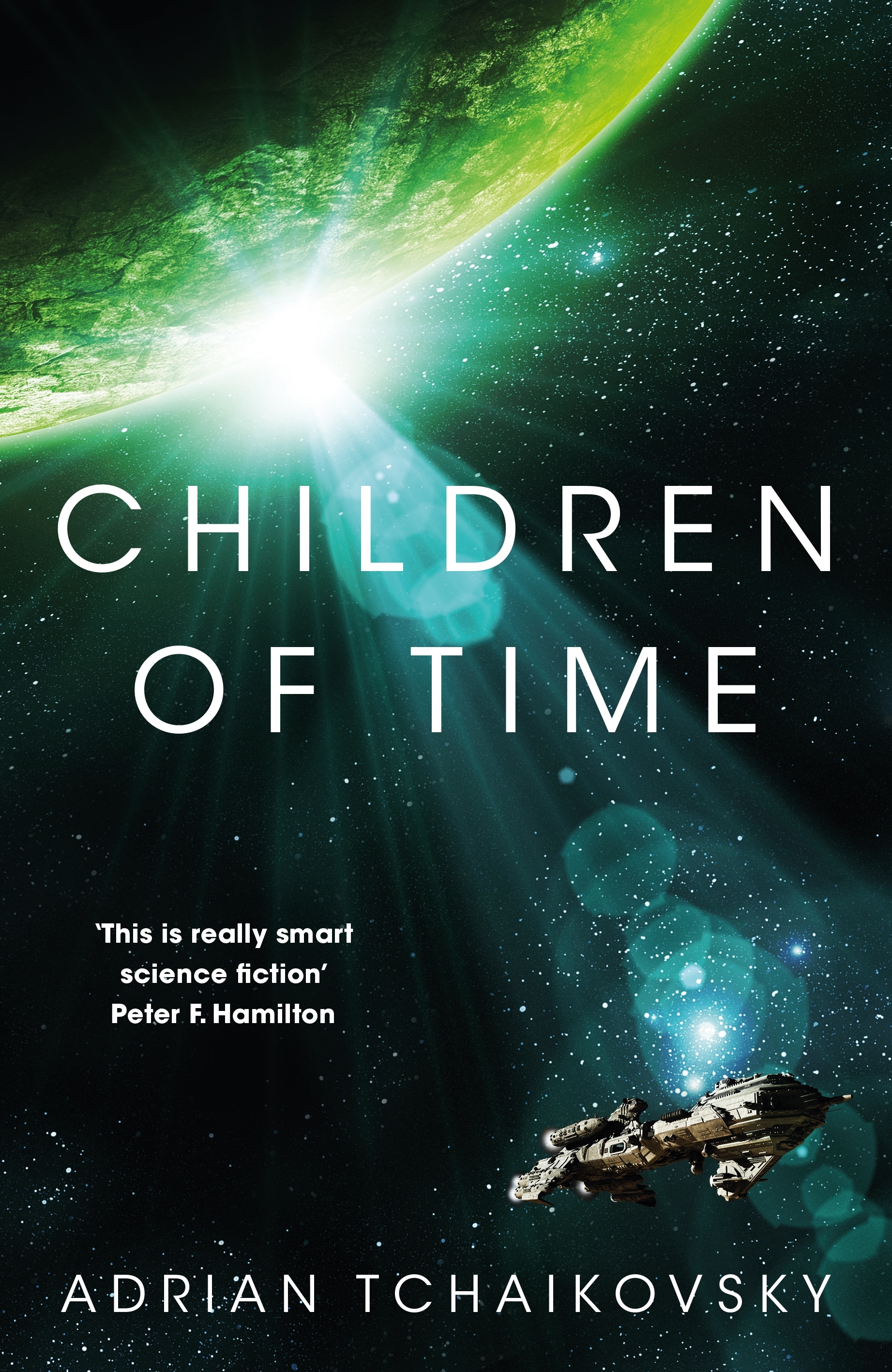
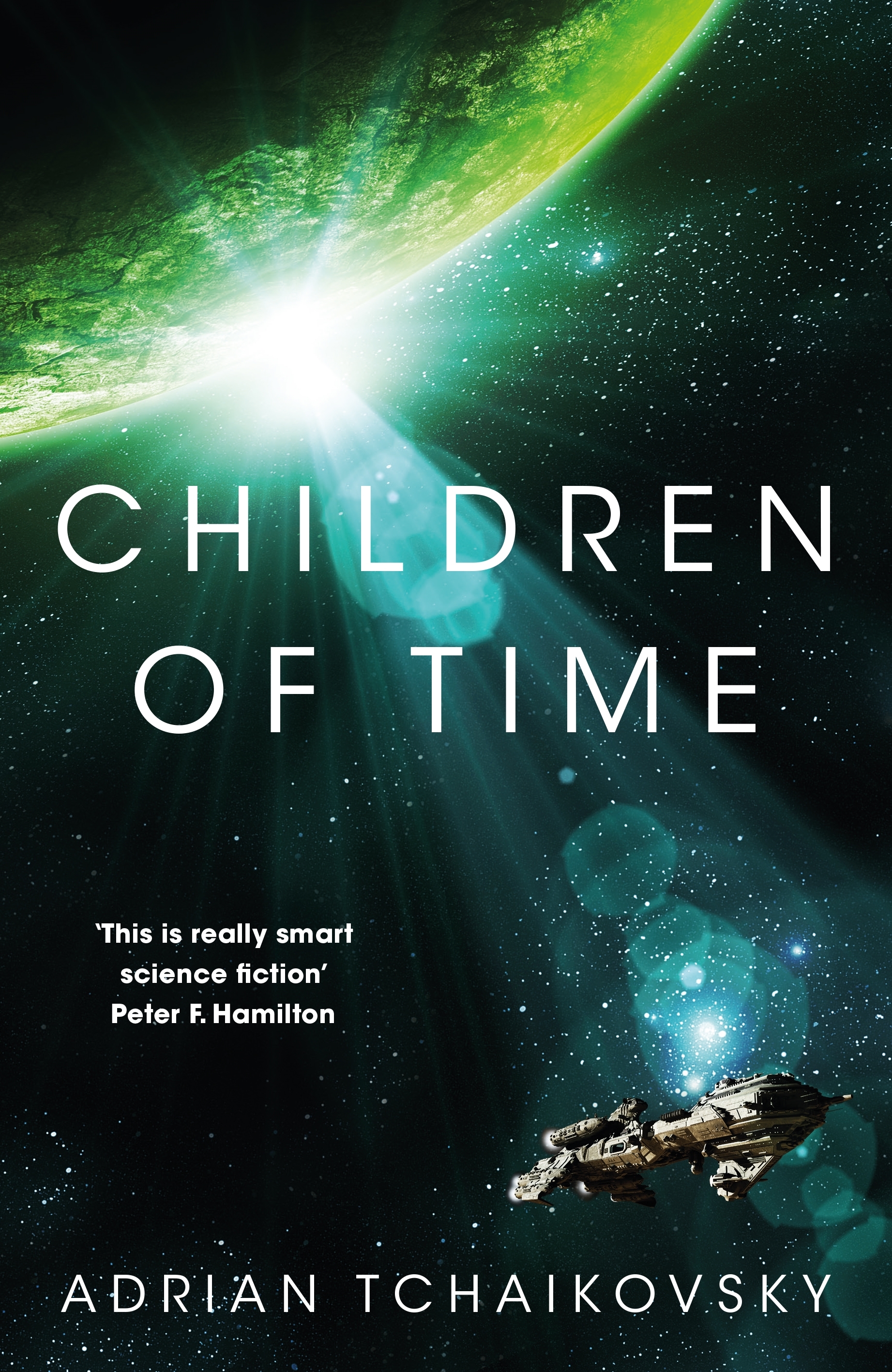
Cover of Children of Time by Adrian Tchaikovsky
№ 1 · Children of Time

Children of Time,

by Adrian Tchaikovsky

Ask AI
Rating4.3/ 5
Ratings1,078
Pages600
Reading Hours13h
Published2015
LanguageEnglish

§Synopsis

01

Adrian Tchaikovsky's Arthur C. Clarke Award-winning novel Children of Time is the epic story of humanity's battle for survival on a terraformed planet.

The last remnants of the human race left a dying Earth, desperate to find a new home among the stars. Following in the footsteps of their ancestors, they discover the greatest treasure of the past age -- a world terraformed and prepared for human life.

But all is not right in this new Eden. In the long years since the planet was abandoned, the work of its architects has borne disastrous fruit. The planet is not waiting for them, pristine and unoccupied. New masters have turned it from a refuge into mankind's worst nightmare.

Now two civilizations are on a collision course, both testing the boundaries of what they will do to survive. As the fate of humanity hangs in the balance, who are the true heirs of this new Earth?

§Our take

The spiders make this novel; the human ark is the disputed passenger. That imbalance is the book’s central pleasure and its most persistent complaint. The spider chapters are built from vibration, silk and generations of history, so an alien society becomes understandable without being made human. Their changing culture, gender arrangements and technology supply a kind of living documentary.

The ship sections widen the scale and add political tension, but readers often call the humans flat or passive; some think the book would be tighter without them. When it won the Clarke Award, the award's director pointed to its cosmic scope and unusually convincing species, and judging chair Andrew M. Butler to the way it plays on readers’ sympathies and phobias at both epic and human scale. The alternating voices can also jar, but that friction sharpens the central question: what does it mean to recognize intelligence unlike your own?

§Themes

Intelligence without a human template
The spider civilization is shaped by its own senses, silk, culture and technology, making it alien without rendering it unreadable.
Empathy across species
The book asks whether fear can give way to recognition between radically different forms of intelligence.
Survival remakes society
Biology, inherited roles and generational change shape a spider society with its own cultural logic.
Time at two speeds
The ark crew leaps through suspension while the spiders advance across centuries, carrying the story through repeated generational changes.
An uneven double narrative
The spider chapters often feel vivid and alive, while the human strand draws complaints about flat characters and passive choices.

§How it was received

It won the 2016 Arthur C. Clarke Award: award director Tom Hunter pointed to its cosmic scope and unusually convincing extrapolated species, and judging chair Andrew M. Butler to the way it plays on readers’ sympathies and phobias at both epic and human scale. Reader reactions remain divided over the uneven double narrative, though a 2025 blog reread calls it one of the modern genre classics and again praises the spider chapters.

§Read it if

  • You want old-school science fiction, including generation ships, species uplift, first contact and biological speculation
  • You would rather read an alien society closely than meet it as monster scenery
  • You can handle tonal changes between shipboard politics and present-tense, nature-documentary spider chapters

§Skip it if

  • Human-led fiction is your priority; flat, passive human characters are the book’s commonest complaint
  • Arachnophobia makes the premise a poor fit, as would discomfort with cannibalistic spider biology, though the cannibalism is mentioned in passing

§Before you start

Reading experience
Expect a long, dense read: some readers find the middle slow, while the repeated century jumps and change from shipboard science fiction to present-tense spider chapters make it demanding.
Reading order
Book 1 of the Children of Time series, followed by Children of Ruin (2019) and Children of Memory (2022). The first novel is self-contained and is the place to start.
Content notes
Large intelligent spiders are central to the story, so arachnophobia is a real concern; Spider biology includes cannibalism after mating, mentioned in passing; Humanity’s civilisational collapse and self-directed violence are recurring elements, and the ark crew faces dire circumstances.

§Common questions

Is Children of Time part of a series?
Yes. It is book one of the Children of Time series, followed by Children of Ruin and Children of Memory.
Is it suitable for readers who hate spiders?
Not a safe bet. Large intelligent spiders are central, and arachnophobic readers report everything from conversion to being unable to continue.
Does the ending work?
It divides readers. Some find it emotionally earned and logical; others call it a last-minute deus ex machina or too neat.

§If you liked this

  • The Forever War by Joe Haldeman — A classic-SF touchstone, and a useful comparison for the book’s old-school sweep and long timescales.
  • Foundation by Isaac Asimov — Another generations-spanning benchmark, with society-building on a scale Children of Time reaches through alien evolution.
  • Children of Ruin by Adrian Tchaikovsky — The direct sequel, for readers who want to remain with the same alien-evolution premise after this self-contained first book.
Sources
  • Wikipedia
  • Financial Times Lite (Sri Lanka), reprinting FT coverage
  • Reactor (Tor.com)
  • The Bookseller
  • Adrian Tchaikovsky (author site)
  • The Hugo Awards (official)
  • Vector (BSFA)
  • Worlds Without End (reader review, 2016)
  • From the Heart of Europe (blog)
  • SFCrowsnest
  • Reenchantment of the World (blog)
  • Inner Horizon (Substack)
  • Brok3n Engines (Substack)
  • At Boundary's Edge (blog)
  • Goodreads (reader reviews)

Track this book

Add to your library to track progress and write reviews

§Genres
adventure1aliens1dystopian1fantasy1fiction1hard science fiction1science fiction1
§Moods
adventurous2challenging1dark1emotional1funny1hopeful1inspiring1
§Tags
#diverse characters1#loveable characters1#not diverse characters1#plot driven1#strong character development1#unloveable characters1

§About the Author

Adrian Tchaikovsky
Adrian Tchaikovsky

7 books in catalog

Speculative fiction exploring non-human intelligence, evolutionary biology, and complex alien minds has been redefined in modern science fiction through award-winning sagas like Children of Time. British author Adrian Tchaikovsky gained widespread acclaim with this Arthur C. Clarke Award-winning novel, which depicts the multi-generational evolution of an arachnid civilization on a terraformed planet alongside humanity's desperate search for a new home.

From ten-book insect-inspired fantasy epics to far-future space operas and satirical explorations of artificial intelligence, Tchaikovsky's prolific bibliography bridges biological concepts with imaginative worldbuilding. Works such as Shards of Earth and Alien Clay demonstrate his ability to construct complex galactic ecosystems and convey truly foreign perspectives to readers.

Career & Background

Born Adrian Czajkowski in June 1972 in Woodhall Spa, Lincolnshire, he studied zoology and psychology at the University of Reading. Before transitioning to writing full-time in late 2018, he worked for years as a legal executive specializing in debt collection, litigation, and landlord and tenant law after initially working with the Legal Aid Board in the mid-1990s. His professional publishing path was established in 2007 when he sold his debut ten-book fantasy series, Shadows of the Apt, which launched in 2008 with Empire in Black and Gold.

Beyond his legal and academic background, Tchaikovsky is an avid tabletop role-player and board gamer whose early passion for world-building was ignited by campaign-based fantasy novels such as the Dragonlance series. He has also trained in stage-fighting and participated in amateur dramatics. His literary influences span major figures in speculative fiction, including Gene Wolfe, Mervyn Peake, China Mi)vie, Steven Erikson, Naomi Novik, Scott Lynch, and Alan Campbell.

Writing Style & Themes

Tchaikovsky's narrative signature stems directly from his academic studies in zoology and psychology, driving a consistent focus on non-human minds, uplifted species, and alien awareness. He frequently constructs plots around artificial intelligence, entomology, and evolutionary adaptation, showing a particular penchant for spiders, insects, and marine organisms. His stories challenge anthropocentric viewpoints by forcing human characters to communicate and negotiate with intelligences operating under distinct biological imperatives.

In addition to deep ecological and technological themes, his writing spans epic galactic settings and intricate fantasy realms. Novels like Service Model examine artificial intelligence and robotic servitude through dark satire, while Eyes of the Void and Lords of Uncreation build vast cosmic opera conflicts around ancient, planet-reshaping entities. Across his bibliography, Tchaikovsky balances detailed social and biological systems with character-driven survival narratives.

Major Works

  • Children of Time — An Arthur C. Clarke Award-winning science fiction novel detailing the evolutionary rise of terraformed arachnid civilization and humanity's survival journey.
  • Shards of Earth — The British Science Fiction Award-winning first novel in the Final Architecture space opera trilogy, exploring a galaxy threatened by cosmic entities.
  • Eyes of the Void — The second installment in the Final Architecture trilogy, following human and alien crews attempting to defend known space from the Architects.
  • Lords of Uncreation — The conclusion to the Final Architecture trilogy, bringing the interstellar conflict against planet-destroying entities to its final resolution.
  • Alien Clay — A science fiction novel set on a harsh penal planet, following a political dissident scientist forced to study a symbiotic alien ecosystem.
  • Service Model — A satirical novel following a domestic valet robot navigating a declining world after the collapse of human society.
  • Shroud — A speculative work showcasing Tchaikovsky's signature focus on atmospheric settings and complex encounters between different forms of intelligence.

§Featured Series

Children of Time

Cover of Children of Time by Adrian Tchaikovsky

Children of Time

Adrian Tchaikovsky, 2015

§Editions

Cover of Children of Time

Children of Time

engHardcover600 pgs
Tor Books20159780316452519
§Genres
adventure1aliens1dystopian1fantasy1fiction1hard science fiction1science fiction1
§Moods
adventurous2challenging1dark1emotional1funny1hopeful1inspiring1
§Tags
#diverse characters1#loveable characters1#not diverse characters1#plot driven1#strong character development1#unloveable characters1

Metadata

ISBN-139780316452519
ISBN-108498891191

Editions and availability

Find Children of Time Adrian Tchaikovsky in PDF, EPUB, ebook, audiobook, print, or library editions.

Bookshop.orgGoogle Play BooksBarnes & NobleOpen Library

Featured In Lists

Book cover from this collectionBook cover from this collectionBook cover from this collectionBook cover from this collection
Book cover from this collection

The Esquire 75 Best Sci-Fi Books of All Time

74 books
Book cover from this collectionBook cover from this collectionBook cover from this collectionBook cover from this collection
Book cover from this collection

Sword And Laser

134 books
Book cover from this collectionBook cover from this collectionBook cover from this collectionBook cover from this collection
Book cover from this collection

NPR Top 50 Science Fiction and Fantasy Books of the 2010s

50 books
Book cover from this collectionBook cover from this collectionBook cover from this collectionBook cover from this collection
Book cover from this collection

Arthur C. Clarke Award (1987 to 2025)

39 books