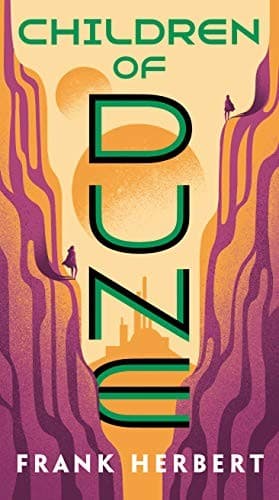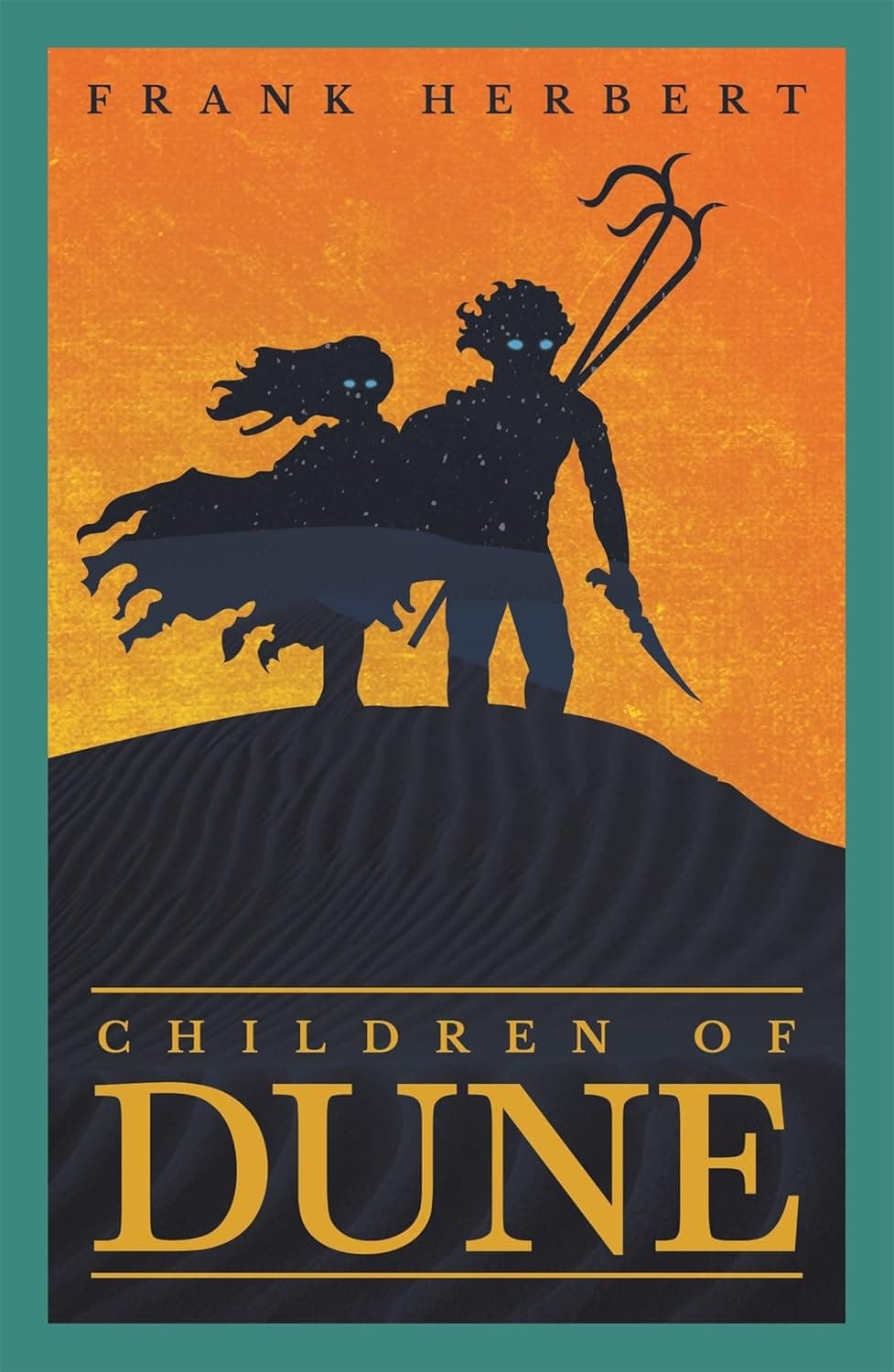
Nine years have passed since Paul Muad’Dib walked into the desert, leaving his Empire in the hands of a Regency that grows increasingly detached from its Fremen roots. Arrakis itself is transforming; the once-harsh dunes are yielding to water and greenery, a miracle of terraforming that ironically threatens the very source of the Imperium’s power: the spice melange. As the ecological balance shifts, the religious fervor surrounding the Atreides name has solidified into a rigid, oppressive bureaucracy, and a mysterious blind figure known only as the Preacher has emerged from the deep desert to challenge the sanctity of the state.
At the center of this gathering storm are Leto II and Ghanima Atreides, Paul’s twin heirs. Unlike ordinary children, they are "pre-born," possessing the full consciousness and memories of every ancestor in their bloodline before they have even lived their own lives. This psychological inheritance is as much a weapon as it is a curse, forcing the twins to navigate a labyrinth of court intrigue and assassination attempts while fighting a desperate internal battle to remain themselves. They must find a way to secure the future of the human race without falling prey to the "Abomination" that haunts those who carry the voices of the past.
The world-building in this installment shifts from the survivalist struggle of the deep desert to the logistical and spiritual consequences of success. Arrakis is no longer just a wasteland; it is a laboratory for planetary engineering. However, this transformation introduces a paradox: by making the planet more hospitable for humans, the environment becomes lethal to the sandworms, the only source of the geriatric spice. The atmosphere is one of creeping decay and "wet" luxury that erodes the legendary Fremen discipline, creating a society caught between a nomadic past and a bureaucratic future.
A central thematic pillar is the concept of "The Pre-Born." Leto and Ghanima must contend with the "Other Memory"—a genetic archive of every ancestor that threatens to overwhelm their fragile young identities. This creates a unique form of character development where the protagonists must bargain with the dead to survive the living. Their primary arc involves a race to find a "Golden Path," a vision of the future that ensures human survival, while being hunted by the remnants of the old Imperial House Corrino and being watched warily by their own aunt, the Regent Alia.
Herbert utilizes the "Heir to the Throne" trope only to dismantle it through the lens of political and religious corruption. Rather than a standard coming-of-age story, the narrative functions as a deconstruction of the "Chosen One" legacy. The book explores the "Trappings of Prescience," where the ability to see the future becomes a cage that locks the characters into a predetermined fate. It subverts the trope of the "Enlightened Ruler" by showing how even the most well-intentioned dynasty can become a tool of institutionalized oppression when faith is weaponized for statecraft.
Add to your library to track progress and write reviews
Find Kāpas bērni Frank Herbert in PDF, EPUB, ebook, audiobook, print, or library editions.

22 books in catalog
The desert planet of Arrakis, with its giant sandworms, complex ecology, and political factions vying for control over the spice melange, remains one of the most thoroughly detailed world-building achievements in speculative fiction. American author Frank Herbert introduced this setting in his seminal 1965 novel Dune, creating an expansive universe that transformed epic science fiction by weaving together ecology, philosophy, religion, and political intrigue.
Born in Tacoma, Washington in 1920, Herbert spent his youth in the Pacific Northwest and worked on local newspapers as a teenager. He attended the University of Washington in Seattle and worked a wide variety of jobs throughout his early adult life, including time as a TV cameraman, radio commentator, oyster diver, jungle survival instructor, lay analyst, and creative writing teacher. He also worked as a reporter and later editor of a number of West Coast newspapers before becoming a full-time writer. Herbert began publishing science fiction in 1952 with his short story 'Looking for Something?' in Startling Stories. His research into the Oregon Dunes during the 1950s served as a primary catalyst for his ecological themes. He achieved widespread fame more than ten years later following the serial publication in Analog of 'Dune World' and 'The Prophet of Dune', which were amalgamated into the novel Dune in 1965.
Herbert's fiction is distinguished by its intricate world-building, ecological awareness, and deep examination of human potential and institutional vulnerability. Rather than relying solely on technological advancement, his narrative focus often centers on human adaptability, psychological conditioning, religious mythmaking, and the perilous consequences of messianic leadership. He frequently explored how harsh environments shape cultures, social structures, and survival strategies, a focus prominently displayed in novels such as Destination: Void and The Jesus Incident alongside his desert sagas.
Dune