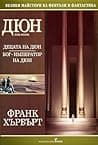
The desert planet of Arrakis is no longer the parched wasteland of Paul Muad’Dib’s youth. As the ecological transformation from sand to greenery accelerates, the foundation of Fremen culture and the lifecycle of the great sandworms are both threatened. In this era of transition, the Atreides Empire is caught in a precarious tension between the religious fervor of its past and a future that appears increasingly unstable under the weight of a bureaucratic theocracy. The very spice that fueled the Atreides’ rise to power now becomes a catalyst for an impending crisis that could see the end of human prescience.
Central to this conflict are the twin heirs of the Atreides line, Leto II and Ghanima. Born with the full consciousness and memories of their ancestors, they must navigate a landscape of lethal court intrigue while battling the internal threat of "Abomination"—the risk of their own identities being consumed by the personas of the dead. As exiled House Corrino schemes to reclaim the throne and the mysterious Preacher challenges the legitimacy of the state religion, the twins are forced to confront the "Golden Path," a cryptic and demanding blueprint for the survival of the human species that requires looking far beyond the immediate concerns of the throne.
In this phase of the Dune saga, Frank Herbert shifts the focus from the mechanics of revolution to the consequences of absolute control. The world-building centers on the environmental collapse of the desert ecosystem and the subsequent loss of the harsh conditions that once forged the galaxy’s most elite warriors. The transition from a nomad-warrior culture to a settled, urbanized society creates a spiritual and physical vacuum. Simultaneously, the narrative introduces the concept of a "forced peace" or long-term stasis, where the rules of the universe are dictated by a singular, overwhelming authority. This atmosphere is heavy with the scent of water and the rot of institutionalized religion, emphasizing the danger of a society that has stopped evolving.
The primary character development revolves around the "pre-born"—individuals who attained consciousness in the womb. This creates a unique dynamic where young children possess the wisdom, cynicism, and manipulative capabilities of elderly statesmen. The relationship between Leto II and Ghanima is built on a foundation of mutual survival and a shared, terrifying understanding of what they are becoming. Their development is not about gaining power, but about maintaining their autonomy against the predatory spirits of history. This internal struggle mirrors the external political battle for the Atreides legacy, as each character must decide whether to serve the ghosts of the past or forge a path into an uncertain future.
Herbert utilizes and deconstructs the "Chosen One" and "Hero’s Journey" tropes by showcasing the catastrophic fallout of a successful messianic rise. While many science fiction epics focus on the hero saving the world, these narratives explore the "Hero as Tyrant." The books subvert the trope of the benevolent ruler by suggesting that absolute foresight leads to absolute entrapment. By removing the traditional stakes of physical combat and replacing them with philosophical and genetic dilemmas, the narrative challenges the reader to question whether a "savior" is ever truly beneficial for a species, or if the hero is merely another form of predator in the ecosystem of history.
The desert planet of Arrakis is no longer the parched wasteland of Paul Muad’Dib’s youth. As the ecological transformation from sand to greenery accelerates, the foundation of Fremen culture and the lifecycle of the great sandworms are both threatened. In this era of transition, the Atreides Empire is caught in a precarious tension between the religious fervor of its past and a future that appears increasingly unstable under the weight of a bureaucratic theocracy. The very spice that fueled the Atreides’ rise to power now becomes a catalyst for an impending crisis that could see the end of human prescience.
Central to this conflict are the twin heirs of the Atreides line, Leto II and Ghanima. Born with the full consciousness and memories of their ancestors, they must navigate a landscape of lethal court intrigue while battling the internal threat of "Abomination"—the risk of their own identities being consumed by the personas of the dead. As exiled House Corrino schemes to reclaim the throne and the mysterious Preacher challenges the legitimacy of the state religion, the twins are forced to confront the "Golden Path," a cryptic and demanding blueprint for the survival of the human species that requires looking far beyond the immediate concerns of the throne.
In this phase of the Dune saga, Frank Herbert shifts the focus from the mechanics of revolution to the consequences of absolute control. The world-building centers on the environmental collapse of the desert ecosystem and the subsequent loss of the harsh conditions that once forged the galaxy’s most elite warriors. The transition from a nomad-warrior culture to a settled, urbanized society creates a spiritual and physical vacuum. Simultaneously, the narrative introduces the concept of a "forced peace" or long-term stasis, where the rules of the universe are dictated by a singular, overwhelming authority. This atmosphere is heavy with the scent of water and the rot of institutionalized religion, emphasizing the danger of a society that has stopped evolving.
The primary character development revolves around the "pre-born"—individuals who attained consciousness in the womb. This creates a unique dynamic where young children possess the wisdom, cynicism, and manipulative capabilities of elderly statesmen. The relationship between Leto II and Ghanima is built on a foundation of mutual survival and a shared, terrifying understanding of what they are becoming. Their development is not about gaining power, but about maintaining their autonomy against the predatory spirits of history. This internal struggle mirrors the external political battle for the Atreides legacy, as each character must decide whether to serve the ghosts of the past or forge a path into an uncertain future.
Herbert utilizes and deconstructs the "Chosen One" and "Hero’s Journey" tropes by showcasing the catastrophic fallout of a successful messianic rise. While many science fiction epics focus on the hero saving the world, these narratives explore the "Hero as Tyrant." The books subvert the trope of the benevolent ruler by suggesting that absolute foresight leads to absolute entrapment. By removing the traditional stakes of physical combat and replacing them with philosophical and genetic dilemmas, the narrative challenges the reader to question whether a "savior" is ever truly beneficial for a species, or if the hero is merely another form of predator in the ecosystem of history.
Add to your library to track progress and write reviews
Add to your library to track progress and write reviews
Find Децата на Дюн. Бог-император на Дюн Frank Herbert in PDF, EPUB, ebook, audiobook, print, or library editions.
Find Децата на Дюн. Бог-император на Дюн Frank Herbert in PDF, EPUB, ebook, audiobook, print, or library editions.

22 books in catalog
The desert planet of Arrakis, with its giant sandworms, complex ecology, and political factions vying for control over the spice melange, remains one of the most thoroughly detailed world-building achievements in speculative fiction. American author Frank Herbert introduced this setting in his seminal 1965 novel Dune, creating an expansive universe that transformed epic science fiction by weaving together ecology, philosophy, religion, and political intrigue.
Born in Tacoma, Washington in 1920, Herbert spent his youth in the Pacific Northwest and worked on local newspapers as a teenager. He attended the University of Washington in Seattle and worked a wide variety of jobs throughout his early adult life, including time as a TV cameraman, radio commentator, oyster diver, jungle survival instructor, lay analyst, and creative writing teacher. He also worked as a reporter and later editor of a number of West Coast newspapers before becoming a full-time writer. Herbert began publishing science fiction in 1952 with his short story 'Looking for Something?' in Startling Stories. His research into the Oregon Dunes during the 1950s served as a primary catalyst for his ecological themes. He achieved widespread fame more than ten years later following the serial publication in Analog of 'Dune World' and 'The Prophet of Dune', which were amalgamated into the novel Dune in 1965.
Herbert's fiction is distinguished by its intricate world-building, ecological awareness, and deep examination of human potential and institutional vulnerability. Rather than relying solely on technological advancement, his narrative focus often centers on human adaptability, psychological conditioning, religious mythmaking, and the perilous consequences of messianic leadership. He frequently explored how harsh environments shape cultures, social structures, and survival strategies, a focus prominently displayed in novels such as Destination: Void and The Jesus Incident alongside his desert sagas.
22 books in catalog
The desert planet of Arrakis, with its giant sandworms, complex ecology, and political factions vying for control over the spice melange, remains one of the most thoroughly detailed world-building achievements in speculative fiction. American author Frank Herbert introduced this setting in his seminal 1965 novel Dune, creating an expansive universe that transformed epic science fiction by weaving together ecology, philosophy, religion, and political intrigue.
Born in Tacoma, Washington in 1920, Herbert spent his youth in the Pacific Northwest and worked on local newspapers as a teenager. He attended the University of Washington in Seattle and worked a wide variety of jobs throughout his early adult life, including time as a TV cameraman, radio commentator, oyster diver, jungle survival instructor, lay analyst, and creative writing teacher. He also worked as a reporter and later editor of a number of West Coast newspapers before becoming a full-time writer. Herbert began publishing science fiction in 1952 with his short story 'Looking for Something?' in Startling Stories. His research into the Oregon Dunes during the 1950s served as a primary catalyst for his ecological themes. He achieved widespread fame more than ten years later following the serial publication in Analog of 'Dune World' and 'The Prophet of Dune', which were amalgamated into the novel Dune in 1965.
Herbert's fiction is distinguished by its intricate world-building, ecological awareness, and deep examination of human potential and institutional vulnerability. Rather than relying solely on technological advancement, his narrative focus often centers on human adaptability, psychological conditioning, religious mythmaking, and the perilous consequences of messianic leadership. He frequently explored how harsh environments shape cultures, social structures, and survival strategies, a focus prominently displayed in novels such as Destination: Void and The Jesus Incident alongside his desert sagas.
Dune


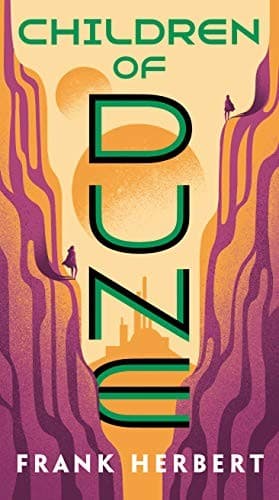
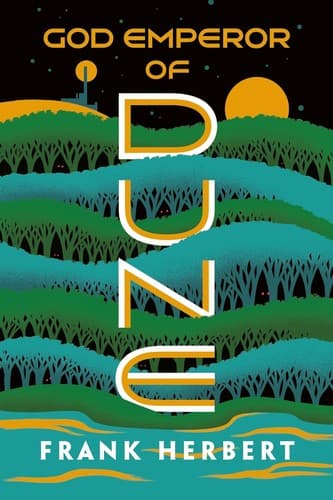

Dune