§Synopsis
01"Aldous Huxley's profoundly important classic of world literature, Brave New World is a searching vision of an unequal, technologically-advanced future where humans are genetically bred, socially indoctrinated, and pharmaceutically anesthetized to passively uphold an authoritarian ruling order–all at the cost of our freedom, full humanity, and perhaps also our souls. “A genius [who] who spent his life decrying the onward march of the Machine” (The New Yorker), Huxley was a man of incomparable talents: equally an artist, a spiritual seeker, and one of history’s keenest observers of human nature and civilization. Brave New World, his masterpiece, has enthralled and terrified millions of readers, and retains its urgent relevance to this day as both a warning to be heeded as we head into tomorrow and as thought-provoking, satisfying work of literature."-- Provided by Amazon
§Our take
Huxley's rulers don't need fear. They condition people to love their roles, dose them with soma and run a culture built on consumption, which is the usual contrast with Orwell. Plenty of readers will admit the World State's health, stability and pleasure sound pretty good, and philosophers have argued Huxley stacks the deck by treating happiness and achievement as either/or. Orwell himself objected on other grounds in 1946: Huxley's rulers, he thought, have no convincing motive to stay in power, so the stability feels philosophically convenient rather than politically plausible. Neil Postman's much-repeated answer runs the other way: Huxley's model, with entertainment standing in for the drug, describes modern media better. Both objections are still alive, and the book only takes a side if you do.
§Themes
- Control through pleasure
- Order comes from conditioning, consumption and a tranquilizer, not terror. The usual contrast with 1984.
- Comfort vs. depth
- Study guides read it as arguing that removing suffering also removes art, emotion and individuality.
- Soma
- Named for the Vedic ritual drink Huxley learned of on a 1925-26 trip to India. It produces contentment and suppresses dissent.
- A novel of ideas
- Reference works note concepts outweigh character. Shakespeare and The Tempest keep turning up, with the title used ironically.
- Science as social engineering
- Pavlovian conditioning, embryology and mass production folded into one planned society, drawing on Huxley's time at a chemical works.
§How it was received
The 1932 response was mixed: Rebecca West judged it Huxley's most accomplished novel to date, while H. G. Wells, whose utopias Huxley was answering, reportedly dismissed it as alarmist. Orwell's 1946 review credited a debt to Zamyatin's We and faulted the political logic. By 1998 the Modern Library editors ranked it fifth among 20th-century English-language novels, though that's an editors' list, not a reader vote.
§Read it if
- You like fiction built to argue with you, not just move you
- The rival warnings of Huxley and Orwell interest you
- You want a short, idea-dense classic you can read in a couple of sittings
§Skip it if
- You need sympathetic, fully drawn characters. Reference works and readers alike find the people thin.
- Exposition-heavy openings and a slower middle will try your patience.
§Before you start
- Reading experience
- moderate pace. moderate difficulty. The lecture-style tour of the hatchery that opens the book is the strongest stretch. Readers report a slower middle before the argument crests late.
- Reading order
- Standalone. Huxley's Brave New World Revisited (1958) and Island (1962) are companion pieces, not sequels.
- Content notes
- Casual sexual content throughout, including children shown being encouraged into sexual play; Heavy drug use: the tranquilizer soma, plus mescal and peyote; Harsh conditions, abuse and self-flagellation; Suicide; Dated racial terminology and caste language; Frequently challenged in the US; the ALA lists it among challenged classics, citing offensive language and sexual content.
§Common questions
- Is it better than 1984?
- It's a live argument. Postman's much-repeated view is that Huxley's soft control through entertainment fits modern media better; others think Orwell hits harder. Orwell himself objected that Huxley's rulers lack a convincing reason to hold power.
- What age is it for?
- Common Sense Media recommends 14 and up, noting sexual content, drug use, violence and language.
- Was it banned?
- It was reportedly banned in Ireland in 1932 and India in 1967, and the ALA lists it among frequently challenged classics in the US, citing offensive language and sexual content.
§If you liked this
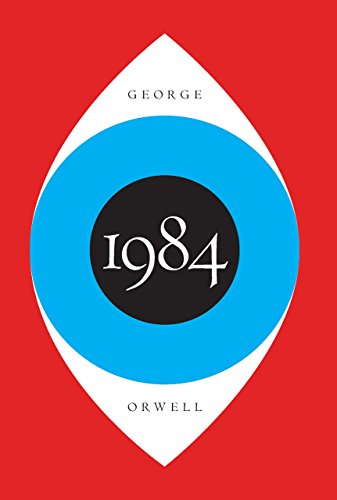
- Nineteen Eighty-Four by George Orwell — Fear and surveillance as tools of control, set against Huxley's comfort and conditioning.
- We by Yevgeny Zamyatin — The earlier dystopia Orwell thought Huxley drew on. Huxley denied it.
- Fahrenheit 451 by Ray Bradbury — Another dystopia where people accept their own distraction.
- Amusing Ourselves to Death by Neil Postman — Nonfiction case that Huxley's pleasure-control model describes modern media better than Orwell's.
- Island by Aldous Huxley — Huxley's own utopian answer to this book.
Track this book
Add to your library to track progress and write reviews