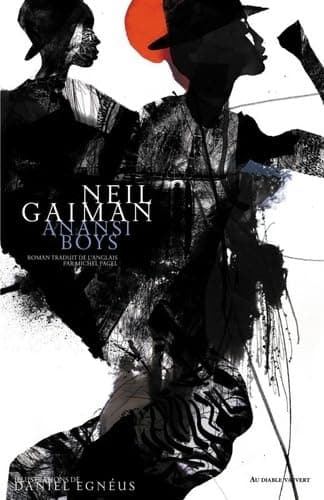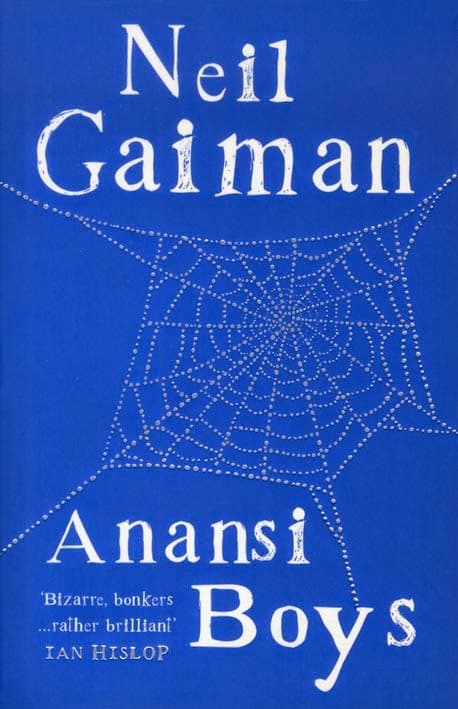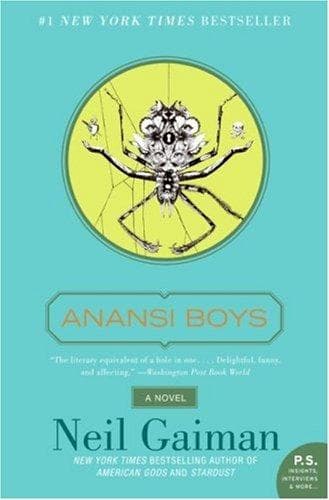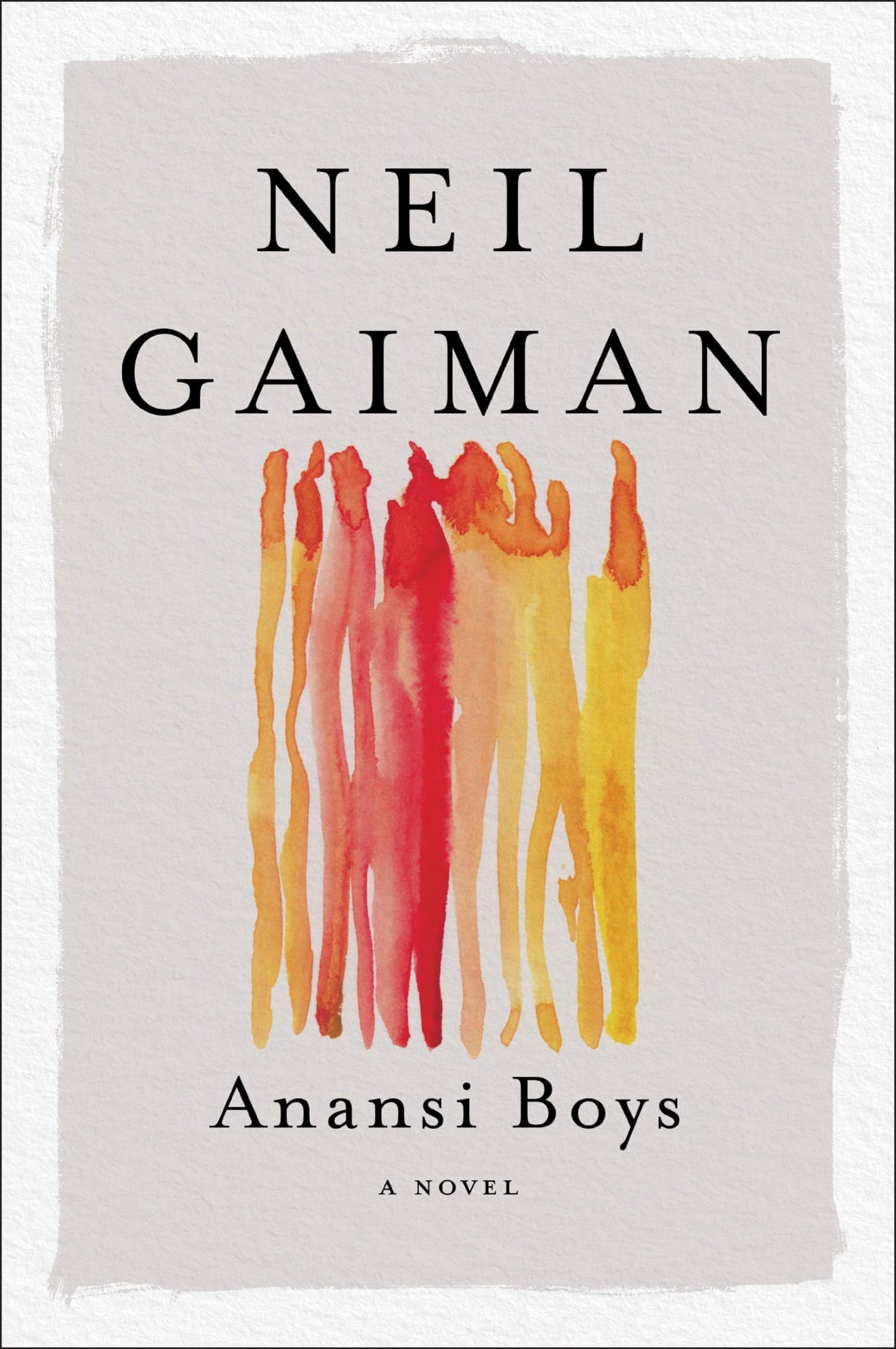
Charles "Fat Charlie" Nancy has spent his entire adult life attempting to be as unremarkable as possible. Living in London and working a modest job in accounts, he has carefully curated a life of quiet stability to distance himself from the memory of his father, a man whose penchant for public singing and flamboyant mischief was a constant source of mortification. Charlie’s world is one of spreadsheets, sensible shoes, and a looming marriage to his fiancée, Rosie. He believes that by leaning into the mundane, he can finally escape the shadow of a childhood defined by a father who never quite fit into the rules of the real world.
The fragile peace of Charlie’s existence shatters when news arrives that his father has passed away during a karaoke performance in Florida. Upon returning home for the funeral, Charlie discovers two things that defy his logical worldview: first, that his father was actually Anansi, the West African spider god of trickery and stories; and second, that he has a brother named Spider who inherited all of their father's divine charm and supernatural abilities. When Spider inevitably appears on Charlie's doorstep, the wall between the ordinary world and the realm of myth collapses, dragging Charlie into a chaotic struggle for his own identity and the remains of his sanity.
Gaiman constructs an urban fantasy landscape where the mythological is not hidden in another dimension, but rather woven into the fabric of everyday life. The setting transitions between the grey, bureaucratic streets of London and the vibrant, sun-drenched atmosphere of the Caribbean, suggesting that ancient magic persists wherever stories are told. The world operates on the "logic of stories," where the person who can spin the best narrative or outwit their opponent through cleverness holds more power than the one with the most physical strength. This isn't a world of epic battles, but one of social manipulation, legacies, and the inherent danger of a trickster’s whims.
The narrative arc centers on the internal and external friction between Charlie and Spider. While they are brothers, they function as two halves of a single whole—Charlie represents the human struggle for order and the weight of embarrassment, while Spider represents the liberation of chaos and the lack of social consequence. Charlie’s development in the first half of the book is characterized by his desperate attempt to reclaim his life from Spider’s "help," which usually involves Spider usurping Charlie’s identity and improving his life in ways Charlie never asked for. This dynamic explores the tension between who we are and the versions of ourselves we project to the world.
The novel utilizes several classical tropes but strips them of their usual gravitas to focus on character and humor. While it employs the Secret Heritage trope, Charlie does not view his divine lineage as a gift or a call to adventure; he views it as a logistical nightmare. The Trickster archetype is explored not just through the deceased Anansi, but through the ripple effects his nature has on his children. Gaiman also plays with the Double/Doppelgänger motif, using Spider not as a traditional "evil twin," but as a catalyst for Charlie to confront his own passivity. The stakes are personal rather than global, focusing on whether a man can survive his own family history without losing his soul in the process.
Add to your library to track progress and write reviews
Find Anansi Boys Neil Gaiman in PDF, EPUB, ebook, audiobook, print, or library editions.

44 books in catalog
Groundbreaking dark fantasy comic books and dark, whimsical prose fiction have reshaped speculative literature, most famously through the comic book series The Sandman. English author Neil Gaiman, born Neil Richard Gaiman on 10 November 1960, created this influential series before publishing widely acclaimed fantasy novels including Stardust, American Gods, Coraline, and The Graveyard Book.
Born Neil Richard Gaiman in Portchester, Hampshire, UK, he spent much of his childhood reading in public libraries, where he discovered the works of C.S. Lewis, J.R.R. Tolkien, Edgar Allan Poe, Ursula K. LeGuin, and G.K. Chesterton. He began his professional career in journalism before transitioning into comic book writing in the late 1980s, gaining prominence with Black Orchid in 1988 and launching The Sandman series for DC Comics' Vertigo imprint in 1989. Over the subsequent decades, he expanded into writing novels, short fiction, audio theatre, screenplays, and films, eventually taking up residence in the United States near Minneapolis.
His fiction has earned widespread critical recognition, receiving Hugo, Nebula, and Bram Stoker awards. In 2008, he published The Graveyard Book, becoming the first author to win both the American Newbery Medal and the British Carnegie Medal for the same work. In 2013, his novel The Ocean at the End of the Lane was voted Book of the Year in the British National Book Awards. His extensive bibliography and media adaptations continued to draw major critical attention through 2017 and beyond.
Gaiman's literary work is noted for combining imaginative fantasy with a darkly humorous tone, fusing modern settings with classical mythology, folklore, and fairy tale motifs. His stories frequently explore themes of memory, childhood innocence, ancient gods navigating contemporary society, and the fundamental power of stories. Across all age categories, his narratives balance gothic atmosphere with warm human empathy and sharp observational wit.
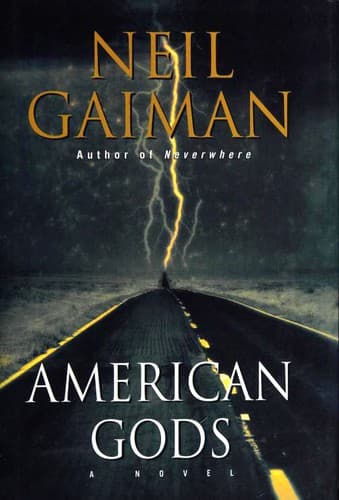
American Gods