SSansFiction
The libraryCollectionsJournalStatsFor authors
Sign inJoin now
Sansfiction,

A digital library for books. Made by readers, for readers.

v 2.0 · 2026
The library
  • Discover
  • Collections
  • Book tracker
  • Journal
  • Stats
For authors
  • SF Links
  • Analytics
  • How it works
  • FAQ
Elsewhere
  • X / @sansfiction
  • Privacy
  • Terms
  • Contact
© 2026 SansFiction · Digital · GlobalA quiet room for your reading life.
The libraryCollectionsJournalStatsFor authors
Sign inJoin now →
Navigation
Library
Bookshelf
Journal
Discover
Collections
Tierlists
Stats
Profile
Author Page
Link Builder
Account
Sign in
S
G
BookschristmasA Christmas Carol
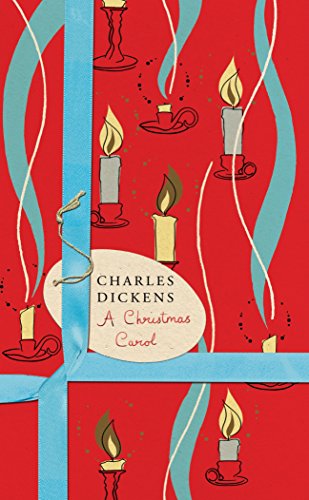
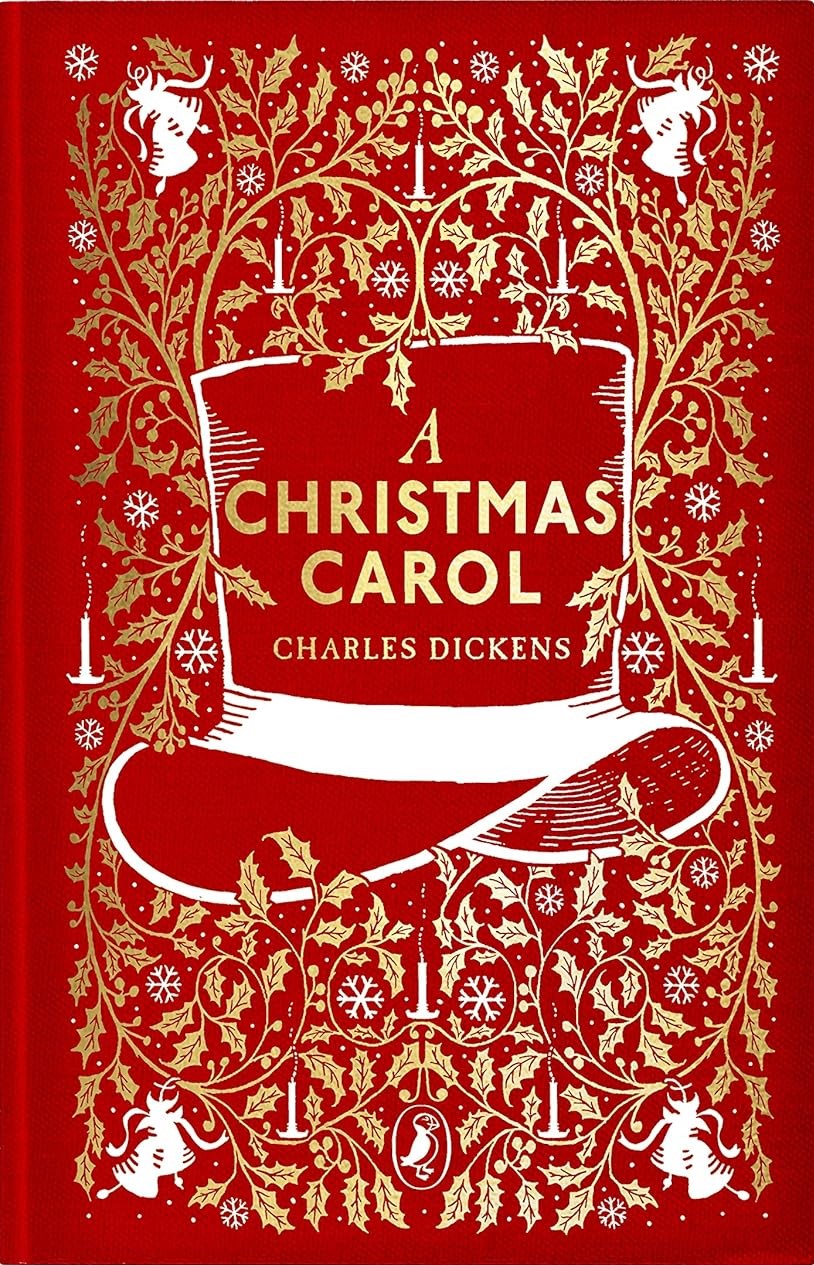
Cover of A Christmas Carol by Charles Dickens
№ 1 · The Christmas Books of Charles Dickens

A Christmas Carol,

by Charles Dickens

Ask AI
Rating4.1/ 5
Ratings995
Pages126
Reading Hours3h
Published1843
LanguageEnglish

§Synopsis

01

A stunningly beautiful hardback edition of the most famous Christmas story in the world - Charles Dickens' beloved book A Christmas Carol. Ebenezer Scrooge is a mean, miserable, bitter old man with no friends. One cold Christmas Eve, three ghosts take him on a scary journey to show him the error of his nasty ways. By visiting his past, present and future, Scrooge learns to love Christmas and the people all around him. Also in Puffin Clothbound Classics: 9780241411148 Black Beauty 9780241411155 Dracula 9780241411162 The Secret Garden 9780241411209 The Wizard of Oz 9780241411216 Treasure Island

§Our take

This is Dickens at his most politically alert, smuggling a sharp argument about poverty inside a ghost story built for the fireside. Scrooge's coldness is personal, but Dickens's criticism of workhouses and his attack on surplus-population thinking make the problem social too. Its sentimental patches are real: Tiny Tim and the Cratchits can tip into treacle, and Dickens's fable is never subtle about what virtue means.

The five short staves make the book brisk, episodic and unusually good aloud. Dickens's long Victorian sentences can look forbidding, but the central movement is simple and forceful: a man is shown what his priorities produce and forced to reckon with what lies beyond his ledger.

§Themes

Ghosts as conscience
The spirits use memory, present misery and the future to make Scrooge face the consequences of his priorities.
Poverty with a face
Dickens personifies hunger and neglect so social cruelty cannot hide behind respectable language.
Mercy versus bookkeeping
The story attacks workhouses and the idea that poor people are a surplus to be managed.
Christmas as argument
The old-fashioned season becomes a case for fellowship and generosity, even when the sentiment turns sticky.
Made for the ear
Five compact staves and a long history of public readings make the story work best aloud.

§How it was received

British reviewers were overwhelmingly warm: Thackeray treated it as a national good and a personal kindness to readers, while the Illustrated London News and the Athenaeum admired its humour and humanity. The dissent was narrow: one magazine faulted the lavish edition as too costly for the poor, and the Westminster Review mocked Dickens's economics. American coverage was sparser at first, but the book became Dickens's most popular title there over the following decades; later critics split, with Howells and Joyce finding the sentiment naive or theatrical and Chesterton defending its emotional force.

§Read it if

  • You want a short Dickens and prefer a sharp moral fable to a sprawling social novel
  • You like ghost stories with teeth and a social argument under the scares
  • You enjoy read-aloud books, unabridged audio or old-fashioned sentences that reward listening

§Skip it if

  • You prefer psychological depth to a moral fable that presses its lesson hard
  • You find Tiny Tim and the Cratchits unbearably sentimental, or the ghost scenes too frightening

§Before you start

Reading experience
The five short staves keep the pace brisk and the novella easy to finish in an evening, though Dickens's long sentences can snag; an unabridged recording helps.
Reading order
Standalone. It is the first of Dickens's five Christmas Books, followed by The Chimes, The Cricket on the Hearth, The Battle of Life and The Haunted Man, but each is self-contained and none needs to be read first.
Content notes
Scary supernatural scenes, including Marley's chained ghost and the Ghost of Christmas Yet to Come; Depictions of hunger, cold and poverty among children; A family grieving a child's death in one of the ghostly visions; Background drinking and pipe smoking.

§Common questions

Is A Christmas Carol a novella?
Yes. It's a short novella, much shorter than Dickens's novels, and can be read in an evening.
Do I need to read the other Christmas Books first?
No. Each book is self-contained, though A Christmas Carol comes first in the five-book sequence.
Is A Christmas Carol suitable for children?
Common Sense Media recommends it for ages 9+, but the frightening ghosts, child poverty and a vision of a child's death may upset younger or sensitive readers.

§If you liked this

  • The Chimes by Charles Dickens — Dickens's next Christmas book keeps the ghostly mood and concern with poverty, though it is generally considered weaker and more openly polemical.
  • The Sketch Book (Christmas essays) by Washington Irving — Washington Irving's earlier portrait of old-fashioned Christmas shows the tradition Dickens inherited and sharpened.
Sources
  • Wikipedia
  • The Victorian Web (essay by Dan Calinescu, editor's note by Philip V. Allingham)
  • LitCharts
  • Common Sense Media
  • Project Gutenberg
  • Poets & Writers / Pshares blog (Victoria Addis)
  • Encyclopedia.com (Gale, Novels for Students)

Track this book

Add to your library to track progress and write reviews
§Genres
christmas2classics2adventure1children1comics1fantasy1fiction1
§Content Warnings
§Moods
adventurous1dark1emotional1funny1heartwarming1hopeful1inspiring1
§Tags
#a mix driven1#character driven1#diverse characters1

§About the Author

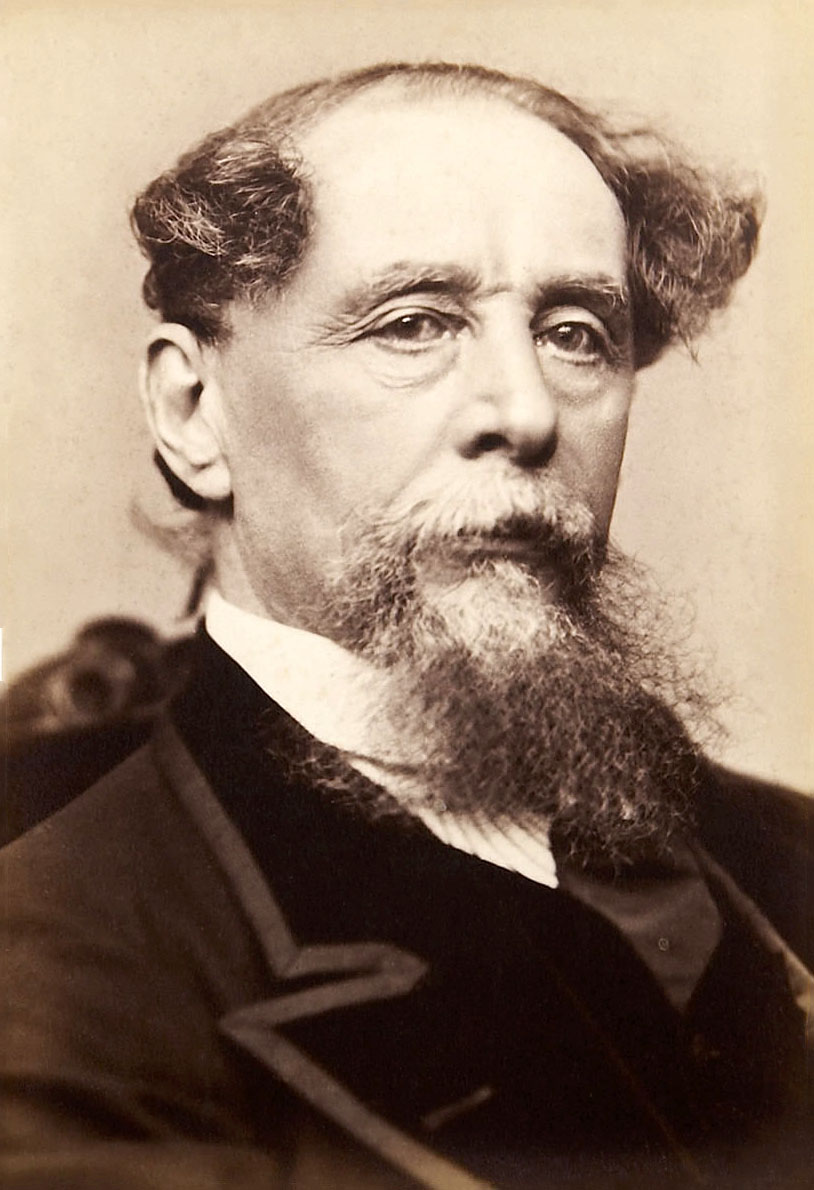
Charles Dickens
Charles Dickens

13 books in catalog

Victorian narrative fiction gained its most widespread public engagement through serialized novels depicting urban industrial life, institutional neglect, and personal redemption, exemplified by A Christmas Carol. Charles Dickens emerged during the nineteenth century as a central figure in English literature, publishing fourteen major novels along with extensive journalistic reports, essays, and seasonal short stories that have remained continuously in print since their initial publication.

His fiction transformed popular entertainment into a platform for social critique, combining vivid characterization with detailed observations of contemporary London society.

Career & Background

Born in Portsmouth on February 7, 1812, to John and Elizabeth Dickens, Charles John Huffam Dickens experienced financial instability early in life. In 1824, his father was imprisoned for debt in London's Marshalsea Prison, forcing the twelve-year-old Dickens to work at Warren's Blacking Factory. This traumatic period of hardship shaped his perspective on poverty and institutional injustice, directly influencing novels such as David Copperfield, in which his father served as the model for Mr. Micawber.

Dickens began his professional writing career as a journalist and court reporter before achieving major literary success with serialized fiction like The Pickwick Papers in 1837 and Oliver Twist in 1838. In addition to writing novels, he worked extensively as an editor and commentator, using periodicals to publish topical articles on political and social conditions across Victorian Britain until his death on June 9, 1870.

Writing Style & Themes

Dickens's narrative technique relies on acute social realism, satirical commentary, and memorable characterizations to critique contemporary institutions. A central theme running throughout his work is social reform, specifically targeting debtor prisons, child labor, legal corruption, and the indifference of privileged classes. Through works such as Bleak House and Hard Times, he combined outraged social commentary with sprawling, interconnected plots that reflected the complexities of Victorian life.

Major Works

  • A Christmas Carol — Published in 1843, this novella addresses greed, isolation, and moral redemption through a seasonal ghost story that critiques economic heartlessness.
  • Oliver Twist — Published in 1838, this novel highlights orphanhood, criminal underworlds, and the harsh realities of the workhouse system in Victorian London.
  • David Copperfield — Published in 1850, this semi-autobiographical novel draws on Dickens's early personal hardships and his father's imprisonment for debt.
  • Bleak House — Published in 1853, this novel satirizes the English legal system through the protracted Court of Chancery lawsuit of Jarndyce and Jarndyce.
  • Great Expectations — Published in 1861, this coming-of-age story examines ambition, class mobility, and personal integrity through the life of the orphan Pip.
  • A Tale of Two Cities — A historical novel set in London and Paris during the French Revolution, depicting political upheaval, sacrifice, and resurrection.
  • Hard Times — A novel set in an industrial town that critiques utilitarian philosophy, mechanized labor, and rigid educational systems.
  • Little Dorrit — A novel exploring the crippling effects of debt and institutional dysfunction, centered around the Marshalsea debtor's prison.
  • Nicholas Nickleby — A story following a young man's struggle to support his family while exposing cruel conditions in private boarding schools.
  • Our Mutual Friend — Dickens's last completed novel, examining the corrupting influence of wealth and social ambition along the River Thames.
  • Martin Chuzzlewit — A satire examining selfishness and hypocrisy, featuring observations inspired by Dickens's travels to North America.

§Featured Series

The Christmas Books of Charles Dickens

Cover of A Christmas Carol by Charles Dickens

A Christmas Carol

Charles Dickens, 1843

§Editions

Showing 3 of 282 editions
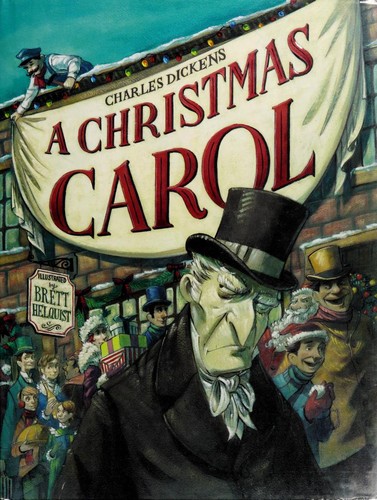
Cover of A Christmas Carol

A Christmas Carol

engHardcover126 pgs
National Geographic Books20199780241411193
Cover of A Christmas Carol

A Christmas Carol

engPaperback
Vintage20159780099599852
Cover of Charles Dickens' A Christmas Carol

Charles Dickens' A Christmas Carol

engHardcover
Harper20099780061650994
§Genres
christmas2classics2adventure1children1comics1fantasy1fiction1
§Content Warnings
§Moods
adventurous1dark1emotional1funny1heartwarming1hopeful1inspiring1
§Tags
#a mix driven1#character driven1#diverse characters1

Metadata

ISBN-139780241411193
ISBN-10024141119X

Editions and availability

Find A Christmas Carol Charles Dickens in PDF, EPUB, ebook, audiobook, print, or library editions.

Bookshop.orgGoogle Play BooksBarnes & NobleOpen Library

Featured In Lists

Book cover from this collectionBook cover from this collectionBook cover from this collectionBook cover from this collection
Book cover from this collection

Gilmore Girls Reading List 🍂

407 books
Book cover from this collectionBook cover from this collectionBook cover from this collectionBook cover from this collection
Book cover from this collection

100 Must Read Classics

99 books
Book cover from this collectionBook cover from this collectionBook cover from this collectionBook cover from this collection
Book cover from this collection

List 1001 Books Boxall

1000 books