BooksДюна. Первая трилогия
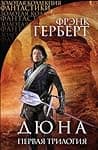
Set in a far-future feudal society where technology is constrained by ancient religious prohibitions, Frank Herbert’s epic saga begins with a precarious transfer of power. House Atreides, led by the noble Duke Leto, is ordered by the Padishah Emperor to leave their lush home world of Caladan and take stewardship of Arrakis—a harsh, waterless desert planet known colloquially as Dune. This world is the only source in the universe for the "spice" melange, a substance that grants longevity, expanded consciousness, and is vital for interstellar travel, making it the most valuable commodity in existence.
Beneath the political maneuverings lies a deeper struggle between ecological survival and manufactured prophecy. As the Atreides settle into their new role, they find themselves caught between the brutal legacy of their predecessors, the Harkonnens, and the mysterious, hardened indigenous people known as the Fremen. Young Paul Atreides, heir to the house, begins to experience prescient visions that suggest his arrival on Arrakis is not merely a political move, but the fulfillment of a millennia-old genetic program and a catalyst for a conflict that could reshape the human species.
The world of the first trilogy is defined by the Butlerian Jihad, an ancient crusade that outlawed "thinking machines." This prohibition forced humanity to develop the mental capacities of the human mind to their absolute limits. In place of computers, the universe relies on Mentats (human computers), the Spacing Guild (who use spice to fold space), and the Bene Gesserit (a sisterhood using genetic selection and psychological conditioning to influence politics). On the surface of Arrakis, the environment itself is a primary antagonist; water is the ultimate currency, and survival depends on "stillsuits" that recycle the body’s moisture. The ecology of the planet is inextricably linked to the lifecycle of the Great Sandworms, massive creatures that guard the spice and punish any rhythmic sound on the desert floor.
The initial arc of the trilogy focuses on Paul’s transition from a sheltered student of war and philosophy into a survivalist. His development is marked by a growing tension between his training as a noble leader and the "weirding way" of his mother’s heritage. Unlike many protagonists who eagerly embrace their destiny, Paul experiences his growing prescience as a heavy burden, fearing the violent future his very existence might trigger. His relationship with his parents evolves from one of protected obedience to one of shared survival, as the political stability of House Atreides begins to crumble under the weight of imperial and Harkonnen conspiracies.
Herbert utilizes the trope of the "Chosen One" but adds a layer of sociological realism that subverts the traditional hero’s journey. Rather than Paul being a hero by divine right, the narrative reveals how the Bene Gesserit’s Missionaria Protectiva spent centuries planting religious myths among the Fremen to ensure that any member of the sisterhood who arrived there would be seen as a savior. The trilogy also explores the trope of "Galactic Feudalism," treating the Great Houses not as romanticized kingdoms, but as competing corporations in a high-stakes monopoly where the environment of Arrakis is the only truly independent player. The central dilemma is not merely good versus evil, but the danger of following charismatic leaders and the ecological cost of human ambition.
Set in a far-future feudal society where technology is constrained by ancient religious prohibitions, Frank Herbert’s epic saga begins with a precarious transfer of power. House Atreides, led by the noble Duke Leto, is ordered by the Padishah Emperor to leave their lush home world of Caladan and take stewardship of Arrakis—a harsh, waterless desert planet known colloquially as Dune. This world is the only source in the universe for the "spice" melange, a substance that grants longevity, expanded consciousness, and is vital for interstellar travel, making it the most valuable commodity in existence.
Beneath the political maneuverings lies a deeper struggle between ecological survival and manufactured prophecy. As the Atreides settle into their new role, they find themselves caught between the brutal legacy of their predecessors, the Harkonnens, and the mysterious, hardened indigenous people known as the Fremen. Young Paul Atreides, heir to the house, begins to experience prescient visions that suggest his arrival on Arrakis is not merely a political move, but the fulfillment of a millennia-old genetic program and a catalyst for a conflict that could reshape the human species.
The world of the first trilogy is defined by the Butlerian Jihad, an ancient crusade that outlawed "thinking machines." This prohibition forced humanity to develop the mental capacities of the human mind to their absolute limits. In place of computers, the universe relies on Mentats (human computers), the Spacing Guild (who use spice to fold space), and the Bene Gesserit (a sisterhood using genetic selection and psychological conditioning to influence politics). On the surface of Arrakis, the environment itself is a primary antagonist; water is the ultimate currency, and survival depends on "stillsuits" that recycle the body’s moisture. The ecology of the planet is inextricably linked to the lifecycle of the Great Sandworms, massive creatures that guard the spice and punish any rhythmic sound on the desert floor.
The initial arc of the trilogy focuses on Paul’s transition from a sheltered student of war and philosophy into a survivalist. His development is marked by a growing tension between his training as a noble leader and the "weirding way" of his mother’s heritage. Unlike many protagonists who eagerly embrace their destiny, Paul experiences his growing prescience as a heavy burden, fearing the violent future his very existence might trigger. His relationship with his parents evolves from one of protected obedience to one of shared survival, as the political stability of House Atreides begins to crumble under the weight of imperial and Harkonnen conspiracies.
Herbert utilizes the trope of the "Chosen One" but adds a layer of sociological realism that subverts the traditional hero’s journey. Rather than Paul being a hero by divine right, the narrative reveals how the Bene Gesserit’s Missionaria Protectiva spent centuries planting religious myths among the Fremen to ensure that any member of the sisterhood who arrived there would be seen as a savior. The trilogy also explores the trope of "Galactic Feudalism," treating the Great Houses not as romanticized kingdoms, but as competing corporations in a high-stakes monopoly where the environment of Arrakis is the only truly independent player. The central dilemma is not merely good versus evil, but the danger of following charismatic leaders and the ecological cost of human ambition.
Add to your library to track progress and write reviews
Add to your library to track progress and write reviews
Find Дюна. Первая трилогия Frank Herbert in PDF, EPUB, ebook, audiobook, print, or library editions.
Find Дюна. Первая трилогия Frank Herbert in PDF, EPUB, ebook, audiobook, print, or library editions.

22 books in catalog
The desert planet of Arrakis, with its giant sandworms, complex ecology, and political factions vying for control over the spice melange, remains one of the most thoroughly detailed world-building achievements in speculative fiction. American author Frank Herbert introduced this setting in his seminal 1965 novel Dune, creating an expansive universe that transformed epic science fiction by weaving together ecology, philosophy, religion, and political intrigue.
Born in Tacoma, Washington in 1920, Herbert spent his youth in the Pacific Northwest and worked on local newspapers as a teenager. He attended the University of Washington in Seattle and worked a wide variety of jobs throughout his early adult life, including time as a TV cameraman, radio commentator, oyster diver, jungle survival instructor, lay analyst, and creative writing teacher. He also worked as a reporter and later editor of a number of West Coast newspapers before becoming a full-time writer. Herbert began publishing science fiction in 1952 with his short story 'Looking for Something?' in Startling Stories. His research into the Oregon Dunes during the 1950s served as a primary catalyst for his ecological themes. He achieved widespread fame more than ten years later following the serial publication in Analog of 'Dune World' and 'The Prophet of Dune', which were amalgamated into the novel Dune in 1965.
Herbert's fiction is distinguished by its intricate world-building, ecological awareness, and deep examination of human potential and institutional vulnerability. Rather than relying solely on technological advancement, his narrative focus often centers on human adaptability, psychological conditioning, religious mythmaking, and the perilous consequences of messianic leadership. He frequently explored how harsh environments shape cultures, social structures, and survival strategies, a focus prominently displayed in novels such as Destination: Void and The Jesus Incident alongside his desert sagas.
22 books in catalog
The desert planet of Arrakis, with its giant sandworms, complex ecology, and political factions vying for control over the spice melange, remains one of the most thoroughly detailed world-building achievements in speculative fiction. American author Frank Herbert introduced this setting in his seminal 1965 novel Dune, creating an expansive universe that transformed epic science fiction by weaving together ecology, philosophy, religion, and political intrigue.
Born in Tacoma, Washington in 1920, Herbert spent his youth in the Pacific Northwest and worked on local newspapers as a teenager. He attended the University of Washington in Seattle and worked a wide variety of jobs throughout his early adult life, including time as a TV cameraman, radio commentator, oyster diver, jungle survival instructor, lay analyst, and creative writing teacher. He also worked as a reporter and later editor of a number of West Coast newspapers before becoming a full-time writer. Herbert began publishing science fiction in 1952 with his short story 'Looking for Something?' in Startling Stories. His research into the Oregon Dunes during the 1950s served as a primary catalyst for his ecological themes. He achieved widespread fame more than ten years later following the serial publication in Analog of 'Dune World' and 'The Prophet of Dune', which were amalgamated into the novel Dune in 1965.
Herbert's fiction is distinguished by its intricate world-building, ecological awareness, and deep examination of human potential and institutional vulnerability. Rather than relying solely on technological advancement, his narrative focus often centers on human adaptability, psychological conditioning, religious mythmaking, and the perilous consequences of messianic leadership. He frequently explored how harsh environments shape cultures, social structures, and survival strategies, a focus prominently displayed in novels such as Destination: Void and The Jesus Incident alongside his desert sagas.
Dune


Dune