
§Author· 7 books
Philip Gabriel
Also known as James Philip Gabriel, J. Philip Gabriel
Rendering contemporary Japanese fiction into English with nuanced precision has brought acclaimed literature to a global readership, most notably through translations of Haruki Murakami's surreal novel Kafka on the Shore. American translator and Japanologist James Philip Gabriel (born 1953) has served as one of the primary English translators for Murakami while also rendering works by Nobel laureate Kenzaburō Ōe, Senji Kuroi, and Natsuo Kirino.
Career & Background
Born at Fort Ord, California, Gabriel earned an undergraduate degree in Chinese and a Master's degree in Japanese before spending seven years teaching in Japan during the late 1970s and 1980s. While living in Japan, his participation in a weekly reading group that compared Japanese fiction line-by-line with published English translations developed his passion for literary translation. Gabriel later earned a doctorate in Japanese literature from Cornell University following research conducted under a Fulbright graduate fellowship. He published his first translation of a short story by Murakami in 1988 and went on to join the faculty at the University of Arizona, where he served as a full professor and chair of the Department of East Asian Studies. Beyond translating fiction, Gabriel is a scholar who authored academic books including Mad Wives and Island Dreams: Shimao Toshio and the Margins of Japanese Literature and Spirit Matters: The Transcendent in Modern Japanese Literature.
Writing Style & Themes
Gabriel's translation work is widely recognized for its careful fidelity to authorial voice, capturing both the mundane textures and subtle surrealism characteristic of modern Japanese prose. His methodology rests on close textual examination, balancing literal accuracy with idiomatic fluency in English. In translating works that range from psychological drama to magical realism and non-fiction essays like Murakami's Novelist as a Vocation, Gabriel preserves narrative rhythm, character perspective, and underlying existential themes without introducing intrusive stylistic alterations.
Major Works
- Kafka on the Shore — Gabriel's English translation of Haruki Murakami's novel won the 2006 PEN/Book-of-the-Month Club Translation Prize.
- Life in the Cul-de-Sac — His translation of Senji Kuroi's novel won the 2001 Japan-U.S. Friendship Commission Prize for the Translation of Japanese Literature.
- 1Q84 — Gabriel contributed as a co-translator for Murakami's multi-volume dystopian novel.
- Sputnik Sweetheart — One of Gabriel's key novel translations for Murakami, capturing themes of solitude and personal connection.
- Novelist as a Vocation — Gabriel translated Murakami's essay collection detailing the author's perspective on writing, creative discipline, and literary craft.
§All Books

Kafka on the Shore
Haruki Murakami, 2001
967 ratings

1Q84
Haruki Murakami, 20
508 ratings

Sputnik Sweetheart
Haruki Murakami, 1999
301 ratings

The Travelling Cat Chronicles
Hiro Arikawa, 2012
237 ratings

Lonely Castle in the Mirror
Mizuki Tsujimura, 2017
110 ratings
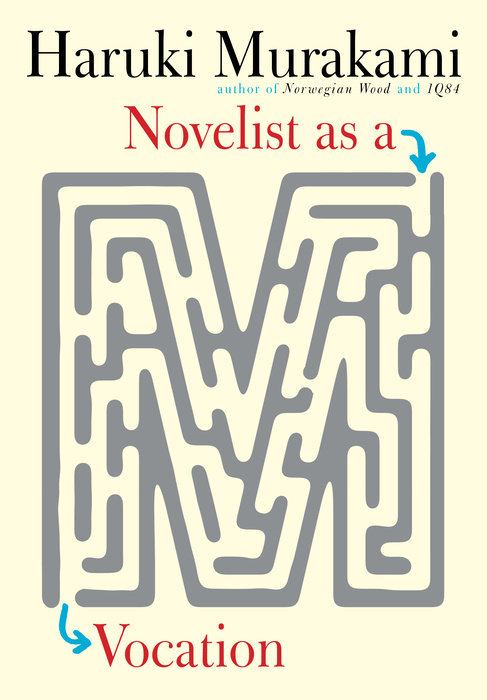
Novelist as a Vocation
Haruki Murakami, 2015
44 ratings

The Goodbye Cat
Hiro Arikawa, 2021
28 ratings
§ About Philip Gabriel's books
- Books on SansFiction
- 7
- Published
- 1999–2021
- Average rating
- 3.9 / 5 across 2,195 ratings
- Genres
- Fantasy, Fiction, Mystery, Classics
Start here: Kafka on the Shore (2001)
Kafka on the Shore is powered by two remarkable characters: a teenage boy, Kafka Tamura, who runs away from home either to escape a gruesome oedipal prophecy or to search for his long missing mother and sister; and an aging simpleton called Nakata, who never recovered from a wartime affliction and now is drawn toward Kafka for reasons that, like the most…
Common questions about Philip Gabriel
- Who is Philip Gabriel?
- Born at Fort Ord, California, Gabriel earned an undergraduate degree in Chinese and a Master's degree in Japanese before spending seven years teaching in Japan during the late 1970s and 1980s. While living in Japan, his participation in a weekly reading group that compared Japanese fiction line-by-line with published English translations developed his passion for literary translation.
- What is Philip Gabriel best known for?
- Philip Gabriel is best known for Kafka on the Shore, published in 2001 with 967 ratings and a 4.0 average. It is the most-rated of Philip Gabriel's books on SansFiction.
- How many books has Philip Gabriel written?
- SansFiction lists 7 books by Philip Gabriel, published between 1999 and 2021. The most popular are Kafka on the Shore, 1Q84, Sputnik Sweetheart, The Travelling Cat Chronicles and Lonely Castle in the Mirror.
- Which Philip Gabriel book should I read first?
- Kafka on the Shore is the usual place to start: it is Philip Gabriel's most-rated book here, with a 4.0 average.
- What genres does Philip Gabriel write?
- Philip Gabriel's books on SansFiction are tagged Fantasy, Fiction, Mystery and Classics.