§Synopsis
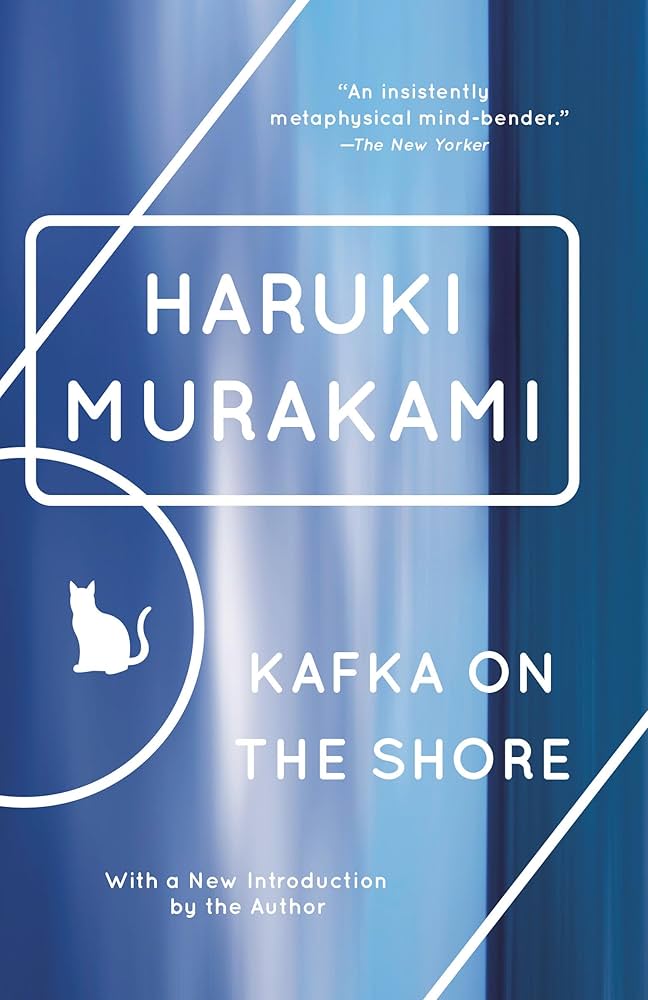
01Kafka on the Shore is powered by two remarkable characters: a teenage boy, Kafka Tamura, who runs away from home either to escape a gruesome oedipal prophecy or to search for his long missing mother and sister; and an aging simpleton called Nakata, who never recovered from a wartime affliction and now is drawn toward Kafka for reasons that, like the most basic activities of daily life, he cannot fathom.
§Our take
The real argument with Kafka on the Shore is whether its riddles are an invitation or an evasion. Murakami says the riddles interact so that each reader can arrive at a different solution, and the book lives up to that claim: Kafka's first-person flight offers nervous momentum, while Nakata's gentler third-person chapters, often shared with the truck driver Hoshino, bring warmth and comedy.
That balance is the pleasure and the problem. Some readers find the unresolved imagery profound; others call it a cop-out. The polished surface also gives way to sexual material involving the 15-year-old protagonist, incest themes, murder and cruelty to cats. If you need every mystery tied off, leave before the strangeness takes hold. If you can live with loose ends, those riddles are the reason to stay.
§Themes
- Riddles without tidy keys
- Meaning accumulates through images and associations, so each reader may build a different answer.
- A prophecy as a trap
- Kafka's father's Oedipal prediction pushes him into flight while making freedom itself feel dangerous.
- Two narrators, two speeds
- Kafka's urgent first-person story alternates with Nakata's gentler third-person chapters, creating the novel's central contrast.
- Fate against agency
- Readers disagree over whether inevitability gives the story meaning or drains its characters of agency.
- The shore between worlds
- Shikoku, the library and the woods become a physical route into Kafka's unconscious.
§How it was received
Kirkus gave an unreserved rave, praising the interwoven narratives, dense symbolism and accessibility; the novel later won the 2006 World Fantasy Award for Best Novel. The Complete Review's survey found the 2005 English-language reception mostly warm but divided, rating the novel good though below Murakami's best. The recurring objections were a weak ending, shallow mysticism, overlength and clumsiness; even the translation drew praise from some reviewers and complaints from others.
§Read it if
- You want a demanding Murakami entry point in plain, accessible prose
- You like dream logic, recurring symbols and an ending that leaves room for rereading
- You enjoy the contrast between Kafka's anxious first-person chapters and Nakata's warmer, funnier ones
§Skip it if
- You need a tightly resolved plot. Many readers find the loose ends and open ending frustrating.
- You want no sexual content involving a 15-year-old protagonist, incest themes, murder or cruelty to cats.
§Before you start
- Reading experience
- Expect the pace to shift between Kafka's brooding first-person chapters and Nakata's gentler, often funny third-person sections; the difficulty is conceptual rather than linguistic.
- Content notes
- Sexual content involving a 15-year-old protagonist; Incest themes and a prophecy about patricide; Violence, including a murder; Cruelty to cats; Patricide and parental abandonment.
§Common questions
- Is Kafka on the Shore part of a series?
- No. It's a standalone novel, and no earlier Murakami book is required.
- Does it have a happy ending?
- Not in a conventional sense. Major questions remain unresolved, which some readers appreciate and others dislike.
- Is it suitable for younger readers?
- Check the content warnings first. It includes sexual encounters involving a 15-year-old protagonist, incest themes, violence and cruelty to cats.
§If you liked this
- The Wind-Up Bird Chronicle by Haruki Murakami — A useful Murakami companion for its detached narrator, missing cat and slide into a parallel reality.
- Norwegian Wood by Haruki Murakami — The gentler, realist counterweight for readers who find this much surrealism wearing.
- A Wild Sheep Chase / Dance Dance Dance by Haruki Murakami — Both are shorter Murakami novels with tighter payoffs, useful alternatives when Kafka's sprawl feels like too much.
Track this book
Add to your library to track progress and write reviews