
§Author· 4 books
Olga Tokarczuk
Also known as Olga Nawoja Tokarczuk
Constellation novels, philosophical murder mysteries, and mythic historical chronicles offer readers intricate explorations of geography, identity, and human memory, as seen in the internationally celebrated book Flights. Written by Polish novelist Olga Tokarczuk, these works have been translated into more than thirty languages, earning her both the Nike Award—Poland's highest literary honor—and the Nobel Prize in Literature.
Career & Background
Born on January 29, 1962, in Sulechów, Poland, Tokarczuk grew up in Klenica, where her parents worked as teachers and her father managed a school library that fostered her early reading habits. She studied psychology at the University of Warsaw before debuting as a fiction writer in 1993 with the novel Podróż ludzi Księgi (The Journey of the Book-People), which received the Polish Publisher's Prize for best debut. Tokarczuk eventually settled in Wrocław and published eight novels alongside multiple short story collections, developing into one of Poland's most prominent literary authors.
Tokarczuk gained broad international prominence in 2018 when her novel Flights won the Man Booker International Prize, making her the first Polish writer to receive the award. That same year, the Swedish Academy selected her for the 2018 Nobel Prize in Literature (awarded in 2019), honoring her narrative imagination that represents the crossing of boundaries as a form of life.
Writing Style & Themes
Tokarczuk's prose is known for its wry perspective and non-linear narrative structures that leap between centuries, mythologies, and shifting viewpoints. Drawing on Gnosticism, Kabbalah, folklore, tarot, and regional history, her books frequently examine environmental ethics, human migration, fluid identity, and the historic entwinement of Central and Eastern European cultures.
Major Works
- Flights — A constellation novel that weaves together short reflections, travel observations, and historical vignettes on human anatomy and travel, winner of the Man Booker International Prize.
- The Books of Jacob — An epic historical novel recovering forgotten chapters of 18th-century Central European history through the life of religious leader Jacob Frank.
- Drive Your Plow Over the Bones of the Dead — A dark existential murder mystery and eco-thriller centered on an eccentric recluse in a remote Polish village, exploring animal ethics and William Blake's poetry.
- House of Day, House of Night: A Novel — A multi-layered narrative combining local folklore, history, and personal observations along the Polish-Czech borderland.
§All Books

Drive Your Plow Over the Bones of the Dead
Olga Tokarczuk, 2009
272 ratings

Flights
Olga Tokarczuk, 2007
73 ratings

The Books of Jacob
Olga Tokarczuk, 2010
25 ratings
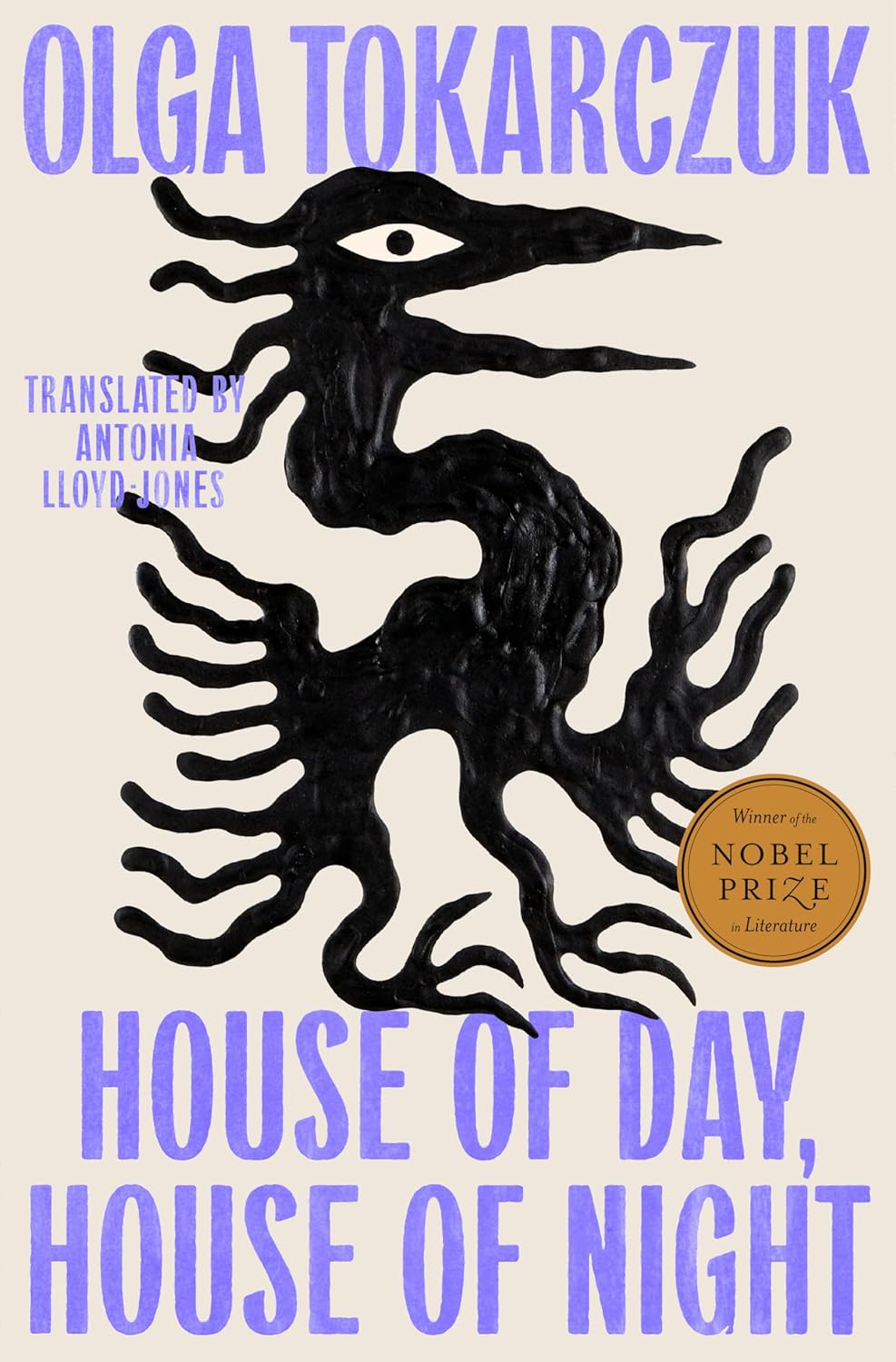
House of Day, House of Night: A Novel
Olga Tokarczuk, 2025
§ About Olga Tokarczuk's books
- Books on SansFiction
- 4
- Published
- 2007–2025
- Average rating
- 3.8 / 5 across 370 ratings
- Genres
- Literary Short Stories, Magical Realism, Classics, Crime
Start here: Drive Your Plow Over the Bones of the Dead (2009)
WINNER OF THE NOBEL PRIZE IN LITERATURE "A brilliant literary murder mystery." —Chicago Tribune "Extraordinary. Tokarczuk's novel is funny, vivid, dangerous, and disturbing, and it raises some fierce questions about human behavior.
Common questions about Olga Tokarczuk
- Who is Olga Tokarczuk?
- Born on January 29, 1962, in Sulechów, Poland, Tokarczuk grew up in Klenica, where her parents worked as teachers and her father managed a school library that fostered her early reading habits. She studied psychology at the University of Warsaw before debuting as a fiction writer in 1993 with the novel Podróż ludzi Księgi (The Journey of the Book-People), which received the Polish Publisher's Prize for best debut.
- What is Olga Tokarczuk best known for?
- Olga Tokarczuk is best known for Drive Your Plow Over the Bones of the Dead, published in 2009 with 272 ratings and a 3.8 average. It is the most-rated of Olga Tokarczuk's books on SansFiction.
- How many books has Olga Tokarczuk written?
- SansFiction lists 4 books by Olga Tokarczuk, published between 2007 and 2025. The most popular are Drive Your Plow Over the Bones of the Dead, Flights, The Books of Jacob and House of Day, House of Night: A Novel.
- Which Olga Tokarczuk book should I read first?
- Drive Your Plow Over the Bones of the Dead is the usual place to start: it is Olga Tokarczuk's most-rated book here, with a 3.8 average.
- What genres does Olga Tokarczuk write?
- Olga Tokarczuk's books on SansFiction are tagged Literary Short Stories, Magical Realism, Classics and Crime.
Explore: Literary Short Stories · Magical Realism · Classics · Crime