“Bewitching … Tokarczuk is an excellent storyteller.” —The New York Times
A novel about the rich stories of small places, from the Nobel Prize–winning, New York Times bestselling author of The Books of Jacob and Drive Your Plow over the Bones of the Dead
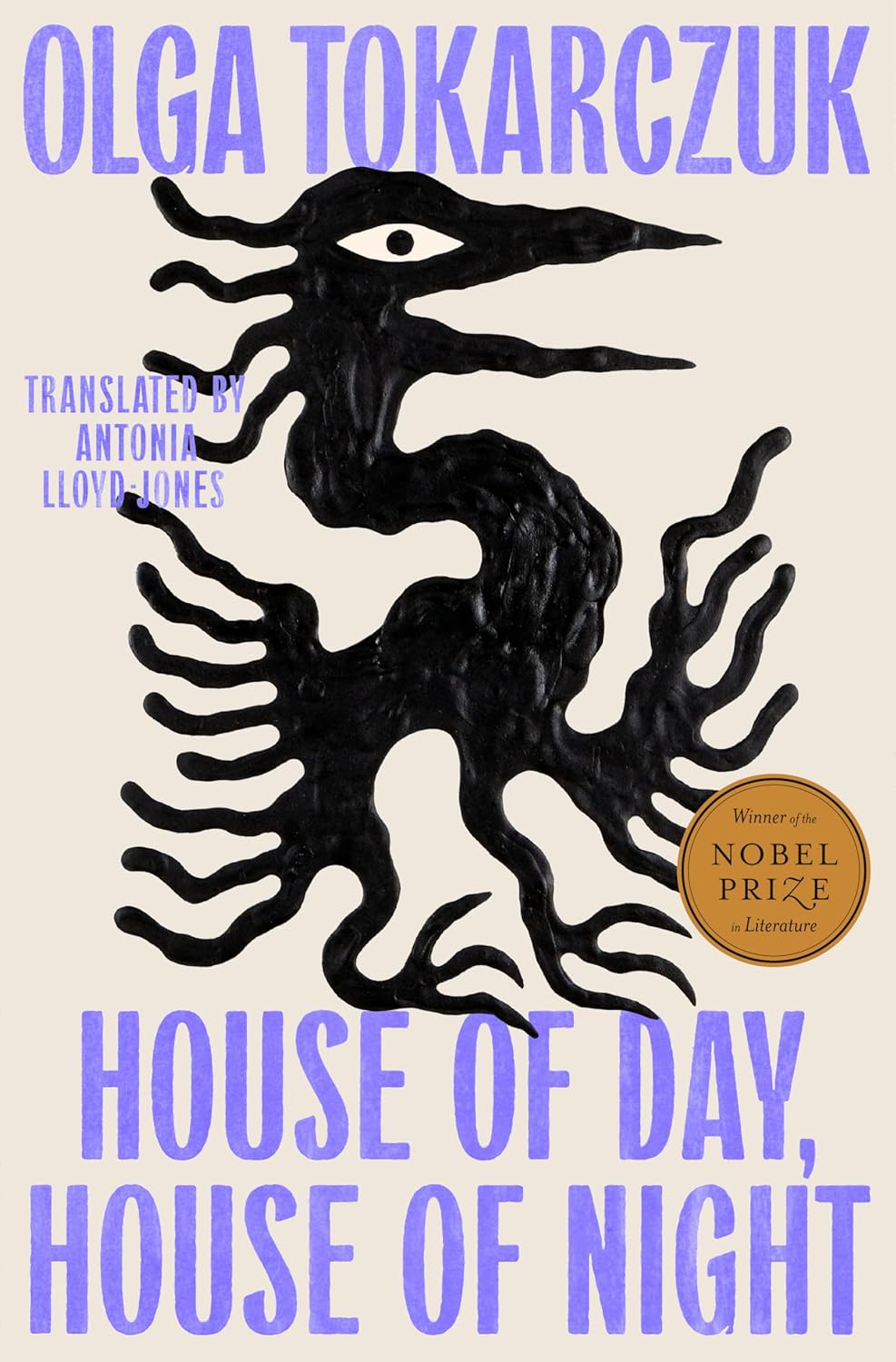
A woman settles in a remote Polish village where she knows no one. It has few inhabitants, but it teems with the stories of the living and the dead. There’s the drunk Marek Marek, who discovers that he shares his body with a bird, and Franz Frost, whose nightmares come to him from a newly discovered planet. There’s the man whose death – with one leg on the Polish side, one on the Czech—was an international incident. And there are the Germans who still haunt a region that not long ago they called their own. From the founding of the town to the lives of its saints, these shards piece together not only a history, but a cosmology.
Another brilliant “constellation novel” in the mode of Tokarczuk’s International Booker Prize-winning Flights, House of Day, House of Night reminds us that the story of any place, no matter how humble, is boundless.
“Bewitching … Tokarczuk is an excellent storyteller.” —The New York Times
A novel about the rich stories of small places, from the Nobel Prize–winning, New York Times bestselling author of The Books of Jacob and Drive Your Plow over the Bones of the Dead
A woman settles in a remote Polish village where she knows no one. It has few inhabitants, but it teems with the stories of the living and the dead. There’s the drunk Marek Marek, who discovers that he shares his body with a bird, and Franz Frost, whose nightmares come to him from a newly discovered planet. There’s the man whose death – with one leg on the Polish side, one on the Czech—was an international incident. And there are the Germans who still haunt a region that not long ago they called their own. From the founding of the town to the lives of its saints, these shards piece together not only a history, but a cosmology.
Another brilliant “constellation novel” in the mode of Tokarczuk’s International Booker Prize-winning Flights, House of Day, House of Night reminds us that the story of any place, no matter how humble, is boundless.
Add to your library to track progress and write reviews
Find House of Day, House of Night: A Novel Olga Tokarczuk in PDF, EPUB, ebook, audiobook, print, or library editions.

4 books in catalog
Constellation novels, philosophical murder mysteries, and mythic historical chronicles offer readers intricate explorations of geography, identity, and human memory, as seen in the internationally celebrated book Flights. Written by Polish novelist Olga Tokarczuk, these works have been translated into more than thirty languages, earning her both the Nike Award—Poland's highest literary honor—and the Nobel Prize in Literature.
Born on January 29, 1962, in Sulechów, Poland, Tokarczuk grew up in Klenica, where her parents worked as teachers and her father managed a school library that fostered her early reading habits. She studied psychology at the University of Warsaw before debuting as a fiction writer in 1993 with the novel Podróż ludzi Księgi (The Journey of the Book-People), which received the Polish Publisher's Prize for best debut. Tokarczuk eventually settled in Wrocław and published eight novels alongside multiple short story collections, developing into one of Poland's most prominent literary authors.
Tokarczuk gained broad international prominence in 2018 when her novel Flights won the Man Booker International Prize, making her the first Polish writer to receive the award. That same year, the Swedish Academy selected her for the 2018 Nobel Prize in Literature (awarded in 2019), honoring her narrative imagination that represents the crossing of boundaries as a form of life.
Tokarczuk's prose is known for its wry perspective and non-linear narrative structures that leap between centuries, mythologies, and shifting viewpoints. Drawing on Gnosticism, Kabbalah, folklore, tarot, and regional history, her books frequently examine environmental ethics, human migration, fluid identity, and the historic entwinement of Central and Eastern European cultures.

4 books in catalog
Constellation novels, philosophical murder mysteries, and mythic historical chronicles offer readers intricate explorations of geography, identity, and human memory, as seen in the internationally celebrated book Flights. Written by Polish novelist Olga Tokarczuk, these works have been translated into more than thirty languages, earning her both the Nike Award—Poland's highest literary honor—and the Nobel Prize in Literature.
Born on January 29, 1962, in Sulechów, Poland, Tokarczuk grew up in Klenica, where her parents worked as teachers and her father managed a school library that fostered her early reading habits. She studied psychology at the University of Warsaw before debuting as a fiction writer in 1993 with the novel Podróż ludzi Księgi (The Journey of the Book-People), which received the Polish Publisher's Prize for best debut. Tokarczuk eventually settled in Wrocław and published eight novels alongside multiple short story collections, developing into one of Poland's most prominent literary authors.
Tokarczuk gained broad international prominence in 2018 when her novel Flights won the Man Booker International Prize, making her the first Polish writer to receive the award. That same year, the Swedish Academy selected her for the 2018 Nobel Prize in Literature (awarded in 2019), honoring her narrative imagination that represents the crossing of boundaries as a form of life.
Tokarczuk's prose is known for its wry perspective and non-linear narrative structures that leap between centuries, mythologies, and shifting viewpoints. Drawing on Gnosticism, Kabbalah, folklore, tarot, and regional history, her books frequently examine environmental ethics, human migration, fluid identity, and the historic entwinement of Central and Eastern European cultures.