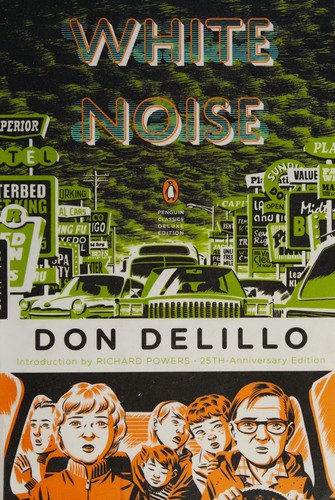
Postmodern American fiction gained one of its most distinct voices through dark, resonant explorations of mass media, consumer culture, and paranoia in late twentieth-century society. Don DeLillo established his position in contemporary literature by examining how technological acceleration, global systems, and cultural anxiety shape human consciousness, most famously in his award-winning novel White Noise.
Career & Background
Donald Richard DeLillo was born on November 20, 1936, in the Bronx, New York, to Italian immigrant parents. He attended Cardinal Hayes High School and later graduated from Fordham University in 1958 with a degree in communication arts. Following his studies, he worked for several years as a copywriter at an advertising agency in New York City before leaving the industry to pursue creative writing full-time.
His debut novel, Americana, was published in 1971 and reflected his observations of corporate culture and media. Over the subsequent decade, he produced a steady succession of novels exploring distinct American subcultures and institutions, including collegiate football in End Zone, the music industry in Great Jones Street, mathematics in Ratner's Star, and political extremism in Players. Throughout his long career, he expanded his literary output across multiple forms, working as a novelist, short story writer, playwright, screenwriter, and essayist.
Writing Style & Themes
DeLillo's prose is recognized for its rhythmic precision, sharp dialogue, and acute social observation. As an American novelist, playwright, and essayist, his work centers on subjects as diverse as TV, nuclear war, sports, language, performance art, the Cold War, the digital age, politics, economics, and terrorism. Across his bibliographical history, his narratives consistently examine how individuals attempt to negotiate identity and construct meaning in an era dominated by empty mass culture, pervasive advertising, and systemic fear.
Major Works
- Ratner's Star — Published in 1976, this intricate novel centers on a child prodigy mathematician brought to a secretive research facility to decipher an enigmatic transmission from space.
- The Names — Released in 1982, this novel follows an American risk analyst in Greece who uncovers a mysterious cult carrying out murders connected to ancient linguistic scripts.
- White Noise — Published in 1985, this acclaimed satire investigates suburban fear, rampant consumerism, and mortality when a family faces an industrial disaster known as the airborne toxic event.
- Libra — Published in 1988, this speculative historical novel explores the life of Lee Harvey Oswald and the covert conspiracies surrounding the assassination of John F. Kennedy.
- Mao II — Published in 1991, this novel examines the collision between reclusive literary figures, mass media imagery, and political terrorism in modern society.
- Underworld — Published in 1997, this monumental narrative spans several decades of post-war American history, weaving together waste management, nuclear anxiety, and pop culture.
- The Body Artist — Published in 2001, this intimate novella explores grief, perception, and time through a performance artist living alone in an isolated house after her husband's death.
- Falling Man — Published in 2007, this understated novel details the immediate and long-term psychological fallout of the September 11 attacks on a survivor and his family.