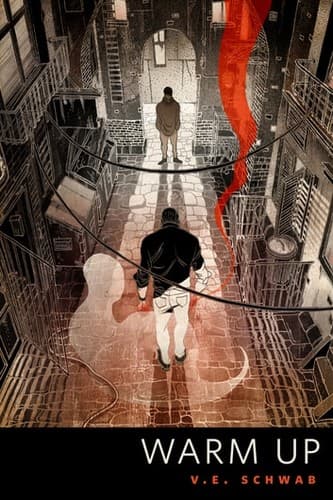
In a world where surviving a near-death experience can result in more than just physical scars, David is a man defined by the 297 days since he died and returned to life. The avalanche that took his breath away also stripped him of his humanity, leaving him with a volatile, shadow-based ability that he neither understands nor desires. His survival was not a miracle of medicine, but a transformation into something the world labels as an ExtraOrdinary—a status that cost him his marriage, his son, and his sense of safety.
Now living in self-imposed exile, David’s primary conflict is one of containment. He remains trapped within the four walls of his home, terrified that a single slip in concentration will unleash his power and cause irreparable harm to those around him. However, seclusion cannot last forever. When David finally attempts to re-enter a society that has moved on without him, he finds that the mechanics of his power are not the only danger he faces; there are others who monitor those who have cheated death, and they are far more practiced in the arts of control and pursuit.
The world of the Villains series operates on a chilling premise: superhuman abilities are not granted by destiny or cosmic accidents, but by the trauma of a near-death experience. These individuals, known as ExtraOrdinaries (EOs), do not possess the moral clarity often associated with the genre. Instead, the setting is clinical and grim, focusing on the physiological and psychological toll of manifesting abilities. The atmosphere is grounded in a modern, urban environment where the "supernatural" is treated with a mixture of clinical curiosity and predatory fear.
The narrative focuses heavily on David’s internal struggle with identity. He is a protagonist caught between who he was—a husband and father—and what he has become—a biological anomaly. His development is marked by a move from passive fear to active navigation of his new reality. The relationship dynamics are defined by absence and the haunting memory of normalcy, as David must reconcile his love for his family with the danger his presence now poses to them.
This story utilizes the "Superpowered Awakening" trope but strips away the wonder, replacing it with the "Gifts as a Curse" motif. Unlike traditional superhero origins where the discovery of power leads to a sense of purpose, Schwab subverts this by treating David’s power as a chronic condition or a form of post-traumatic stress. It leans into the "Reluctant Hero" trope but focuses more on the "reluctant" than the "hero," emphasizing that in this world, having a power does not automatically confer a moral responsibility to do good—only a desperate need to survive.
Add to your library to track progress and write reviews
Find Warm Up V.E. Schwab in PDF, EPUB, ebook, audiobook, print, or library editions.

7 books in catalog
A bargain made in the dark of night rarely ends with a soul intact. Whether following a woman forgotten by history across centuries or a traveler moving between four distinct parallel versions of London, these speculative narratives center on the high cost of ambition, the permanence of choice, and the heavy weight of being extraordinary. Victoria Elizabeth Schwab, publishing as V.E. Schwab for adult audiences and Victoria Schwab for children's and young adult fiction, has constructed an expansive body of work encompassing middle-grade, young adult, and adult fantasy novels. Her bibliography is anchored by a refusal to treat genre conventions as rigid constraints, instead using fantastical premises, dark magic, and liminal spaces to interrogate universal human experiences of loneliness, mortality, and identity.
With more than twenty books in print and frequent appearances at the top of the New York Times bestseller list, Schwab's narratives span standalone historical fantasies, dark antihero sagas, gothic fiction, and epic series. Her breakout adult novel Vicious, published in 2013, earned a place on the American Library Association's Reading List, while The Invisible Life of Addie LaRue spent over a year on the New York Times bestseller list and was nominated for the 2020 Locus Award for Best Fantasy Novel. From short stories like Warm Up to sprawling universes like the Shades of Magic series, her books invite readers into eerie, highly atmospheric worlds where every extraordinary power comes with a visceral sacrifice.
Born Victoria Elizabeth Schwab on July 7, 1987, to a British mother and an American father from California, she grew up in Nashville, Tennessee, and spent her youth moving between California and the American South. This upbringing, combined with a persistent passion for travel and wanderlust, instilled an early fascination with place, cultural intersection, and alterity. Schwab pursued her undergraduate education at Washington University in St. Louis, graduating in 2009 with a Bachelor of Fine Arts in Book Design. She later continued her academic study at the University of Edinburgh, focusing on the study of monstrosity in medieval art. This scholarly research into how human societies historically conceptualize, depict, and demonize the figure of the monster provided the intellectual framework for much of her later speculative fiction.
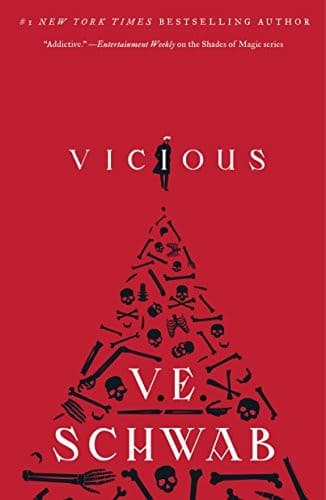
Schwab entered the publishing world in 2011 with her debut young adult novel The Near Witch, published by Disney Hyperion, followed by The Archived in 2013 and The Unbound in 2014. Her transition into adult speculative fiction occurred in 2013 with the publication of Vicious, a dark fantasy that deconstructed traditional superhero tropes by focusing on two college roommates whose lethal academic rivalry leads to supernatural abilities and moral ruin. Originally, the author maintained a strict division between pen names, reserving Victoria Schwab for middle-grade and young adult releases—such as her Everyday Angel series (2014–2015) and her City of Ghosts middle-grade series—and reserving V.E. Schwab for adult fantasy. Over time, as her international readership expanded and thematic elements crossed age categories, her works consolidated under the V.E. Schwab brand for broader audience recognition.
Beyond her standalone novels and prose series, Schwab's career encompasses graphic novels, short fiction, and television production. She created and executive produced the supernatural teen drama series First Kill, based on her short story originally published in the 2020 anthology Vampires Never Get Old: Tales with Fresh Bite. Her work is published across major houses including Tor Books, Scholastic, and Disney Hyperion, and she has been represented by literary agent Holly Root at Waxman Literary and film agent Jon Cassir at CAA. Dividing her time between Edinburgh, Scotland, and Denver, Colorado, Schwab continues to maintain an active writing schedule, frequenting historic European cities and participating in major literary events such as the 2025 National Book Festival, where her novel Bury Our Bones in the Midnight Soil was featured.
Schwab's writing style is noted for its mythic, atmospheric quality, prioritizing psychological depth, atmospheric dread, and character motivation over rigid hard magic systems. A signature thematic concept in her bibliography is the ExtraOrdinary—individuals who survive near-death experiences and return to life endowed with supernatural abilities shaped directly by their final, frantic thoughts before dying. This mechanic allows her stories to explore the subtle line separating heroes from villains, demonstrating how ambition, grief, and resentment can corrupt individuals when granted unearthly power. Rather than relying on escapist fantasy, her magic systems serve as metaphorical tools to examine the permanence of human choice and the emotional burdens borne by those who dare to seek extraordinary lives.
A central thematic pillar across Schwab's adult and young adult fiction is the profound dread of being forgotten and the isolation inherent in immortality or alterity. In The Invisible Life of Addie LaRue, this is embodied in a French woman who bargains with a dark god for eternal life, only to be cursed with complete oblivion where no person can remember her once she leaves their sight. Similar motifs of loneliness and liminality appear throughout her work, whether in the parallel, magic-infused versions of London in A Darker Shade of Magic or the haunted physical boundaries explored in Gallant. Schwab frequently uses prose designed to plant seeds of doubt in the reader's mind, challenging conventional boundaries between reality and dark fantasy while underscoring that every desire carries an inescapable price.
Villains