SSansFiction
The libraryCollectionsJournalStatsFor authors
Sign inJoin now
Sansfiction,

A digital library for books. Made by readers, for readers.

v 2.0 · 2026
The library
  • Discover
  • Collections
  • Book tracker
  • Journal
  • Stats
For authors
  • SF Links
  • Analytics
  • How it works
  • FAQ
Elsewhere
  • X / @sansfiction
  • Privacy
  • Terms
  • Contact
© 2026 SansFiction · Digital · GlobalA quiet room for your reading life.
The libraryCollectionsJournalStatsFor authors
Sign inJoin now →
Navigation
Library
Bookshelf
Journal
Discover
Collections
Tierlists
Stats
Profile
Author Page
Link Builder
Account
Sign in
S
G
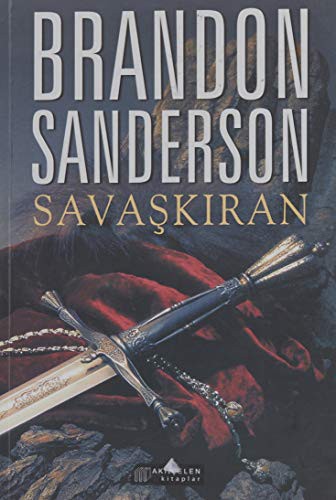
BooksadventureSavaşkıran
Cover of Savaşkıran by Brandon Sanderson
№ 7 · The Cosmere

Savaşkıran,

by Brandon Sanderson, Christopher Graybill, Colleen Delany, David Coyne, Dylan Lynch, Elizabeth Jernigan, James Konicek, Karen Carbone, Ken Jackson, Scott McCormick, Steven Carpenter, Tim Getman

Ask AI
Rating—
Ratings—
Pages580
Reading Hours12h
Published2009
LanguageTUR

§Synopsis

01

In the world of Nalthis, peace is a fragile commodity maintained by a single, terrifying promise. For twenty years, the austere mountain kingdom of Idris has prepared for the day its eldest princess, Vivenna, would be sent to the vibrant, decadent capital of Hallandren to marry the God King—a silent, immortal tyrant who rules through a pantheon of living deities. When the King of Idris makes a desperate, last-minute decision to send his rebellious youngest daughter, Siri, instead, he sets into motion a chain of cultural collisions and political gambles that threaten to ignite a long-dormant war.

This is not just a story of political maneuvering, but a deep exploration of perception and prejudice. As Siri navigates the overwhelming sensory overload of Hallandren’s color-drenched court, and Vivenna secretly enters the city’s shadows to stage a rescue, both sisters find that their lifelong beliefs about the "monstrous" enemy are challenged by the reality of a society built on the literal commodification of the human soul.

The Mechanics of BioChromatic Breath

The magic system of this world, known as Awakening, operates on a strict set of thermodynamic-like rules. Every human is born with a single "Breath," a spark of life that enhances their senses and perception of color. In Hallandren, these Breaths are used as currency, harvested from the poor and given to the wealthy or the "Returned"—the city's living gods. By gathering enough Breath and using color as a catalyst, an Awakener can command inanimate objects to perform tasks, from a cloak that grasps like a hand to straw soldiers that guard a palace. This creates a stark moral dilemma: Hallandren’s splendor is built on the systematic stripping of life essence from its lower classes, making magic a luxury of the elite.

The Court of Gods

Central to the Hallandren capital of T'Telir is the Court of Gods, a place where those who died heroic deaths return to life as massive, perfectly formed beings. These "Returned" have no memory of their previous lives and are entirely dependent on the state to provide them with one Breath per week to survive; without it, they wither and die. This creates a unique theological paradox: these are gods who are essentially prisoners of their own divinity, spending their days interpreting their own prophetic dreams while navigating a labyrinth of bureaucratic infighting and priestly manipulation.

Main Characters

  • Siri: The youngest Idrian princess whose impulsive nature is tested when she is thrust into the role of Queen to a silent, intimidating deity.
  • Vivenna: The disciplined eldest sister who finds herself stripped of her status and forced to navigate the dangerous slums of a city she was taught to hate.
  • Lightsong the Bold: A Returned god of bravery who, ironically, does not believe in his own religion and spends his immortality questioning the purpose of his existence.
  • Vasher: A mysterious, ragged man who stalks the city with a sentient, black-bladed sword that possesses a terrifying hunger and a dark sense of morality.

Character Development and Dynamics

The early narrative is defined by the "Role Reversal" arc. Siri, who always shirked responsibility, must suddenly learn the nuance of courtly survival and find a way to communicate with a husband who is forbidden from speaking. Conversely, Vivenna, who was the epitome of royal poise, must learn to survive in a world where her titles mean nothing and her rigid Idrian morals are a liability. Their journey is mirrored by Lightsong’s internal struggle; as a god who views his own worshipers with skepticism, his character provides a cynical yet insightful look at the burdens of unearned power.

Tropes and Subversions

Sanderson utilizes the "Political Marriage" trope but subverts it by making the cultural clash the primary obstacle rather than the personal relationship. The "Damsel in Distress" trope is also dismantled, as both sisters attempt to save one another through very different means—one through high-stakes diplomacy and the other through grassroots insurrection. Finally, the "Sentient Weapon" trope is explored through Nightblood, Vasher's sword, which acts less like a traditional fantasy artifact and more like an alien entity with a dangerously simplistic understanding of "evil."

The Dramatized Experience

The dramatized adaptation elevates these elements through a multi-layered soundscape. The vibrant, chaotic atmosphere of T'Telir is rendered through immersive background audio, while the distinct cultural divide between the quiet, somber Idris and the loud, color-obsessed Hallandren is reinforced by a full cast of voice actors. This format emphasizes the tonal shifts between the regal, tense scenes in the palace and the gritty, dangerous encounters in the city's back alleys.

Track this book

Add to your library to track progress and write reviews

§Genres
adventure1fantasy1science fiction1young adult1

§About the Author

Brandon Sanderson
Brandon Sanderson

37 books in catalog

The creation of the Cosmere, a vast interconnected universe where magic systems are governed by distinct physical laws, has redefined the scope of modern epic fantasy. Brandon Sanderson established this shared setting through a series of novels that began with the publication of Elantris and expanded into the multi-volume saga The Stormlight Archive.

His work is characterized by intricate world-building and a commitment to "hard magic," where the limitations of supernatural abilities are as important as the powers themselves. This approach has made his books, such as Mistborn: The Final Empire and The Way of Kings, central to contemporary discussions of genre construction and narrative consistency.

Career & Background

Born on December 19, 1975, in Lincoln, Nebraska, Brandon Winn Sanderson was the eldest of four children born to Barbara and Winn Sanderson. Although he was a reluctant reader in his early youth, his perspective changed in the eighth grade when his teacher, Mrs. Reeder, gave him a copy of Dragonsbane by Barbara Hambly. This encounter led him to explore the works of Robert Jordan, Melanie Rawn, David Eddings, Anne McCaffrey, and Orson Scott Card, eventually inspiring his own early attempts at fiction. In 1994, he enrolled at Brigham Young University (BYU) as a biochemistry major. However, a two-year hiatus from 1995 to 1997 to serve as a missionary for the Church of Jesus Christ of Latter-day Saints in Seoul, South Korea, shifted his focus. During this time, he realized he missed writing more than chemistry. Upon returning to BYU, he changed his major to English, much to the dismay of his mother, who had hoped he would become a doctor.

To support his education while maximizing his writing time, Sanderson worked as a night desk clerk at a local hotel, writing between midnight and 5:00 AM. By the time he finished his undergraduate degree, he had completed seven novels, though he faced a steady stream of rejections from publishers. He also volunteered for The Leading Edge, BYU’s science fiction and fantasy magazine, where he served as Editor in Chief during his senior year. This role allowed him to read many submissions and form lifelong friendships within the industry. He learned about the business side of writing by taking a class from David Farland, author of the Runelords series, who advised him to attend conventions like WorldCon and World Fantasy to connect with professionals. He eventually met his current agent and one of his editors at these events.

His persistence paid off in 2003 when editor Moshe Feder at Tor Books discovered the manuscript for Elantris in a slush pile. The novel was published in May 2005, marking the official start of his professional career. Shortly after, he launched the Mistborn trilogy, which includes Mistborn: The Final Empire (2006), The Well of Ascension (2007), and The Hero of Ages. In 2004, after graduating with his Master’s degree in creative writing from BYU, he was asked to teach the same genre-focused writing class he had once taken as an undergraduate. He continues to teach this section because he enjoys helping aspiring writers. In July 2006, he married Emily Bushman, a fellow English major from BYU. Emily began working as his business manager following the birth of their first child in October 2007.

A significant turning point occurred in December 2007 when Harriet McDougal Rigney selected Sanderson to complete Robert Jordan’s The Wheel of Time series following Jordan's death. This massive undertaking resulted in three volumes: The Gathering Storm (2009), Towers of Midnight (2010), and A Memory of Light (2013). During this same period, Sanderson began his own magnum opus, The Stormlight Archive, starting with The Way of Kings in 2010. He has since balanced these epic projects with middle-grade series like Alcatraz Versus the Evil Librarians (2007) and young adult science fiction such as Skyward. His novella The Emperor’s Soul won the Hugo Award in 2013, and he has been a judge for Writers of the Future since 2016. He also co-hosts the podcast Writing Excuses, which has won multiple awards for its writing advice.

Writing Style & Themes

Sanderson is widely recognized for his development of "Sanderson’s Laws of Magic," a set of guidelines for authors to create consistent and logical magic systems. His approach emphasizes that an author's ability to solve problems with magic is directly proportional to how well the reader understands said magic. This philosophy is evident in the "Allomancy" of the Mistborn series, where characters ingest and "burn" metals to gain specific abilities, and the "Surgebinding" found in The Stormlight Archive. By establishing clear costs and limitations, he ensures that magical resolutions feel earned rather than arbitrary. This dedication to internal logic has influenced a generation of fantasy writers seeking to move away from "soft" magic systems where powers are ill-defined.

His world-building often incorporates unique geological and ecological elements that directly influence the cultures and technologies of his characters. For instance, the landscape of Roshar in The Stormlight Archive features a rocky terrain and flora that retracts into the ground, a design inspired by the sandstone buttes and slot canyons of southeastern Utah. Similarly, the world of Scadrial in Mistborn is defined by falling ash and a red sun, environmental factors that shape the social hierarchy and survival strategies of its inhabitants. His background in linguistics, influenced by his time in Korea, often informs the naming conventions and structural logic of his fictional languages, adding a layer of authenticity to his diverse civilizations.

Thematic depth in his work often explores the intersection of leadership, morality, and mental health. Characters in The Stormlight Archive frequently struggle with depression, post-traumatic stress, or identity crises, reflecting a nuanced approach to heroism that acknowledges human vulnerability. The "Cosmere" framework allows for subtle cross-over elements, where characters known as "Worldhoppers" appear in different series, rewarding observant readers with a deeper layer of narrative connectivity. This interconnectedness is further explored in his "Secret Projects," such as Tress of the Emerald Sea and The Sunlit Man, which expand the boundaries of his shared universe into new genres and planetary systems, including the transition into a space age as seen in Wind and Truth.

Major Works

  • The Stormlight Archive — A projected ten-volume epic fantasy series set on the world of Roshar, beginning with The Way of Kings (2010) and continuing through Words of Radiance (2014), Oathbringer, Rhythm of War, and the upcoming Wind and Truth.
  • Mistborn — An initial trilogy consisting of Mistborn: The Final Empire, The Well of Ascension, and The Hero of Ages, followed by the "Wax and Wayne" era starting with The Alloy of Law (2011) and continuing through Shadows of Self, The Bands of Mourning (2016), and The Lost Metal.
  • The Wheel of Time — The final three volumes of Robert Jordan's legendary series, completed by Sanderson: The Gathering Storm (2009), Towers of Midnight (2010), and A Memory of Light (2013).
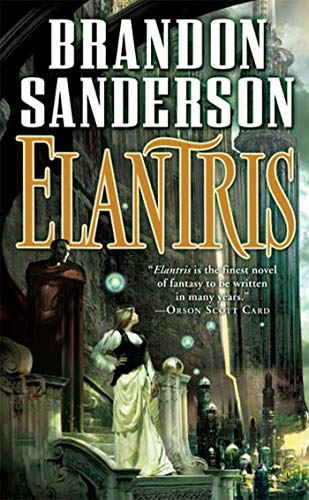
  • Elantris — Sanderson's 2005 debut novel, which introduced the first iteration of the Cosmere and explored a city of fallen, god-like beings.
  • Warbreaker — A standalone novel featuring a color-based magic system known as Awakening, which has significant ties to the broader Cosmere.
  • Skyward — A young adult science fiction series following a girl named Spensa who dreams of being a pilot in a world under constant alien siege, continuing through Starsight, Cytonic, and Defiant.
  • Secret Projects — A series of novels originally funded via a record-breaking Kickstarter campaign, including Tress of the Emerald Sea, The Frugal Wizard's Handbook for Surviving Medieval England, Yumi and the Nightmare Painter, and The Sunlit Man.
  • Alcatraz Versus the Evil Librarians — A middle-grade series beginning in 2007 that follows a boy who discovers his family's legacy of fighting a secret society of librarians.

§Featured Series

The Cosmere

Cover of Elantris by Brandon Sanderson

Elantris

Brandon Sanderson, 2005
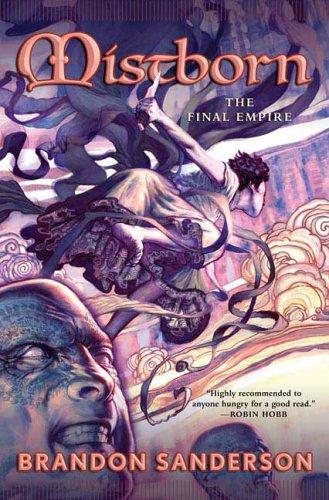
Cover of Mistborn: The Final Empire by Brandon Sanderson

Mistborn: The Final Empire

Brandon Sanderson, 2006
Cover of Yumi y el pintor de pesadillas by Brandon Sanderson

Yumi y el pintor de pesadillas

Brandon Sanderson, 2023
Cover of The Well of Ascension by Brandon Sanderson

The Well of Ascension

Brandon Sanderson, 2007
Cover of The Hero of Ages by Brandon Sanderson

The Hero of Ages

Brandon Sanderson, 2008
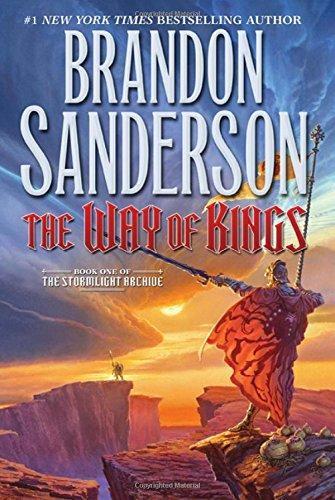
Cover of The Way of Kings by Brandon Sanderson

The Way of Kings

Brandon Sanderson, 2010
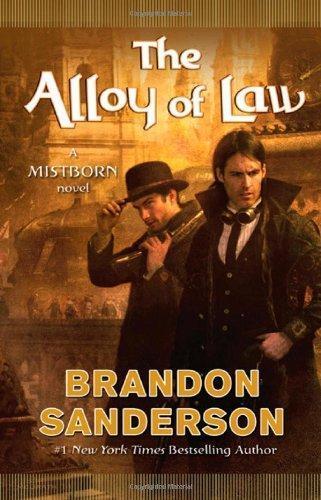
Cover of The Alloy of Law by Brandon Sanderson

The Alloy of Law

Brandon Sanderson, 2011
Cover of Shadows for Silence in the Forests of Hell by Brandon Sanderson

Shadows for Silence in the Forests of Hell

Brandon Sanderson, 2013
Cover of Sixth of the Dusk by Brandon Sanderson

Sixth of the Dusk

Brandon Sanderson, 2014
Cover of Warbreaker by Brandon Sanderson

Warbreaker

Brandon Sanderson, 2001
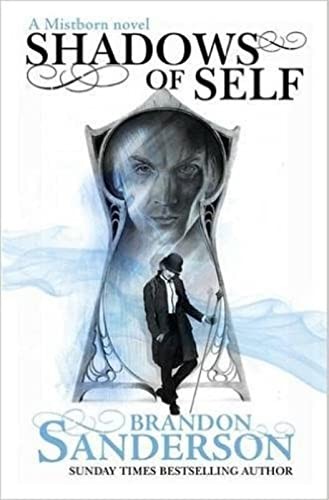
Cover of Shadows of Self by Brandon Sanderson

Shadows of Self

Brandon Sanderson, 2015
Cover of The Bands of Mourning by Brandon Sanderson

The Bands of Mourning

Brandon Sanderson, 2016
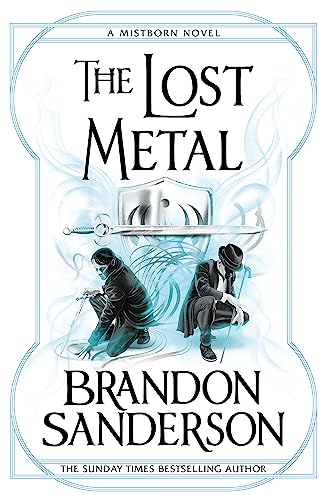
Cover of The Lost Metal by Brandon Sanderson

The Lost Metal

Brandon Sanderson, 2022
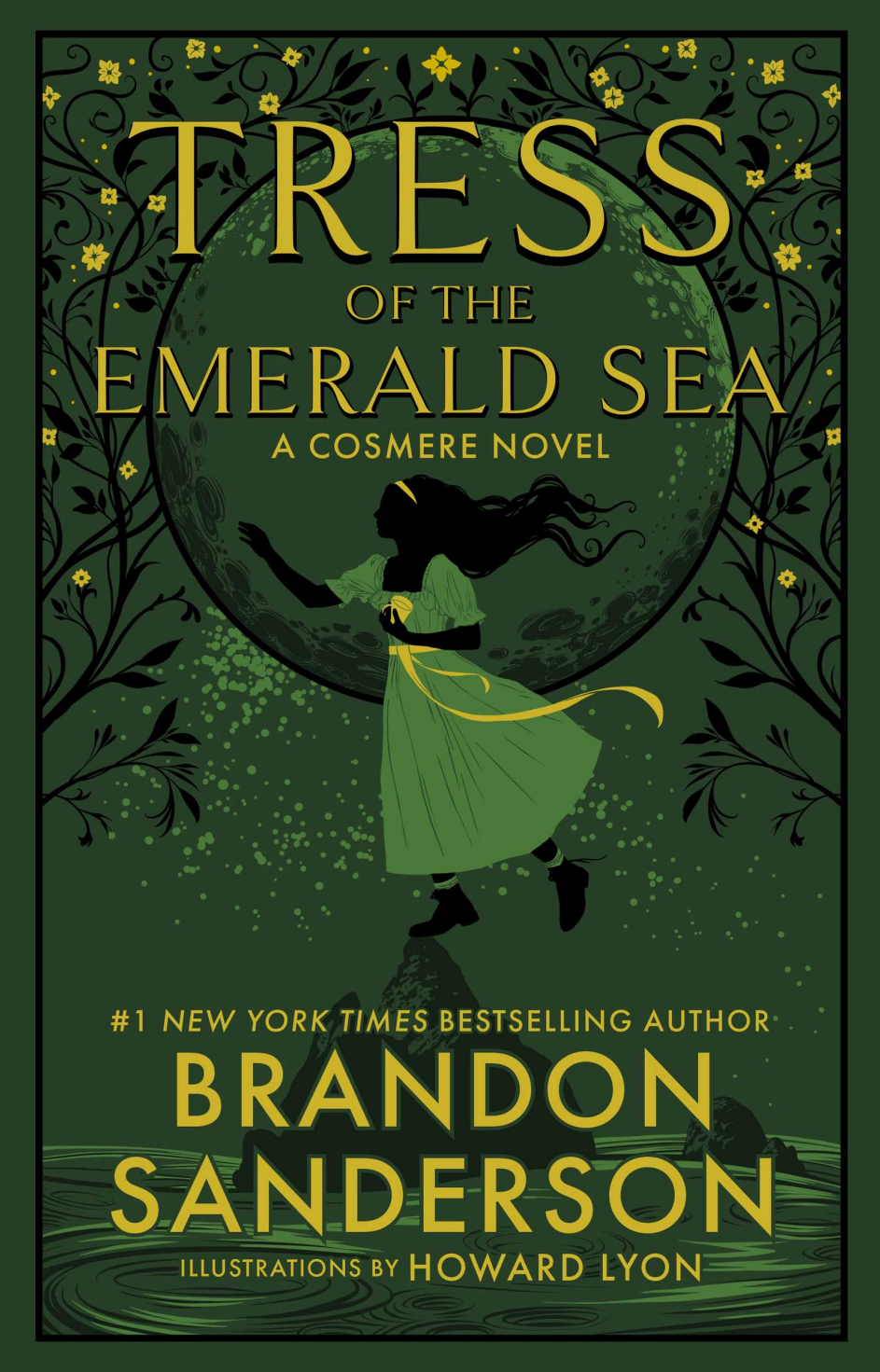
Cover of Tress of the Emerald Sea by Brandon Sanderson

Tress of the Emerald Sea

Brandon Sanderson, 2023
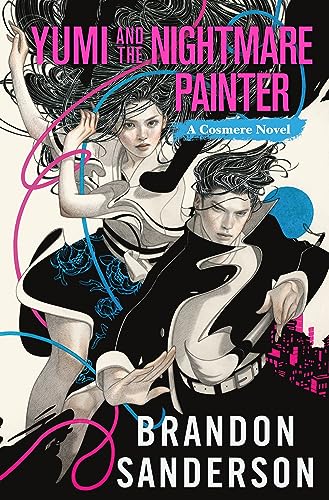
Cover of Yumi and the Nightmare Painter by Brandon Sanderson

Yumi and the Nightmare Painter

Brandon Sanderson, 2023
Cover of The Sunlit Man by Brandon Sanderson

The Sunlit Man

Brandon Sanderson, 2023
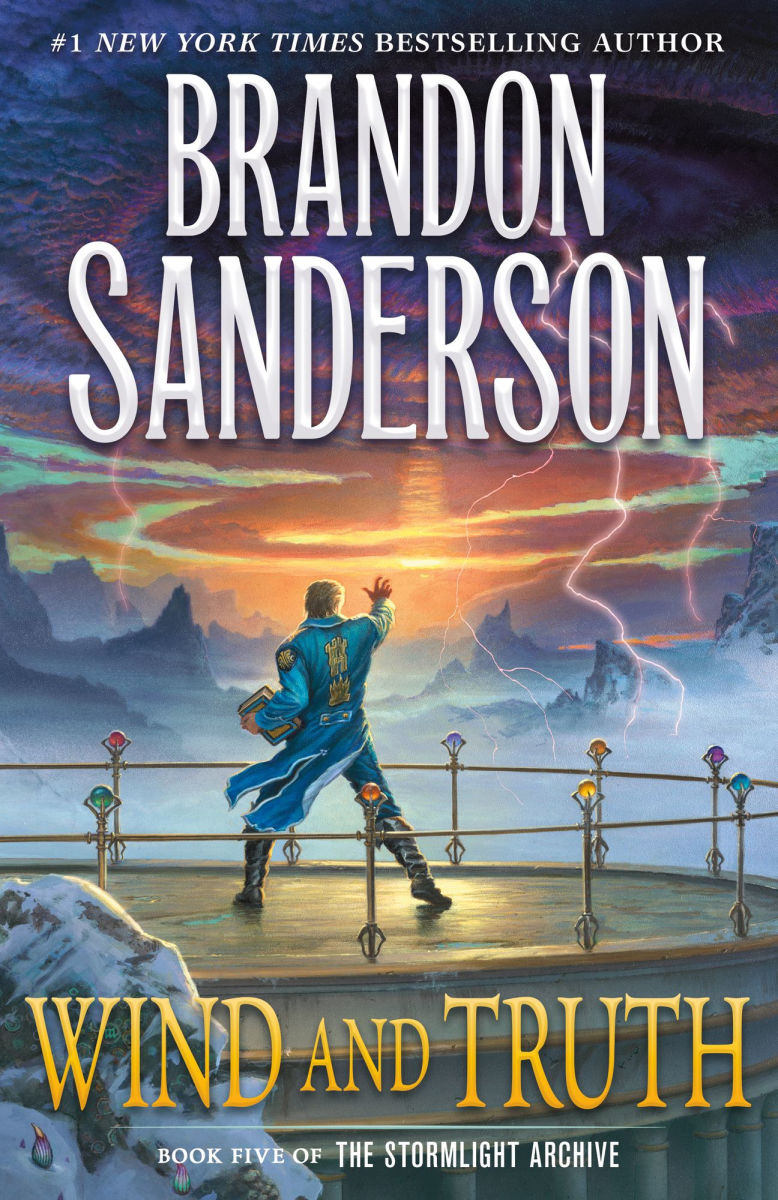
Cover of Wind and Truth by Brandon Sanderson

Wind and Truth

Brandon Sanderson, 2024
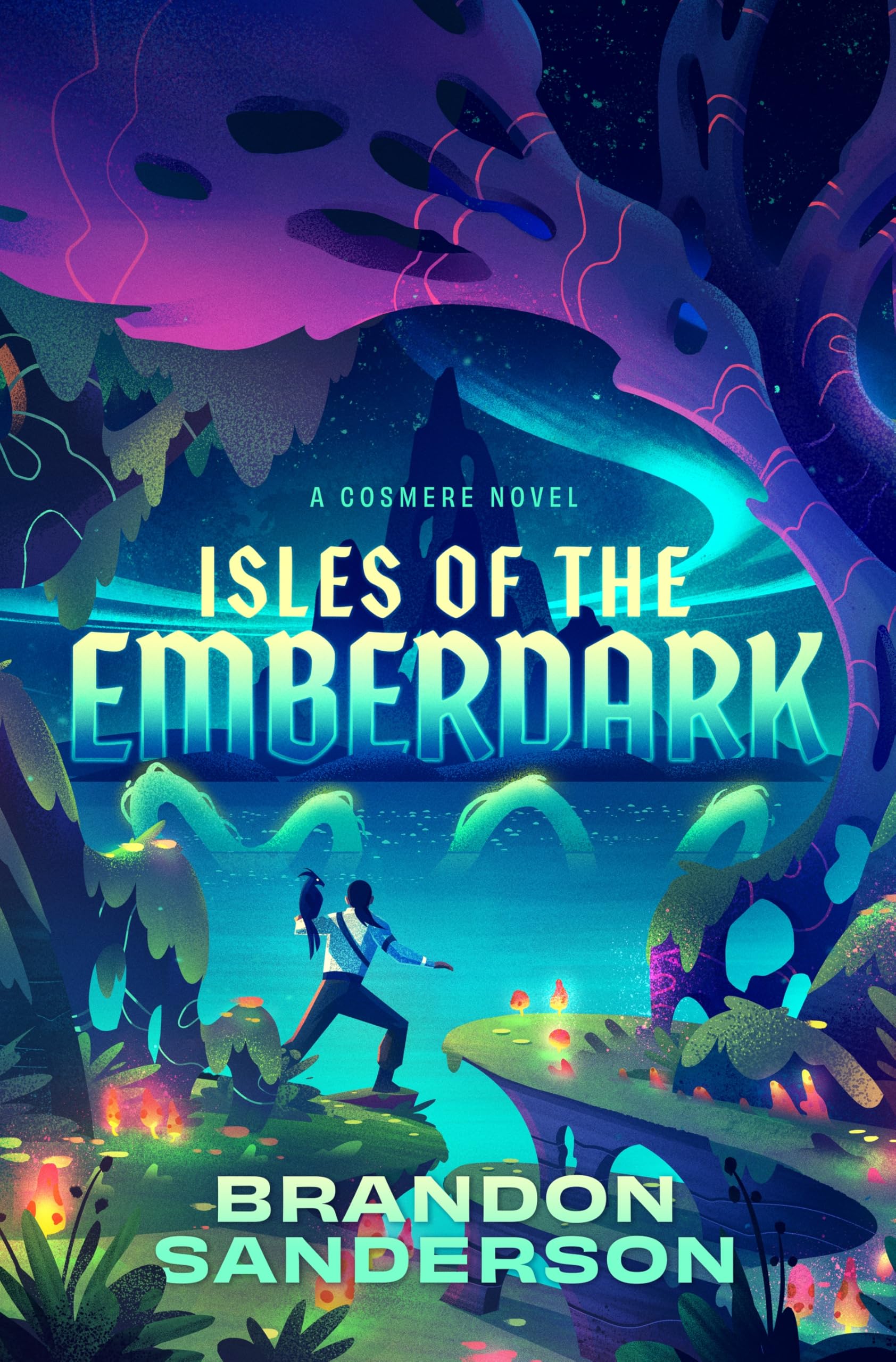
Cover of Isles of the Emberdark by Brandon Sanderson

Isles of the Emberdark

Brandon Sanderson, 2025
Cover of Sexto del Ocaso by Brandon Sanderson

Sexto del Ocaso

Brandon Sanderson, 2014

§Other Editions

Cover of Warbreaker: Dramatized Adaptation

Warbreaker: Dramatized Adaptation

engAudiobook
Graphic Audio LLC2009
§Genres
adventure1fantasy1science fiction1young adult1