SSansFiction
The libraryCollectionsJournalStatsFor authors
Sign inJoin now
Sansfiction,

A digital library for books. Made by readers, for readers.

v 2.0 · 2026
The library
  • Discover
  • Collections
  • Book tracker
  • Journal
  • Stats
For authors
  • SF Links
  • Analytics
  • How it works
  • FAQ
Elsewhere
  • X / @sansfiction
  • Privacy
  • Terms
  • Contact
© 2026 SansFiction · Digital · GlobalA quiet room for your reading life.
The libraryCollectionsJournalStatsFor authors
Sign inJoin now →
Navigation
Library
Bookshelf
Journal
Discover
Collections
Tierlists
Stats
Profile
Author Page
Link Builder
Account
Sign in
S
G
BooksfantasyElantris
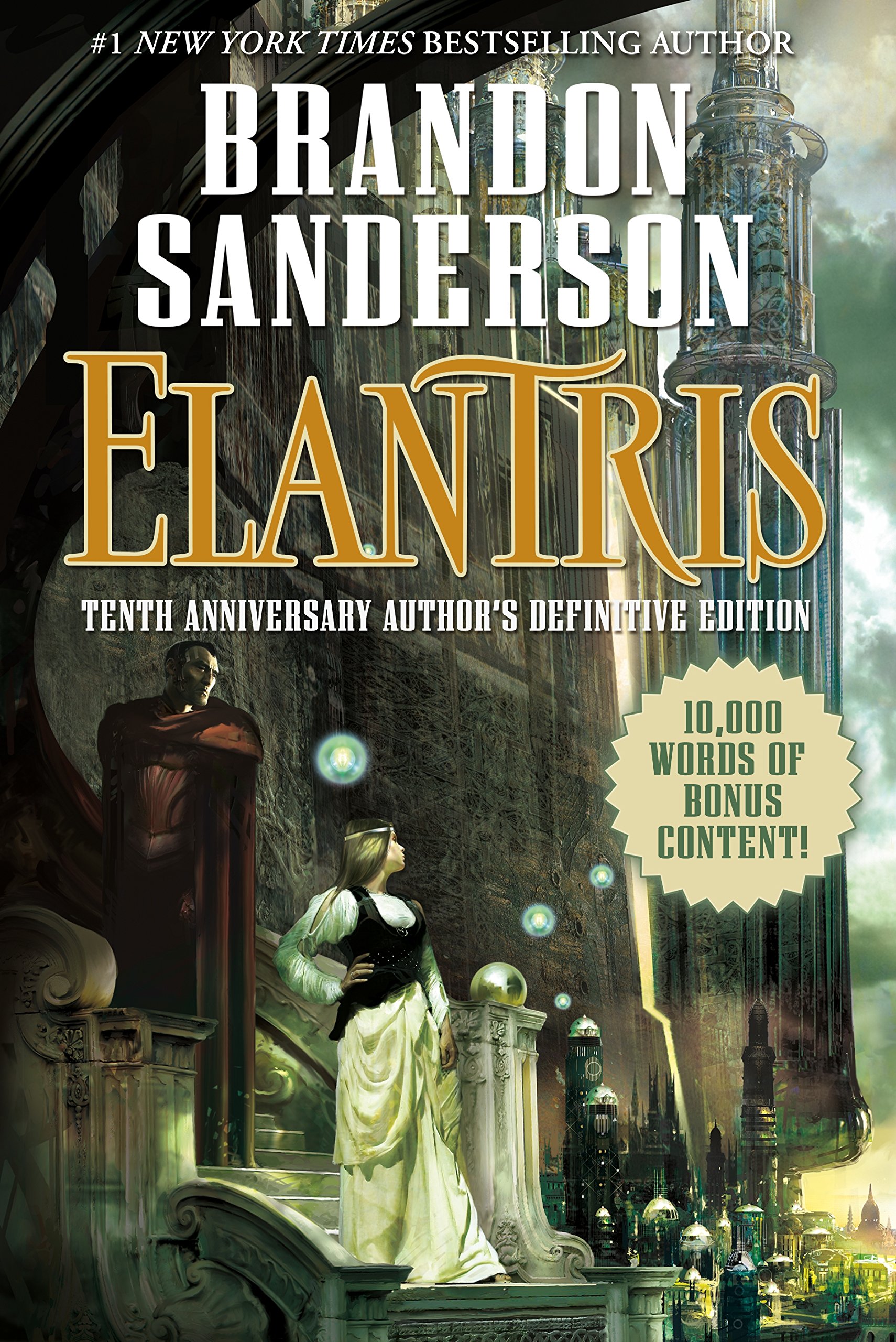
Cover of Elantris by Brandon Sanderson
№ 1 · Elantris

Elantris,

by Brandon Sanderson

Ask AI
Rating4.1/ 5
Ratings2,130
Pages656
Reading Hours14h
Published2005
LanguageEnglish

§Synopsis

01

Elantris was the capital of Arelon: gigantic, beautiful, literally radiant, filled with benevolent beings who used their powerful magical abilities for the benefit of all. Yet each of these demigods was once an ordinary person until touched by the mysterious transforming power of the Shaod. Ten years ago, without warning, the magic failed. Elantrians became wizened, leper-like, powerless creatures, and Elantris itself dark, filthy, and crumbling.

Arelon's new capital, Kae, crouches in the shadow of Elantris. Princess Sarene of Teod arrives for a marriage of state with Crown Prince Raoden, hoping—based on their correspondence—to also find love. She finds instead that Raoden has died and she is considered his widow. Both Teod and Arelon are under threat as the last remaining holdouts against the imperial ambitions of the ruthless religious fanatics of Fjordell. So Sarene decides to use her new status to counter the machinations of Hrathen, a Fjordell high priest who has come to Kae to convert Arelon and claim it for his emperor and his god.

But neither Sarene nor Hrathen suspect the truth about Prince Raoden. Stricken by the same curse that ruined Elantris, Raoden was secretly exiled by his father to the dark city. His struggle to help the wretches trapped there begins a series of events that will bring hope to Arelon, and perhaps reveal the secret of Elantris itself.

A rare epic fantasy that doesn't recycle the classics and that is a complete and satisfying story in one volume, Elantris is fleet and fun, full of surprises and characters to care about. It's also the wonderful debut of a welcome new star in the constellation of fantasy.

§Our take

The villain is the reason to read. Hrathen, a zealot who reasons through his faith instead of screaming it, draws praise from nearly every critic: the cool Kirkus review found most characters thin apart from him, and the Reactor reread calls his characterization masterful for a first published book. The book itself is a curiosity: a 200,000-word epic that refuses to become a series, which 2005 reviewers noted as a relief. Sanderson's rule-based magic — drawing symbols called Aons — is the structural backbone, and the premise of a living-death curse that cannot heal is darker than the tone often lets on. The middle sags; many readers stall there, and some only finish on a later attempt. The finale crowds its revelations. Readers who come to this after Mistborn or The Stormlight Archive tend to judge the prose and dialogue as stiff, while newcomers tend to enjoy it more. The tenth-anniversary edition adds a foreword, deleted scenes, one new scene, and reworked maps and Aon art — copyedits, not a rewrite.

§Themes

Faith versus institution
Hrathen never doubts his religion's truth but comes to doubt his place in it, making him a thinking believer rather than a strawman.
Religion as empire-building
The Derethi faith was designed to unify nations through belief instead of armies, mirroring the Church in a declining Rome.
Rule-based magic
Magic works by drawing Aons, written symbols that drive the plot and name the characters; Kirkus called this the book's best-conceived feature.
Hope inside a living death
The cursed cannot heal and feel every injury forever; Raoden's arc is building community and purpose inside that despair.
Political thriller over quest epic
The action concentrates in one city and its court, reading closer to a court-and-religion thriller than a good-versus-evil struggle.

§How it was received

Publishers Weekly called it an outstanding debut that avoids genre clichés and named Sanderson a writer to watch. Kirkus was cooler, judging it better than routine fantasy but not a classic, praising the magic system while finding most characters thinly drawn except Hrathen. Both trade reviews welcomed a complete story in one volume. Later opinion splits: readers arriving after Sanderson's later books often call it rough or slow, while newcomers tend to enjoy it more.

§Read it if

  • You want a low-commitment entry into Sanderson — a full epic that ends in one book.
  • You like rule-based magic systems and political scheming driven by theology.
  • You prefer a villain who thinks through his faith over a hero who simply wins.

§Skip it if

  • A slow middle and stiff early prose will make you quit; some readers abandon it on a first attempt.
  • You need flawed, vulnerable protagonists; Raoden and Sarene can feel too capable, lowering the stakes.

§Before you start

Reading experience
Strong hook, slower middle, fast and crowded finale; readers who stall in the middle are often told the ending pays off.
Reading order
Standalone novel set in the Cosmere. Optional companions: the short story The Hope of Elantris (read after the novel; contains spoilers) and the Hugo-winning novella The Emperor's Soul (same world, different region, no need to read Elantris first). Can be read before or after other Cosmere books.
Content notes
Body horror and chronic pain: the cursed cannot heal and feel injuries indefinitely; some go mad from pain; Gang violence and starvation in the cursed city, including references to past cannibalism; Religious coercion and forced conversion are central plot elements.

§Common questions

Is Elantris part of a series?
No. It's a standalone novel. Sanderson has talked about sequels set years later, but none has been published.
Do I need to read other Cosmere books first?
No. Elantris stands alone. A recurring Cosmere figure, Hoid, makes a cameo, but no prior knowledge is required.
Which edition should I buy?
The 2015 tenth-anniversary edition includes copyedits, a foreword by Dan Wells, deleted scenes, one new scene, and reworked maps and Aon art — no substantive story changes. Page counts vary by edition.

§If you liked this

  • Mistborn: The Final Empire by Brandon Sanderson — The book one reviewer suggests as a better first Sanderson; Elantris readers find a more polished version of the same rule-based magic and political scheming.
  • The Emperor's Soul by Brandon Sanderson — A Hugo-winning novella set in the same world with its own symbol-and-rules magic; a short follow-up for readers who liked the setting.
  • The Way of Kings by Brandon Sanderson — Reactor's rereaders compare Raoden with Kaladin: both protagonists try to rebuild hope among people the world has written off.
  • Warbreaker by Brandon Sanderson — The other early standalone Cosmere novel, also built around court politics, religion and an underrated, self-doubting lead.
Sources
  • Wikipedia
  • Kirkus Reviews
  • Publishers Weekly
  • Brandon Sanderson (official site)
  • Brandon Sanderson (official site)
  • Brandon Sanderson (official site)
  • Brandon Sanderson (official site)
  • The Hugo Awards
  • Kara.Reviews (Kara Babcock, book blog)
  • Fantasy-Faction
  • Reactor (formerly Tor.com)
  • Goodreads (Sword and Laser group discussion)

Track this book

Add to your library to track progress and write reviews

§Genres
fantasy2adventure1classics1computers1fiction1high fantasy1literature & fiction1
§Moods
adventurous1challenging1dark1emotional1funny1hopeful1inspiring1
§Tags
#a mix driven1#character driven1#diverse characters1#kindle1#loveable characters1#not diverse characters1

§About the Author

Brandon Sanderson
Brandon Sanderson

37 books in catalog

The creation of the Cosmere, a vast interconnected universe where magic systems are governed by distinct physical laws, has redefined the scope of modern epic fantasy. Brandon Sanderson established this shared setting through a series of novels that began with the publication of Elantris and expanded into the multi-volume saga The Stormlight Archive.

His work is characterized by intricate world-building and a commitment to "hard magic," where the limitations of supernatural abilities are as important as the powers themselves. This approach has made his books, such as Mistborn: The Final Empire and The Way of Kings, central to contemporary discussions of genre construction and narrative consistency.

Career & Background

Born on December 19, 1975, in Lincoln, Nebraska, Brandon Winn Sanderson was the eldest of four children born to Barbara and Winn Sanderson. Although he was a reluctant reader in his early youth, his perspective changed in the eighth grade when his teacher, Mrs. Reeder, gave him a copy of Dragonsbane by Barbara Hambly. This encounter led him to explore the works of Robert Jordan, Melanie Rawn, David Eddings, Anne McCaffrey, and Orson Scott Card, eventually inspiring his own early attempts at fiction. In 1994, he enrolled at Brigham Young University (BYU) as a biochemistry major. However, a two-year hiatus from 1995 to 1997 to serve as a missionary for the Church of Jesus Christ of Latter-day Saints in Seoul, South Korea, shifted his focus. During this time, he realized he missed writing more than chemistry. Upon returning to BYU, he changed his major to English, much to the dismay of his mother, who had hoped he would become a doctor.

To support his education while maximizing his writing time, Sanderson worked as a night desk clerk at a local hotel, writing between midnight and 5:00 AM. By the time he finished his undergraduate degree, he had completed seven novels, though he faced a steady stream of rejections from publishers. He also volunteered for The Leading Edge, BYU’s science fiction and fantasy magazine, where he served as Editor in Chief during his senior year. This role allowed him to read many submissions and form lifelong friendships within the industry. He learned about the business side of writing by taking a class from David Farland, author of the Runelords series, who advised him to attend conventions like WorldCon and World Fantasy to connect with professionals. He eventually met his current agent and one of his editors at these events.

His persistence paid off in 2003 when editor Moshe Feder at Tor Books discovered the manuscript for Elantris in a slush pile. The novel was published in May 2005, marking the official start of his professional career. Shortly after, he launched the Mistborn trilogy, which includes Mistborn: The Final Empire (2006), The Well of Ascension (2007), and The Hero of Ages. In 2004, after graduating with his Master’s degree in creative writing from BYU, he was asked to teach the same genre-focused writing class he had once taken as an undergraduate. He continues to teach this section because he enjoys helping aspiring writers. In July 2006, he married Emily Bushman, a fellow English major from BYU. Emily began working as his business manager following the birth of their first child in October 2007.

A significant turning point occurred in December 2007 when Harriet McDougal Rigney selected Sanderson to complete Robert Jordan’s The Wheel of Time series following Jordan's death. This massive undertaking resulted in three volumes: The Gathering Storm (2009), Towers of Midnight (2010), and A Memory of Light (2013). During this same period, Sanderson began his own magnum opus, The Stormlight Archive, starting with The Way of Kings in 2010. He has since balanced these epic projects with middle-grade series like Alcatraz Versus the Evil Librarians (2007) and young adult science fiction such as Skyward. His novella The Emperor’s Soul won the Hugo Award in 2013, and he has been a judge for Writers of the Future since 2016. He also co-hosts the podcast Writing Excuses, which has won multiple awards for its writing advice.

Writing Style & Themes

Sanderson is widely recognized for his development of "Sanderson’s Laws of Magic," a set of guidelines for authors to create consistent and logical magic systems. His approach emphasizes that an author's ability to solve problems with magic is directly proportional to how well the reader understands said magic. This philosophy is evident in the "Allomancy" of the Mistborn series, where characters ingest and "burn" metals to gain specific abilities, and the "Surgebinding" found in The Stormlight Archive. By establishing clear costs and limitations, he ensures that magical resolutions feel earned rather than arbitrary. This dedication to internal logic has influenced a generation of fantasy writers seeking to move away from "soft" magic systems where powers are ill-defined.

His world-building often incorporates unique geological and ecological elements that directly influence the cultures and technologies of his characters. For instance, the landscape of Roshar in The Stormlight Archive features a rocky terrain and flora that retracts into the ground, a design inspired by the sandstone buttes and slot canyons of southeastern Utah. Similarly, the world of Scadrial in Mistborn is defined by falling ash and a red sun, environmental factors that shape the social hierarchy and survival strategies of its inhabitants. His background in linguistics, influenced by his time in Korea, often informs the naming conventions and structural logic of his fictional languages, adding a layer of authenticity to his diverse civilizations.

Thematic depth in his work often explores the intersection of leadership, morality, and mental health. Characters in The Stormlight Archive frequently struggle with depression, post-traumatic stress, or identity crises, reflecting a nuanced approach to heroism that acknowledges human vulnerability. The "Cosmere" framework allows for subtle cross-over elements, where characters known as "Worldhoppers" appear in different series, rewarding observant readers with a deeper layer of narrative connectivity. This interconnectedness is further explored in his "Secret Projects," such as Tress of the Emerald Sea and The Sunlit Man, which expand the boundaries of his shared universe into new genres and planetary systems, including the transition into a space age as seen in Wind and Truth.

Major Works

  • The Stormlight Archive — A projected ten-volume epic fantasy series set on the world of Roshar, beginning with The Way of Kings (2010) and continuing through Words of Radiance (2014), Oathbringer, Rhythm of War, and the upcoming Wind and Truth.
  • Mistborn — An initial trilogy consisting of Mistborn: The Final Empire, The Well of Ascension, and The Hero of Ages, followed by the "Wax and Wayne" era starting with The Alloy of Law (2011) and continuing through Shadows of Self, The Bands of Mourning (2016), and The Lost Metal.
  • The Wheel of Time — The final three volumes of Robert Jordan's legendary series, completed by Sanderson: The Gathering Storm (2009), Towers of Midnight (2010), and A Memory of Light (2013).
  • Elantris — Sanderson's 2005 debut novel, which introduced the first iteration of the Cosmere and explored a city of fallen, god-like beings.
  • Warbreaker — A standalone novel featuring a color-based magic system known as Awakening, which has significant ties to the broader Cosmere.
  • Skyward — A young adult science fiction series following a girl named Spensa who dreams of being a pilot in a world under constant alien siege, continuing through Starsight, Cytonic, and Defiant.
  • Secret Projects — A series of novels originally funded via a record-breaking Kickstarter campaign, including Tress of the Emerald Sea, The Frugal Wizard's Handbook for Surviving Medieval England, Yumi and the Nightmare Painter, and The Sunlit Man.
  • Alcatraz Versus the Evil Librarians — A middle-grade series beginning in 2007 that follows a boy who discovers his family's legacy of fighting a secret society of librarians.

§Featured Series

Elantris

Cover of Elantris by Brandon Sanderson

Elantris

Brandon Sanderson, 2005

§Also part of

The Cosmere

§Editions

Showing 3 of 75 editions
Cover of Elantris

Elantris

engTenth Anniversary Author's Definitive Edition
Tor Books20079781429914550
Amazon
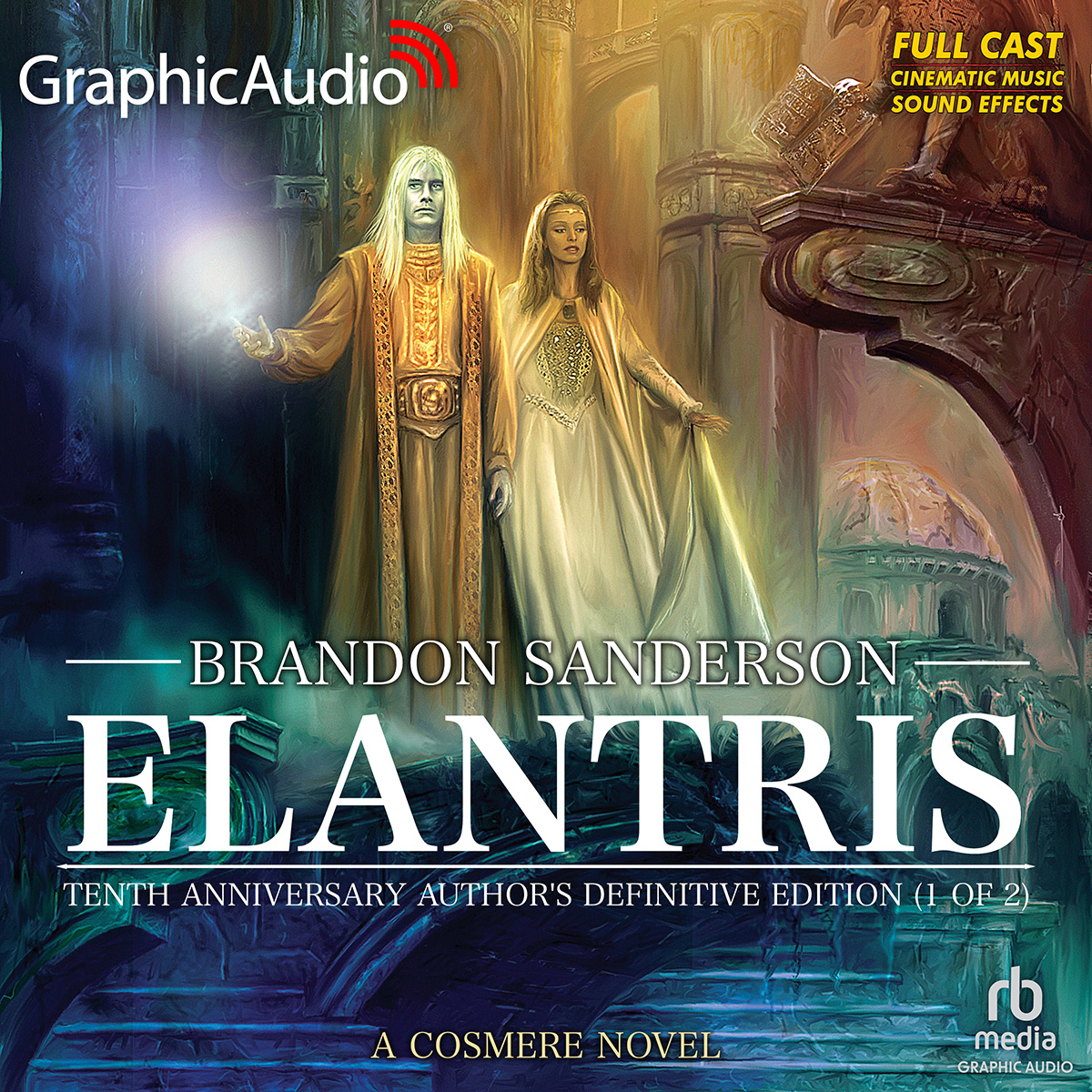
Cover of Elantris Tenth Anniversary Author's Definitive Edition (1 of 2)

Elantris Tenth Anniversary Author's Definitive Edition (1 of 2)

eng
GraphicAudio20259798228586628
Amazon
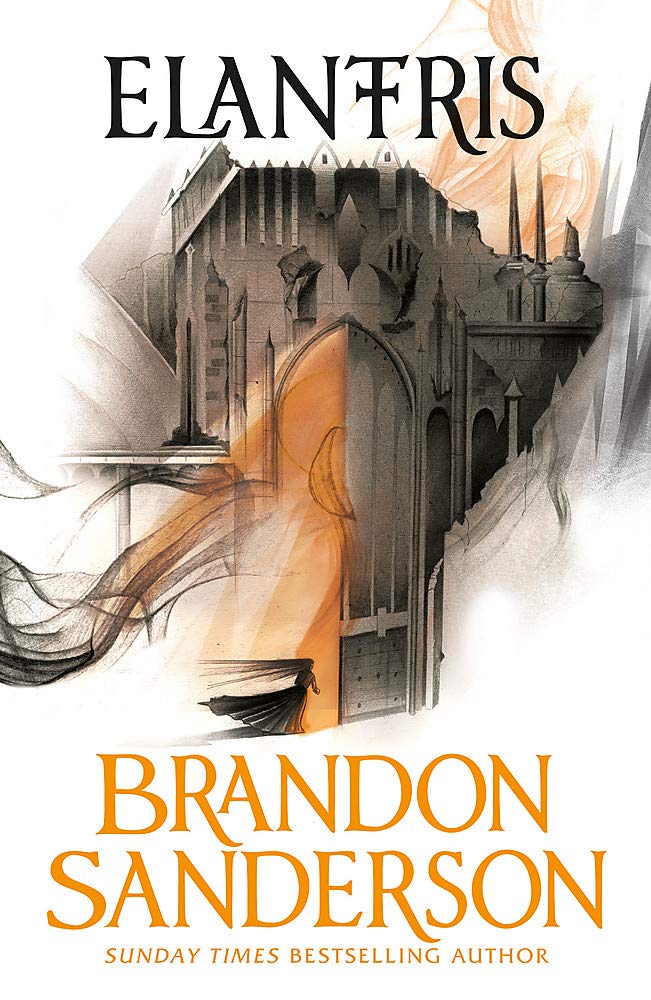
Cover of Elantris

Elantris

engPaperbackTenth Anniversary Edition
Gollancz20209781473217706
§Genres
fantasy2adventure1classics1computers1fiction1high fantasy1literature & fiction1
§Moods
adventurous1challenging1dark1emotional1funny1hopeful1inspiring1
§Tags
#a mix driven1#character driven1#diverse characters1#kindle1#loveable characters1#not diverse characters1

Metadata

ISBN-139781429914550
ISBN-101429914556
ASINB003G93YLY

Editions and availability

Find Elantris Brandon Sanderson in PDF, EPUB, ebook, audiobook, print, or library editions.

View on Amazon
Bookshop.orgGoogle Play BooksBarnes & NobleOpen Library