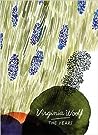

A stirring, straightforward work written near the end of her luminous career, Virginia Woolf's The Years is a portrait of the Pargiters, a staid London family presided over by Colonel Abel Pargiter. In some ways, "portrait" is not an entirely appropriate word, because Woolf's subject in this novel (and an abiding concern in all of her works) is fluidity and flux: the movement of the seasons and years, the experience of maturing and growing old, and the pain of change, passing, and loss. Although it spans a fifty year period, it is not an epic novel in the sense that Mann's Buddenbrooks or Tolstoy's War and Peace are epic. The fifty years under consideration in The Years are not continuously narrated; instead, the novel deals with only certain years-1880, 1891, 1908, 1911, 1914, 1917 and "The Present Day" - punctuated with large gaps of time in between. At each new juncture, the reader is left to surmise what has happened in the intervening time with little assistance from a controlling narrative presence.
Although The Years is written in the third person, the novel's narrative voice roves among the point of view of different characters fluidly, and recounts the events of the past through memory and dialogue rather than through a third-person summation. Leaping over years and even decades - as the novel does - infuses it with a sense of time's rapid, relentless movement, as the reader watches characters age significantly with the turn of a few pages. The subject matter of The Years is also decidedly not epic, but it is what gives the novel its remarkable power. Although it does discuss what might be termed monumental events in the lives of its characters, such as the death of Mrs. Pargiter in the first chapter, the novel leaves out many events that might seem particularly noteworthy, such as the birth of a child, a courtship, or a wedding. These traditional milestones are often consigned to the blank, unnarrated stretches of time that pass between the chapters. Woolf instead focuses our attention on smaller, less self-evidently significant moments of experience: a girl writing a letter to her brother, a college student sipping a glass of port and studying ancient Greek, the goodnights exchanged after a dinner party. These tiny moments exist in a tension against the sweep of seasons, years, and lives passing in the background, and this ever-present tension is what makes the novel ultimately so disquieting and so moving. Not only does the book's structure keep us constantly aware of the time's march, but also many of the smaller details - the sound of cars moving in the streets, the sight of a hearth fire dying, a gust of wind and rain - subtly keep an atmosphere of change, flow, and passing defining the experience of the characters. The things that lend a sense of fixity to life, such as rank, employment, or marriage, or those things that pass for it, such as a painting, a text, or a sentimentalized object, are touchstones for Woolf as well. The discord between the desire for stasis and the inevitability of change in many ways defines the novel, and is everywhere evidenced in the very environment in which the characters live and breathe.
A stirring, straightforward work written near the end of her luminous career, Virginia Woolf's The Years is a portrait of the Pargiters, a staid London family presided over by Colonel Abel Pargiter. In some ways, "portrait" is not an entirely appropriate word, because Woolf's subject in this novel (and an abiding concern in all of her works) is fluidity and flux: the movement of the seasons and years, the experience of maturing and growing old, and the pain of change, passing, and loss. Although it spans a fifty year period, it is not an epic novel in the sense that Mann's Buddenbrooks or Tolstoy's War and Peace are epic. The fifty years under consideration in The Years are not continuously narrated; instead, the novel deals with only certain years-1880, 1891, 1908, 1911, 1914, 1917 and "The Present Day" - punctuated with large gaps of time in between. At each new juncture, the reader is left to surmise what has happened in the intervening time with little assistance from a controlling narrative presence.
Although The Years is written in the third person, the novel's narrative voice roves among the point of view of different characters fluidly, and recounts the events of the past through memory and dialogue rather than through a third-person summation. Leaping over years and even decades - as the novel does - infuses it with a sense of time's rapid, relentless movement, as the reader watches characters age significantly with the turn of a few pages. The subject matter of The Years is also decidedly not epic, but it is what gives the novel its remarkable power. Although it does discuss what might be termed monumental events in the lives of its characters, such as the death of Mrs. Pargiter in the first chapter, the novel leaves out many events that might seem particularly noteworthy, such as the birth of a child, a courtship, or a wedding. These traditional milestones are often consigned to the blank, unnarrated stretches of time that pass between the chapters. Woolf instead focuses our attention on smaller, less self-evidently significant moments of experience: a girl writing a letter to her brother, a college student sipping a glass of port and studying ancient Greek, the goodnights exchanged after a dinner party. These tiny moments exist in a tension against the sweep of seasons, years, and lives passing in the background, and this ever-present tension is what makes the novel ultimately so disquieting and so moving. Not only does the book's structure keep us constantly aware of the time's march, but also many of the smaller details - the sound of cars moving in the streets, the sight of a hearth fire dying, a gust of wind and rain - subtly keep an atmosphere of change, flow, and passing defining the experience of the characters. The things that lend a sense of fixity to life, such as rank, employment, or marriage, or those things that pass for it, such as a painting, a text, or a sentimentalized object, are touchstones for Woolf as well. The discord between the desire for stasis and the inevitability of change in many ways defines the novel, and is everywhere evidenced in the very environment in which the characters live and breathe.
Add to your library to track progress and write reviews
Find The Years Virginia Woolf in PDF, EPUB, ebook, audiobook, print, or library editions.
7 books in catalog
Pioneering non-linear storytelling and interior monologue, modern fiction was reshaped through interiority, shifting perspectives, and acute psychological observation, exemplified by the landmark 1925 novel Mrs Dalloway. Virginia Woolf helped transform twentieth-century literature by moving beyond conventional Victorian narrative structures to capture the flow of human consciousness.
Her major works explored the passage of time, artistic creation, social constraints, and the internal life, generating enduring interest in feminist theory and modernism through influential titles such as To the Lighthouse and A Room of One's Own.
Born Adeline Virginia Stephen in London in 1882, she was raised in an affluent and intellectual household by her parents, Sir Leslie Stephen and Julia Prinsep Jackson. She grew up in a blended family of eight children, including her sister, the painter Vanessa Bell, and received a private education at home in English classics and Victorian literature before attending King’s College London to study classics and history. She began publishing professionally in 1900. After the death of her father in 1904, she moved with her siblings to the bohemian Bloomsbury district, where she became a founding member of the intellectual Bloomsbury Group. She married Leonard Woolf in 1912, and together they founded the Hogarth Press in 1917, a publishing enterprise that printed her own novels alongside works by contemporary writers. Over the following decades she rose to prominence during the interwar period. The couple eventually settled in Sussex in 1940, remaining deeply connected to literary circles throughout their lives.
Woolf's narrative approach is defined by stream-of-consciousness narration, fluid temporal shifts, and deep psychological immersion. Moving away from plot-heavy Victorian realism, her prose captures impressionistic moments of perception, interior monologue, and the subjective experience of time. Her themes frequently examine gender inequality, patriarchal social structures, the challenges faced by women artists, and the fragile nature of personal memory. Non-linear structures allow her characters to experience memory and present reality simultaneously, bridging personal intimacy with broader historical reflection.
7 books in catalog
Pioneering non-linear storytelling and interior monologue, modern fiction was reshaped through interiority, shifting perspectives, and acute psychological observation, exemplified by the landmark 1925 novel Mrs Dalloway. Virginia Woolf helped transform twentieth-century literature by moving beyond conventional Victorian narrative structures to capture the flow of human consciousness.
Her major works explored the passage of time, artistic creation, social constraints, and the internal life, generating enduring interest in feminist theory and modernism through influential titles such as To the Lighthouse and A Room of One's Own.
Born Adeline Virginia Stephen in London in 1882, she was raised in an affluent and intellectual household by her parents, Sir Leslie Stephen and Julia Prinsep Jackson. She grew up in a blended family of eight children, including her sister, the painter Vanessa Bell, and received a private education at home in English classics and Victorian literature before attending King’s College London to study classics and history. She began publishing professionally in 1900. After the death of her father in 1904, she moved with her siblings to the bohemian Bloomsbury district, where she became a founding member of the intellectual Bloomsbury Group. She married Leonard Woolf in 1912, and together they founded the Hogarth Press in 1917, a publishing enterprise that printed her own novels alongside works by contemporary writers. Over the following decades she rose to prominence during the interwar period. The couple eventually settled in Sussex in 1940, remaining deeply connected to literary circles throughout their lives.
Woolf's narrative approach is defined by stream-of-consciousness narration, fluid temporal shifts, and deep psychological immersion. Moving away from plot-heavy Victorian realism, her prose captures impressionistic moments of perception, interior monologue, and the subjective experience of time. Her themes frequently examine gender inequality, patriarchal social structures, the challenges faced by women artists, and the fragile nature of personal memory. Non-linear structures allow her characters to experience memory and present reality simultaneously, bridging personal intimacy with broader historical reflection.