SSansFiction
The libraryCollectionsJournalStatsFor authors
Sign inJoin now
Sansfiction,

A digital library for books. Made by readers, for readers.

v 2.0 · 2026
The library
  • Discover
  • Collections
  • Book tracker
  • Journal
  • Stats
For authors
  • SF Links
  • Analytics
  • How it works
  • FAQ
Elsewhere
  • X / @sansfiction
  • Privacy
  • Terms
  • Contact
© 2026 SansFiction · Digital · GlobalA quiet room for your reading life.
The libraryCollectionsJournalStatsFor authors
Sign inJoin now →
Navigation
Library
Bookshelf
Journal
Discover
Collections
Tierlists
Stats
Profile
Author Page
Link Builder
Account
Sign in
S
G
BooksaliensThe Word for World is Forest
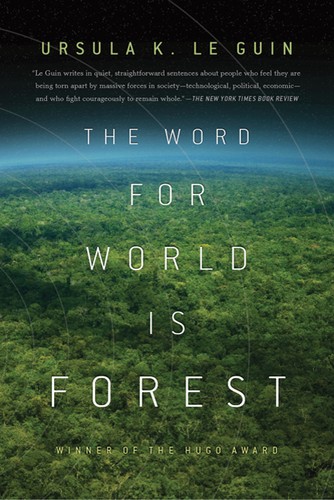
Cover of The Word for World is Forest by Ursula K. Le Guin
№ 5 · Hainish Cycle

The Word for World is Forest,

by Ursula K. Le Guin

Ask AI
Rating4.1/ 5
Ratings196
Pages178
Reading Hours4h
Published1972
LanguageEnglish

§Synopsis

01

Centuries in the future, Terrans have established a logging colony & military base named “New Tahiti” on a tree-covered planet whose small, green-furred, big-eyed inhabitants have a culture centered on lucid dreaming. Terran greed spirals around native innocence & wisdom, overturning the ancient society.

Humans have learned interstellar travel from the Hainish (the origin-planet of all humanoid races, including Athsheans). Various planets have been expanding independently, but during the novel it’s learned that the League of All Worlds has been formed. News arrives via an ansible, a new discovery. Previously they had been cut off, 27 light years from home.

The story occurs after The Dispossessed, where both the ansible & the League of Worlds are unrealised. Also well before Planet of Exile, where human settlers have learned to coexist. The 24th century has been suggested.

Terran colonists take over the planet locals call Athshe, meaning “forest,” rather than “dirt,” like their home planet Terra. They follow the 19th century model of colonization: felling trees, planting farms, digging mines & enslaving indigenous peoples. The natives are unequipped to comprehend this. They’re a subsistence race who rely on the forests & have no cultural precedent for tyranny, slavery or war. The invaders take their land without resistance until one fatal act sets rebellion in motion & changes the people of both worlds forever.

Track this book

Add to your library to track progress and write reviews

§Genres
aliens1classics1classique1dystopian1fantasy1fiction1forests and forestry1
§Moods
adventurous1challenging1dark1emotional1hopeful1informative1inspiring1
§Tags
#diverse characters1#loveable characters1#not diverse characters1#plot driven1#strong character development1#unloveable characters1#up-next1

§About the Author

Ursula K. Le Guin
Ursula K. Le Guin

17 books in catalog

Speculative fiction gained profound depth through thoughtful worldbuilding that examined social structures, gender dynamics, and political philosophy across fantasy and science fiction settings such as the archipelago of Earthsea and the planetary systems of the Hainish Cycle. Ursula K. Le Guin was an American author who wrote more than 20 novels and 100 short stories, alongside poetry, children's books, essays, and translations during a literary career spanning nearly six decades.

Her extensive body of work includes 23 novels, 12 volumes of short stories, 11 volumes of poetry, 13 children's books, five essay collections, and four works of translation. Celebrated for her genre-bending speculative fiction, Le Guin earned six Nebula Awards, seven Hugo Awards, the SFWA Grand Master title, and the 2014 National Book Foundation Medal for Distinguished Contribution to American Letters.

Career & Background

Born Ursula Kroeber in 1929 in Berkeley, California, she was the daughter of anthropologist Alfred Louis Kroeber and writer Theodora Kroeber. Raised in an intellectual environment steeped in cultural anthropology, she developed a keen sensitivity to social structures and language that directly informed her detailed depictions of fictional societies. Le Guin published her first poem in 1959 and her first short story in 1961 before achieving widespread critical success.

Her early works, A Wizard of Earthsea (1968), The Left Hand of Darkness (1969), and The Dispossessed (1974), established her as a major figure in science fiction and fantasy. Over her long career, she expanded both the Earthsea series and her Hainish universe novels, receiving accolades such as the PEN/Malamud Award and being published in her lifetime by the Library of America in 2016 before her death in 2018.

Writing Style & Themes

At a time when American science fiction was largely centered on physical technology and hard-science tropes, Le Guin shifted focus toward anthropology, sociology, linguistics, and psychology. Her Hainish Cycle novels—which include Rocannon's World, Planet of Exile, City of Illusions, The Left Hand of Darkness, The Word for World Is Forest, The Dispossessed, and The Telling—explore alternative political systems such as anarchism, non-violent communication, anti-colonialism, and non-binary concepts of gender.

In her fantasy fiction, particularly the Earthsea cycle featuring A Wizard of Earthsea, The Tombs of Atuan, and Tehanu, Le Guin rejected conventional high-fantasy battle narratives in favor of themes concerning balance, ethical responsibility, self-discovery, and domestic authority. She was also an essayist on feminist issues and literary craft, publishing influential collections such as The Language of the Night and Dancing at the Edge of the World.

Major Works

  • A Wizard of Earthsea (1968)* — The opening novel of the Earthsea cycle, detailing the training and coming-of-age of the wizard Ged as he confronts his own shadow.
  • The Left Hand of Darkness (1969)* — A groundbreaking Hainish universe novel set on the winter planet Gethen, exploring human sexuality, social structures, and diplomacy in an ambisexual society.
  • The Dispossessed (1974)* — A Hugo and Nebula Award-winning novel contrasting an anarchist society on the moon Anarres with a capitalist state on the planet Urras.
  • The Tombs of Atuan — The second Earthsea novel, focusing on a young priestess trapped in an ancient labyrinth and her encounter with Ged.
  • The Lathe of Heaven — A speculative science fiction novel set in Portland about a man whose dreams alter reality and a psychiatrist who attempts to control them.
  • The Word for World Is Forest — A Hainish Cycle novella addressing military imperialism, environmental degradation, and indigenous resistance.
  • Tehanu — The fourth Earthsea novel, shifting focus toward everyday life, aging, and female empowerment within a fantasy world.
  • The Day Before the Revolution — An award-winning short story set in the Hainish universe that portrays the final day of Odo, the visionary philosopher behind the anarchist movement in The Dispossessed.
  • The Telling — A late Hainish Cycle novel following an observer sent to a planet where ancient cultural and oral traditions are suppressed by a technocratic regime.
§Featured Series

Hainish Cycle

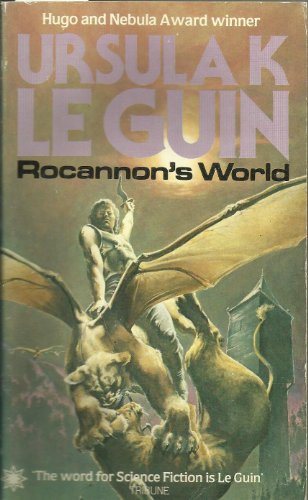
Cover of Rocannon's World by Ursula K. Le Guin

Rocannon's World

Ursula K. Le Guin, 1966
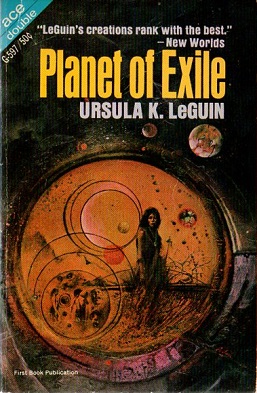
Cover of Planet of Exile by Ursula K. Le Guin

Planet of Exile

Ursula K. Le Guin, 1966
Cover of City of Illusions by Ursula K. Le Guin

City of Illusions

Ursula K. Le Guin, 1967
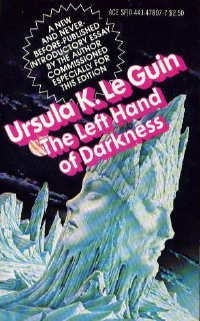
Cover of The Left Hand of Darkness by Ursula K. Le Guin

The Left Hand of Darkness

Ursula K. Le Guin, 1969
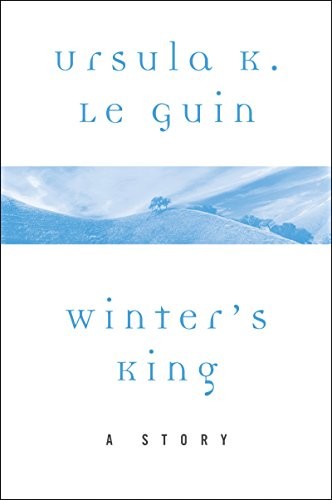
Cover of Winter's King by Ursula K. Le Guin

Winter's King

Ursula K. Le Guin, 2017
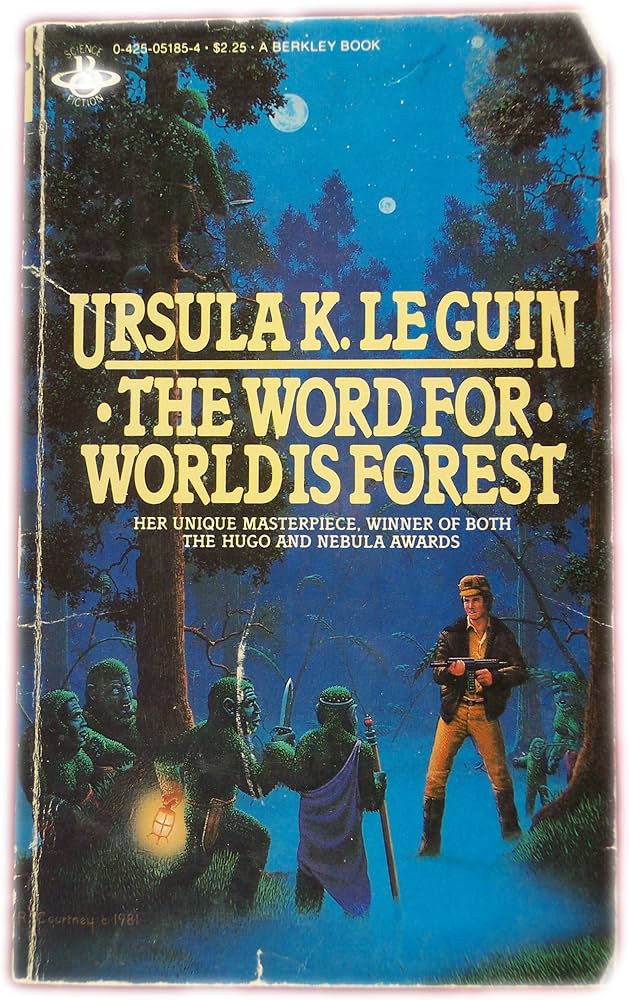
Cover of The Word for World Is Forest by Ursula K. Le Guin

The Word for World Is Forest

Ursula K. Le Guin, 1972
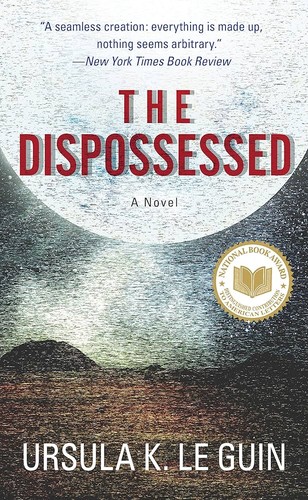
Cover of The Dispossessed by Ursula K. Le Guin

The Dispossessed

Ursula K. Le Guin, 1974
Cover of The Day Before the Revolution by Ursula K. Le Guin

The Day Before the Revolution

Ursula K. Le Guin, 1974
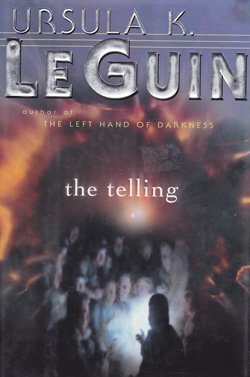
Cover of The Telling by Ursula K. Le Guin

The Telling

Ursula K. Le Guin, 2000
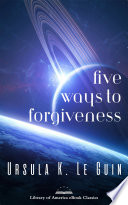
Cover of Five Ways to Forgiveness by Ursula K. Le Guin

Five Ways to Forgiveness

Ursula K. Le Guin, 2017

§Other Editions

Showing 2 of 35 editions
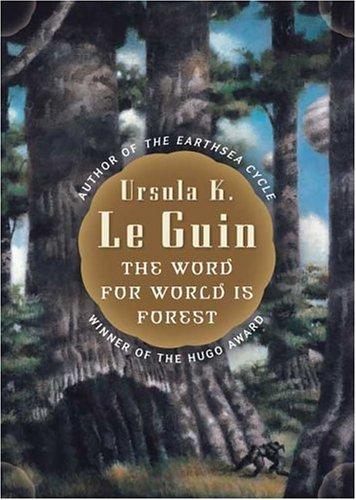
Cover of The Word for World Is Forest

The Word for World Is Forest

engPaperbackSecond edition
Tor Books20109780765324641
Cover of The Word for World is Forest

The Word for World is Forest

engPaperback
Tor Teen19729780765349859
§Genres
aliens1classics1classique1dystopian1fantasy1fiction1forests and forestry1
§Moods
adventurous1challenging1dark1emotional1hopeful1informative1inspiring1
§Tags
#diverse characters1#loveable characters1#not diverse characters1#plot driven1#strong character development1#unloveable characters1#up-next1

Metadata

ISBN-139780057502320
ISBN-100057502323

Editions and availability

Find The Word for World is Forest Ursula K. Le Guin in PDF, EPUB, ebook, audiobook, print, or library editions.

Bookshop.orgGoogle Play BooksBarnes & NobleOpen Library