SSansFiction
The libraryCollectionsJournalStatsFor authors
Sign inJoin now
Sansfiction,

A digital library for books. Made by readers, for readers.

v 2.0 · 2026
The library
  • Discover
  • Collections
  • Book tracker
  • Journal
  • Stats
For authors
  • SF Links
  • Analytics
  • How it works
  • FAQ
Elsewhere
  • X / @sansfiction
  • Privacy
  • Terms
  • Contact
© 2026 SansFiction · Digital · GlobalA quiet room for your reading life.
The libraryCollectionsJournalStatsFor authors
Sign inJoin now →
Navigation
Library
Bookshelf
Journal
Discover
Collections
Tierlists
Stats
Profile
Author Page
Link Builder
Account
Sign in
S
G
BooksadventureThe Wise Man's Fear
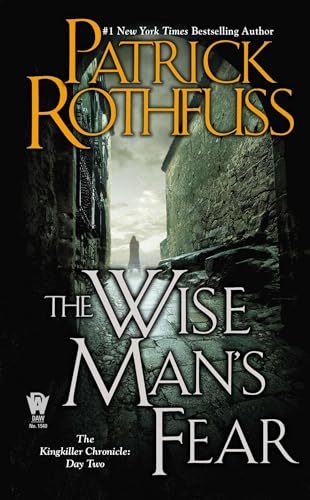
Cover of The Wise Man's Fear by Patrick Rothfuss
№ 2 · The Kingkiller Chronicle

The Wise Man's Fear,

by Patrick Rothfuss

Ask AI
Rating4.4/ 5
Ratings1,854
Pages1107
Reading Hours23h
Published2011
LanguageEnglish

§Synopsis

01

In The Wise Man's Fear, Kvothe searches for answers, attempting to uncover the truth about the mysterious Amyr, the Chandrian, and the death of his parents. Along the way, Kvothe is put on trial by the legendary Adem mercenaries, forced to reclaim the honor of his family, and travels into the Fae realm. There he meets Felurian, the faerie woman no man can resist, and who no man has ever survived...until Kvothe.

Now, Kvothe takes his first steps on the path of the hero and learns how difficult life can be when a man becomes a legend in his own time.

(source)

§Our take

The Kingkiller Chronicle gets bigger here, but the mystery gets no closer, and that mismatch can make a very long book feel oddly still. Kvothe leaves the University and moves through the Vintish court, bandit country, the Fae and Ademre. His music, wit and eye for strange customs keep the prose alive, especially in Ademre, where he has to earn his place rather than coast through on cleverness.

Brandon Sanderson thought it better than The Name of the Wind, praising the prose, cohesion and pacing. Later readers have been less generous, often calling the book bloated, episodic and slow to deliver answers about the Chandrian. The unpublished third volume has become part of how the book is judged. Kvothe's habit of turning modest deeds into legend is fascinating when it feels deliberate; when it feels like special pleading, it is less convincing. The prose remains the saving grace.

§Themes

A legend in the telling
Kvothe's account at the Waystone Inn lets him shape his own legend, making the frame more than decoration.
Mystery losing traction
The search for the Chandrian and Amyr advances so slowly that the many episodes can outrun the central question.
Culture as counterweight
Ademre's music, customs and code of honor offer vivid detail, while Kvothe's struggles there keep him from mastering every culture on contact.
Magic with muddy boots
Sympathy magic joins practical rules, historical pseudoscience and wonder, making knowledge matter as much as talent.
Hero or self-promoter?
Kvothe's confidence and near-flawless competence can read as heroism or arrogance, depending on whether he is knowingly building his own legend.

§How it was received

Publishers Weekly was enthusiastic before publication, praising a large-scale fantasy that stayed emotionally intimate. Brandon Sanderson judged it at least as good as The Name of the Wind and quite a bit better, though he warned about more sexual content and uncomfortable events in the second half. Later reviews grew cooler, with recurring complaints about bloat, episodic plotting and too little movement on the Chandrian mystery; a 2021 student-paper review still praised the writing but advised newcomers to wait because the series was unfinished.

§Read it if

  • You want the University story to open into the Vintish court, bandit country, the Fae and Ademre
  • You like lyrical prose, music and a first-person narrator whose version of himself may not be the whole truth
  • You prefer an immersive, episodic fantasy and can tolerate a major mystery remaining largely unresolved

§Skip it if

  • You need steady plot momentum. The Chandrian mystery barely advances, and several episodes stretch out.
  • You want a completed story now. This is the second volume in a planned three-book series, and the third book remains unpublished.

§Before you start

Reading experience
The 994-page US first edition tests patience with uneven pacing: camp and Fae scenes linger, travel sometimes jumps, and the Chandrian mystery advances little.
Reading order
Book 2 of three planned volumes in The Kingkiller Chronicle. Read The Name of the Wind (2007) first; the third volume, known as The Doors of Stone, remains unpublished and its title is not final. The Slow Regard of Silent Things is an optional Auri-centered novella and isn't required for the main sequence.
Content notes
Sexual content includes an extended Felurian episode and nonconsensual drugging; Rape is referenced; accounts differ on whether sexual assault is depicted or only mentioned; Violence includes swords, knives and axes, plus physical abuse, poisoning, explosions and fire; Some events in the second half may be uncomfortable, and some readers find the sexual content adolescent in tone.

§Common questions

Do I need to read The Name of the Wind first?
Yes. The Wise Man's Fear continues Kvothe's story directly from book one.
Is this the last book in The Kingkiller Chronicle?
No. It is book 2 of three planned volumes, and the third has not been published.
Should I wait to start the series?
Readers who prefer a completed series may want to wait. The third volume remains unpublished, and a 2021 student-paper review made the same recommendation.

§If you liked this

  • The Wheel of Time (starting with The Eye of the World) by Robert Jordan — Both send a young hero into a culture-rich epic, and one reviewer compares Kvothe's Adem to Jordan's Aiel.
  • A Song of Ice and Fire (A Feast for Crows / A Dance with Dragons era) by George R.R. Martin — The comparison captures complaints about bloated middle volumes in a long epic, though Martin himself named The Wise Man's Fear the best fantasy novel he read in 2011.
Sources
  • Wikipedia
  • Wikipedia
  • Wikipedia
  • Wikipedia
  • SFBook
  • Publishers Weekly
  • Brandon Sanderson (author blog)
  • Fantasy Faction
  • The Idle Woman (blog)
  • Cannonball Read
  • Elitist Book Reviews
  • Goodreads
  • Reactor (Tor.com)
  • Trigger Warning Database

Track this book

Add to your library to track progress and write reviews

§Genres
adventure1fantasy1fiction1literary collections1literature & fiction|science fiction & fantasy1magic1science fiction1
§Content Warnings
§Moods
adventurous2medium-paced2emotional1funny1hopeful1inspiring1lighthearted1
§Tags
#diverse characters1#loveable characters1#not diverse characters1

§About the Author

Patrick Rothfuss
Patrick Rothfuss

8 books in catalog

The high fantasy subgenre was deeply influenced by the 2007 debut novel The Name of the Wind, an intricate framed narrative recounting the life of legendary arcanist and musician Kvothe. Author Patrick Rothfuss established a vibrant secondary world in The Kingkiller Chronicle series, earning acclaim for rich prose, precise magic systems, and layered storytelling.

Career & Background

Born on June 6, 1973, in Madison, Wisconsin, Rothfuss developed an early passion for reading and writing. He enrolled at the University of Wisconsin–Stevens Point, where he spent nine years taking diverse courses and writing a humor column titled 'Your College Survival Guide' for the student newspaper before completing his Bachelor of Arts in English. He earned a Master of Arts from Washington State University in 2002 and returned to teach at UW–Stevens Point before focusing fully on his literary career.

Rothfuss originally envisioned his epic fantasy narrative as a single massive manuscript called The Song of Flame and Thunder. The project was eventually restructured into a trilogy named The Kingkiller Chronicle. Following the release of The Name of the Wind, his 2011 sequel The Wise Man's Fear reached the top of The New York Times Best Seller list, consolidating his reputation within modern speculative fiction.

Writing Style & Themes

Rothfuss is known for his poetic phrasing, meticulous worldbuilding, and meta-narrative framing. His central novels rely on a story-within-a-story structure in which an older Kvothe dictates his autobiography, emphasizing themes of mythmaking, memory, personal reputation, and the distortion of history over time. Magic in his world, including disciplines like Sympathy and Naming, operates under clear internal logic while maintaining a sense of wonder.

In addition to his core novels, Rothfuss explores side characters in standalone companion pieces. Novellas such as The Slow Regard of Silent Things and The Narrow Road Between Desires provide intimate, focused perspectives that broaden the lore of his main fantasy setting.

Major Works

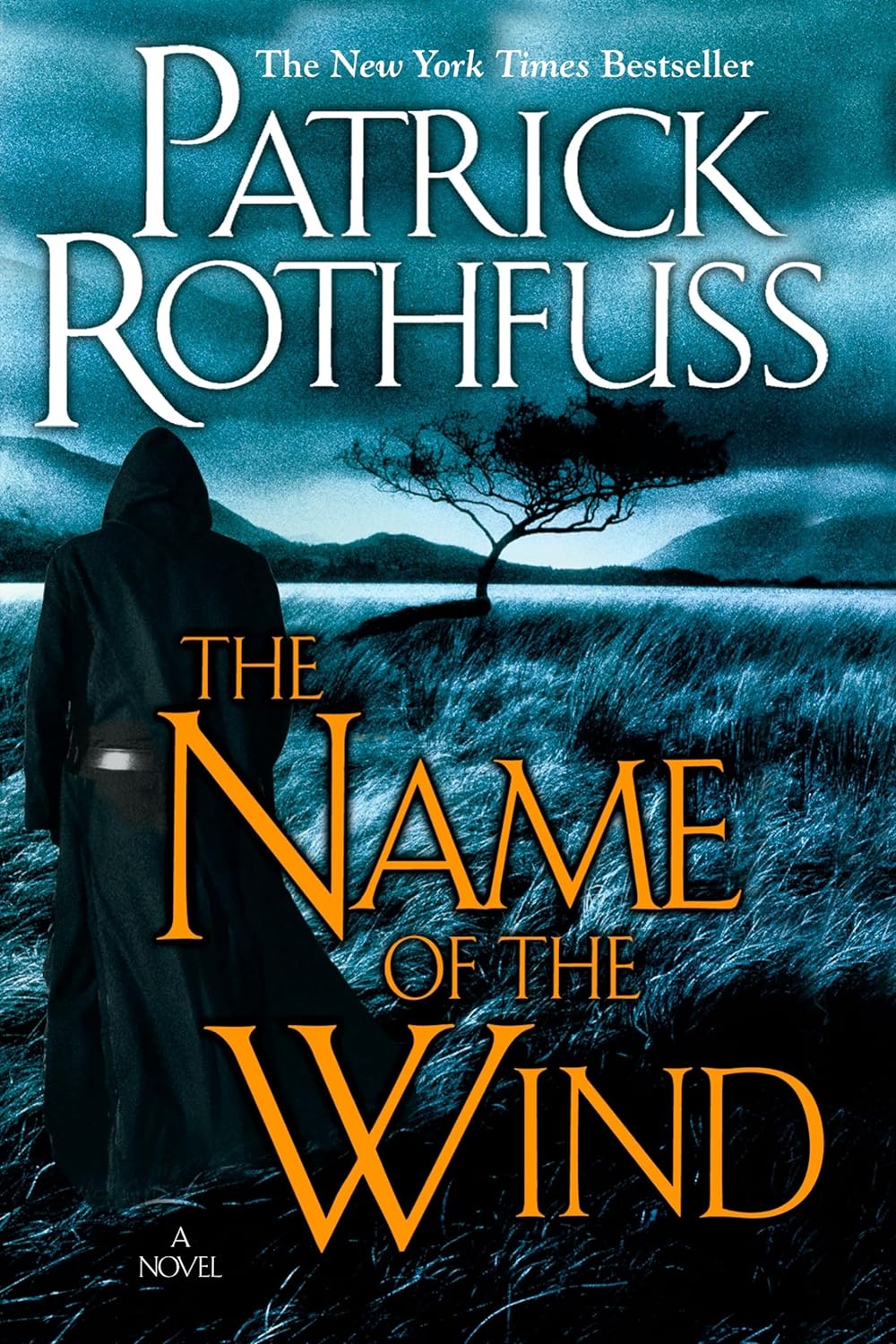
  • The Name of the Wind — The 2007 debut novel that opens The Kingkiller Chronicle, recounting Kvothe's childhood in a troupe of traveling performers, his struggles at the University, and his quest to learn about the mysterious Chandrian.
  • The Wise Man's Fear — The 2011 second volume of The Kingkiller Chronicle, following Kvothe as he leaves the University to navigate courtly intrigue in Vintas, venture into the Fae realm, and study with Adem mercenaries.
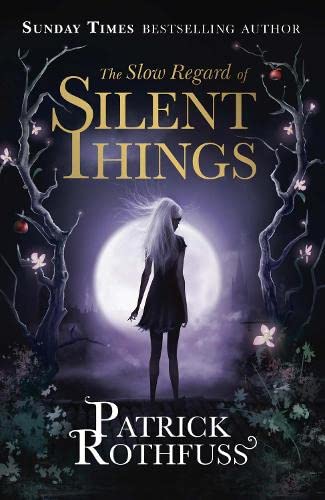
  • The Slow Regard of Silent Things — A 2014 companion novella that explores a week in the life of Auri, a former University student living in the subterranean ruins known as the Underthing.
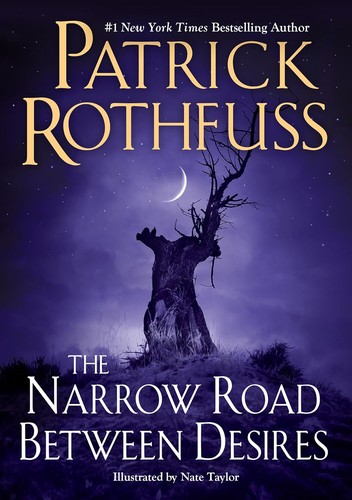
  • The Narrow Road Between Desires — A 2023 illustrated novella expanding the short story 'The Lightning Tree', detailing a day in the life of the Fae character Bast as he bargains with village children.
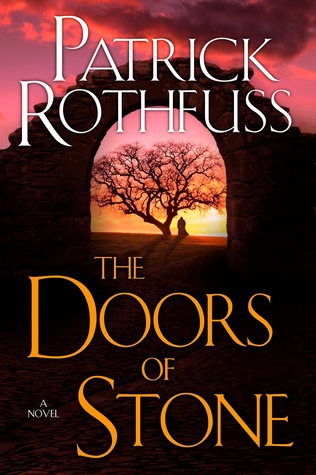
  • The Doors of Stone — The anticipated third primary novel in The Kingkiller Chronicle, intended to complete Kvothe's three-day autobiographical recount.
  • The Tale of Laniel Young-Again — A planned companion novel set in the world of Temerant, exploring historical legend centuries prior to the main trilogy.

§Featured Series

The Kingkiller Chronicle

Cover of The Narrow Road Between Desires by Patrick Rothfuss

The Narrow Road Between Desires

Patrick Rothfuss
Cover of The Name of the Wind by Patrick Rothfuss

The Name of the Wind

Patrick Rothfuss, 2007
Cover of The Wise Man's Fear by Patrick Rothfuss

The Wise Man's Fear

Patrick Rothfuss, 2011
Cover of The Slow Regard of Silent Things by Patrick Rothfuss

The Slow Regard of Silent Things

Patrick Rothfuss, 2014
Cover of L'estret camí entre desitjos by Patrick Rothfuss

L'estret camí entre desitjos

Patrick Rothfuss, 2023
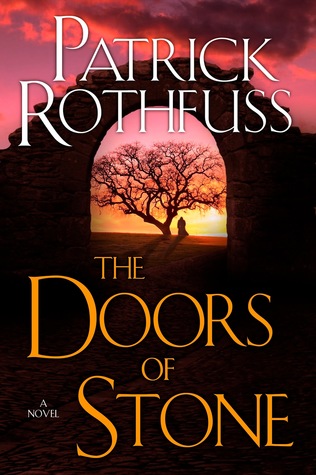
Cover of The Doors of Stone by Patrick Rothfuss

The Doors of Stone

Patrick Rothfuss
Cover of The Tale of Laniel Young-Again by Patrick Rothfuss

The Tale of Laniel Young-Again

Patrick Rothfuss

§Editions

Showing 3 of 54 editions
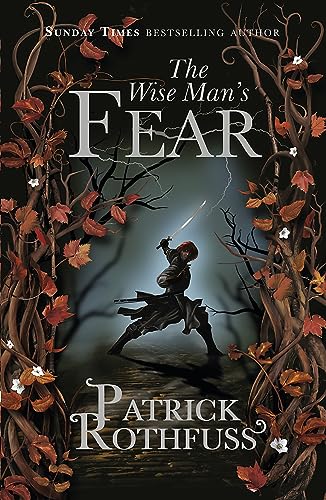
Cover of The Wise Man's Fear

The Wise Man's Fear

engPaperbackUK Edition
Gollancz20129780575081437
Cover of The Wise Man's Fear

The Wise Man's Fear

engAudible Audio
Brilliance Audio2011B004QJOG2O
Amazon
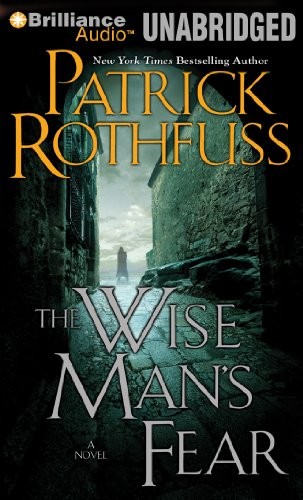
Cover of The Wise Man's Fear

The Wise Man's Fear

engAudio CD
Brilliance Audio20119781469259260
§Genres
adventure1fantasy1fiction1literary collections1literature & fiction|science fiction & fantasy1magic1science fiction1
§Content Warnings
§Moods
adventurous2medium-paced2emotional1funny1hopeful1inspiring1lighthearted1
§Tags
#diverse characters1#loveable characters1#not diverse characters1

Metadata

ISBN-139780575081437
ISBN-100575081430
ASINB004QJOG2O

Editions and availability

Find The Wise Man's Fear Patrick Rothfuss in PDF, EPUB, ebook, audiobook, print, or library editions.

View on Amazon
Bookshop.orgGoogle Play BooksBarnes & NobleOpen Library