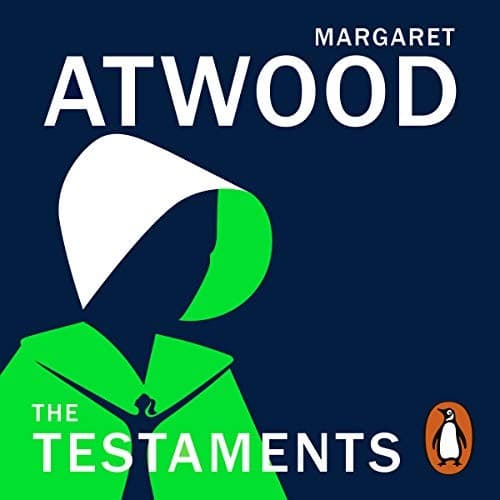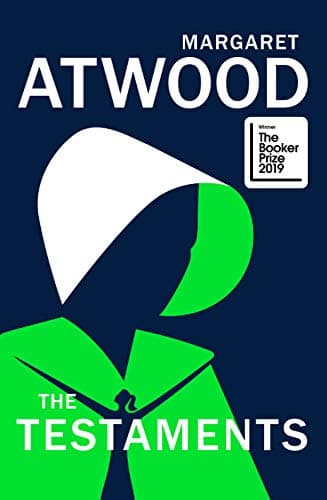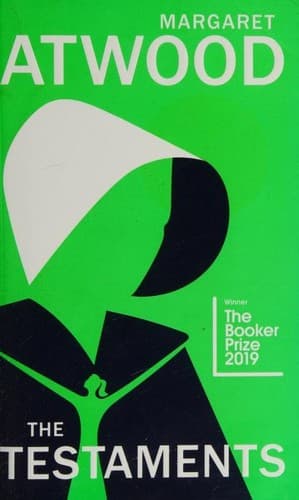
"At this crucial moment, the lives of three radically different women converge, with potentially explosive results.
Two have grown up as part of the first generation to come of age in the new order. The testimonies of these two young women are joined by a third: Aunt Lydia. Her complex past and uncertain future unfold in surprising and pivotal ways."-- Provided by Amazon
Add to your library to track progress and write reviews
Find The Testaments Margaret Atwood in PDF, EPUB, ebook, audiobook, print, or library editions.
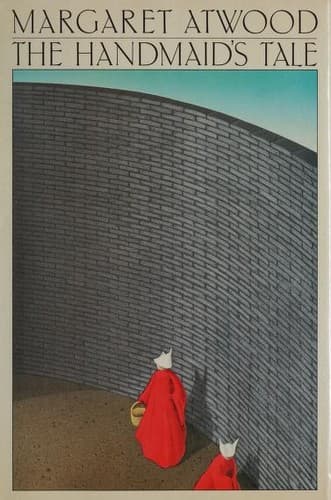
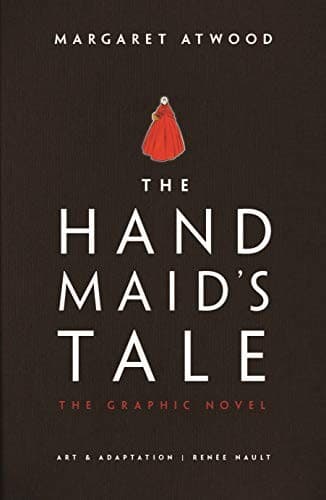
The Handmaid's Tale

14 books in catalog
Speculative fiction and dystopian literature found one of their defining contemporary anchors in the 1985 novel The Handmaid's Tale, a narrative exploring totalitarian control, bodily autonomy, and societal resistance. Margaret Atwood developed the novel using exclusively real-world historical precedents, constructing a grounded examination of religious authoritarianism.
Her extensive bibliography spans more than fifty books of fiction, poetry, literary criticism, non-fiction, and graphic novels published in over forty-five countries. Beyond dystopias, Atwood's fiction encompasses psychological realism, historical re-examinations, and speculative visions of environmental and technological crisis.
Born in Ottawa, Ontario, in 1939, Atwood grew up in northern Ontario, Quebec, and Toronto. She received her undergraduate degree from Victoria College at the University of Toronto and her master's degree from Radcliffe College at Harvard University. She began publishing poetry in the 1960s before establishing her prose fiction career with early novels such as Surfacing and Cat's Eye, which was shortlisted for the Booker Prize.
Her international reach expanded with historical fiction such as Alias Grace, which won Canada's Giller Prize and Italy's Premio Mondello. In 2000, Atwood won the Booker Prize for The Blind Assassin. She returned to speculative fiction with Oryx and Crake, shortlisted for the Booker Prize in 2003, which initiated her MaddAddam trilogy. In 2019, Atwood published The Testaments, a sequel to The Handmaid's Tale that became a co-winner of the Booker Prize. Alongside her writing, she has taught as a university professor, written literary commentary, and advocated for environmental protection while residing in Toronto.
Atwood's writing is characterized by stylistic precision, satirical irony, and formal experimentation. A recurring focus across her work is the examination of gender, power dynamics, institutional control, and human survival within shifting social environments. She frequently uses complex narrative frames, historical documents, and multi-layered perspectives to question cultural myths and recorded histories.
Her non-fiction writing, including Burning Questions: Essays and Occasional Pieces, 2004 to 2021, demonstrates her active interest in climate change, civil liberties, and the social role of art. Whether writing speculative fiction, historical drama, or critical prose, Atwood relies on extensive research and sharp observation to examine contemporary ethics.