§Synopsis
01The collapse of modern civilization is not a slow decay but a sudden, mechanical failure triggered by a single breach in a high-security laboratory. When a security guard flees his post, unknowingly carrying a bio-engineered strain of super-flu known as "Captain Trips," he initiates a chain reaction that systematically dismantles the infrastructure of the United States within weeks. This is not merely a story of a pandemic; it is a clinical observation of how quickly the legal, medical, and social frameworks of the world evaporate when faced with a 99% mortality rate.
As the government attempts to suppress the truth through martial law and misinformation, the few who are naturally immune find themselves in a silent, empty world. The vacuum left by the disappearance of the old order creates a terrifying new reality where the survivors are guided not by logic or law, but by vivid, recurring dreams. These visions pull them across a landscape of stalled cars and abandoned cities, forcing a disparate group of strangers to choose between two emerging figureheads who represent the fundamental poles of human nature.
The Mechanics of a Fragile World
The world building in this narrative functions on the "sliding scale of civilization," where the comfort of the 20th century is stripped away to reveal a primitive, lawless frontier. King establishes a setting defined by "The Super-Flu," a weaponized virus that bypasses the human immune system entirely. The atmosphere is one of claustrophobic dread followed by an eerie, echoing silence. The rules of this new world are harsh: technology is a dead weight without the people to run it, and survival depends on one’s ability to scavenge while maintaining a semblance of psychological stability. The setting serves as a crucible, testing whether human morality is an inherent trait or merely a byproduct of social policing.
Character Evolution in the Vacuum
The narrative follows several protagonists whose initial arcs are defined by their flaws and the sudden necessity for growth. Stu Redman, a quiet man from East Texas, begins as a prisoner of a government desperate for a cure, representing the pragmatic resistance to bureaucratic overreach. Larry Underwood, a rising rock star plagued by debt and narcissism, is forced to confront his own shallow nature when there is no longer an audience to perform for. Meanwhile, Nick Andros, a deaf-mute roamer, utilizes his pre-existing resilience to navigate a world that has become as silent for others as it has always been for him. These characters are not traditional heroes; they are ordinary people whose relationship dynamics are forged in the trauma of loss and the shared necessity of the road.
Subverting the Post-Apocalyptic Trope
The story utilizes the "Cozy Catastrophe" trope—where a small group of survivors inherits the earth—but subverts it by infusing the journey with elements of dark fantasy and theological horror. Rather than focusing solely on the logistics of finding food and shelter, the narrative prioritizes the internal struggle of free will. It leans into the "Good vs. Evil" trope but complicates it by making the call to action a matter of faith rather than certainty. The survivors aren't just looking for safety; they are being recruited into a cosmic conflict that they do not fully understand, where the primary antagonist is not the virus, but the dark impulses that rise when the lights go out.
The Moral Dilemma of Reconstruction
As the survivors begin to congregate, the central thematic conflict shifts toward the difficulty of building an ideal society. The characters face the "cyclic persistence of evil," questioning if they are destined to repeat the same mistakes that led to the creation of the virus in the first place. This transition from individual survival to community building highlights the tension between the need for order and the corrupting nature of power. The stakes are elevated from mere physical survival to the preservation of the human soul, as each character must decide whether to follow the beckoning of a benevolent, elderly woman in Nebraska or the dark, charismatic figure gathering strength in the West.
§Our take
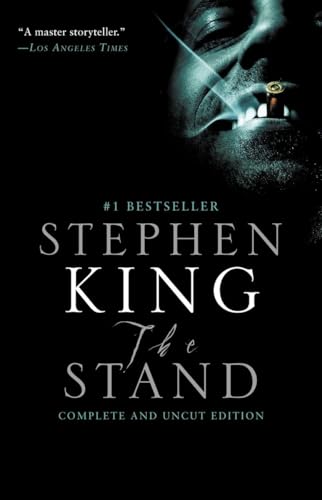
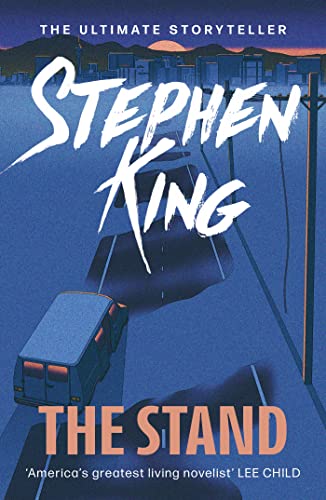
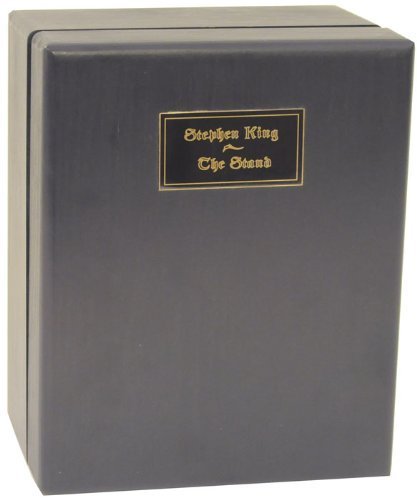
The book you remember from the pandemic isn't the book King wrote. The first half is a vivid catalogue of civilization unraveling — abandoned cars clogging Fifth Avenue, an inventory of American brands and landscapes — and the Encyclopedia of Science Fiction calls it a very superior example of its genre. Then the novel pivots to a mythic battle between good and evil that Kirkus in 1978 said follows Revelation too explicitly, and that SFE argues weakens the SF premise. King wanted an American Lord of the Rings with Vegas as Mordor; he got a doorstopper whose two halves critics have weighed differently ever since. Two editions exist: the 1978 Doubleday cut (823 pages) and the 1990 Complete & Uncut (1,152 pages, reset to the 1990s). King says it's the book his longtime readers still like best. Pick your edition deliberately; the uncut version restores cut material and expanded ending material but doesn't change the structural argument.
§Themes
- Civilization unraveling
- The flu collapses society within a month, and the first half reads as a catalogue of American order coming apart.
- Two camps, two visions
- Survivors gather around Mother Abagail or Randall Flagg, turning the second half into a mythic contest between good and evil.
- Rival utopias
- SFE reads the two camps as competing visions of an ideal society, one a utopia and one a dystopia, set against the collapse of the old world.
- An American epic
- King wanted an American Lord of the Rings, and Kirkus saw the book as a catalogue of American culture, brands and landscapes.
§How it was received
Kirkus in 1978 called it King's most sweeping horror novel with vivid American set pieces but faulted the Revelation-heavy climax. The Encyclopedia of Science Fiction calls it King's earliest and perhaps best SF novel but says the supernatural second half weakens the genre impact. It placed 53rd in the BBC's 2003 Big Read.
§Read it if
- You want a pandemic collapse rendered in granular, brand-name American detail before the supernatural kicks in
- You're fine with a novel that pivots halfway from science fiction to theological horror
- You'll pick an edition deliberately: 823 pages (1978) or 1,152 (1990 uncut)
§Skip it if
- A 1,152-page commitment with a mid-book genre shift feels like a bait-and-switch
- Heavy-handed biblical symbolism and an atomic climax that follows scripture literally will frustrate you
§Before you start
- Reading experience
- Starts fast with the pandemic collapse, then slows into a multi-character road novel that shifts tone halfway through; the 1990 uncut edition runs 1,152 pages.
- Content notes
- Mass death: a lab-released flu kills about 99.4 percent of the world's population within a month; Societal collapse, suicide, and grief are pervasive; Violence, apocalyptic religious imagery, and an atomic climax.
§Common questions
- Which edition should I read?
- The 1978 Doubleday edition (823 pages) is shorter; the 1990 Complete & Uncut (1,152 pages) restores most cut material, updates the setting to the 1990s, and adds expanded ending material. Readers disagree on which is better.
- Is The Stand connected to other King books?
- The 2025 serial The End Times, by King and Benjamin Percy, is set in The Stand's world, but The Stand itself is a standalone novel with no direct sequel.
- How does the 1994 miniseries compare to the book?
- King wrote the screenplay; it drew generally positive reviews and won two Emmys. It isn't based on the uncut edition, though its opening scenes use that version. The 2020 series received mixed reviews for pacing and runtime and adds a new King-written ending.
§If you liked this
- Earth Abides by George R. Stewart — The 1949 post-collapse novel King drew on; SFE says The Stand owes it something without being imitative.
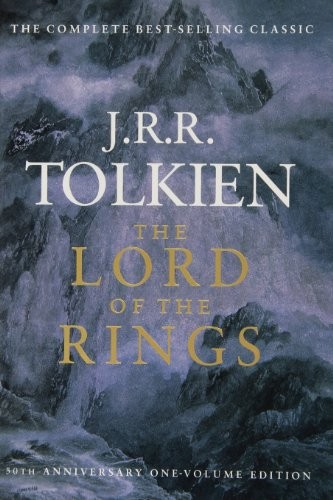
- The Lord of the Rings by J. R. R. Tolkien — King's stated model for an American fantasy epic, with Las Vegas standing in for Mordor.
Track this book
Add to your library to track progress and write reviews