SSansFiction
The libraryCollectionsJournalStatsFor authors
Sign inJoin now
Sansfiction,

A digital library for books. Made by readers, for readers.

v 2.0 · 2026
The library
  • Discover
  • Collections
  • Book tracker
  • Journal
  • Stats
For authors
  • SF Links
  • Analytics
  • How it works
  • FAQ
Elsewhere
  • X / @sansfiction
  • Privacy
  • Terms
  • Contact
© 2026 SansFiction · Digital · GlobalA quiet room for your reading life.
The libraryCollectionsJournalStatsFor authors
Sign inJoin now →
Navigation
Library
Bookshelf
Journal
Discover
Collections
Tierlists
Stats
Profile
Author Page
Link Builder
Account
Sign in
S
G
BooksfantasyThe Shadow Rising
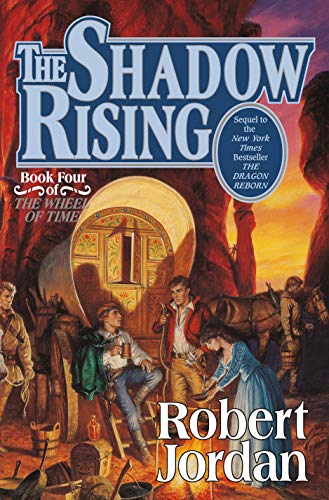
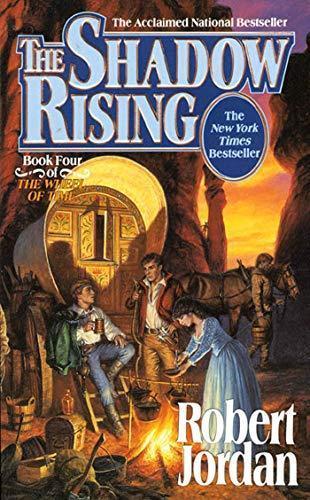
Cover of The Shadow Rising by Robert Jordan
№ 4 · The Wheel of Time

The Shadow Rising,

by Robert Jordan

Ask AI
Rating4.2/ 5
Ratings910
Pages716
Reading Hours15h
Published1992
LanguageEnglish

§Synopsis

01

Perrin Aybara must return to Emond's Field to face the occupying Whitecloaks, while Rand enters the Aiel Waste and the forbidden city of Rhuidean

§Our take

The Shadow Rising is where The Wheel of Time stops being one expedition and becomes four, a sprawl that is both the book's greatest strength and the beginning of its later excesses. Rhuidean is the persuasive counterweight: Aiel history arrives as lived scenes and buried contradictions rather than a lecture.

The first half can drag. Tanchico's bickering is the obvious place to lose patience. The second half moves with purpose. This is also the hinge into the looser books, because the main characters now work in separate corners and rarely share a scene. Fans often place it among the series' best; the original reviews were less sure, seeing invention and momentum alongside excessive description, tiresome secrecy and too many open threads.

§Themes

History with boots on
Rhuidean turns Aiel heritage into lived history, showing how present ideals can harden into contradictions with their origins.
Home is not safe
Perrin's return to the Two Rivers makes homecoming a test of grief, leadership and resistance.
Prophecy resists control
Attempts to steer the prophesied Dragon run into the Pattern's pull and the unchangeable certainty of Min's visions.
Authority turns inward
Tar Valon's Aes Sedai fight over leadership inside the organization that carries immense power.
Four roads at once
Separated quest strands widen the world while giving each main character less time and fewer shared scenes.

§How it was received

Kirkus called the book huge but flawed, praising Jordan's invention while warning that the description was excessive and the control uneven; it also said the book was close to unintelligible without the earlier volumes. Publishers Weekly was more guarded, noting that each volume opens more plot threads than it closes, secrets become tiresome and the large cast pushes action offstage, though it expected invention and momentum to satisfy existing fans. Fan rankings tell a kinder story: The Mary Sue ranks it third of the fifteen books, prequel included, and Marie Brennan names it her favorite in the series.

§Read it if

  • You have read the first three main novels and want to see the series widen into several linked campaigns
  • You want Aiel history and Rhuidean delivered through lived scenes rather than lore lectures
  • You enjoy huge casts, rotating viewpoints and payoffs that reward remembering earlier books

§Skip it if

  • You are starting the series. Kirkus says this volume is close to unintelligible without the earlier books.
  • You prefer a tight, single-thread plot. Long stretches of travel, battle preparation and the Tanchico bickering are likely to grate.

§Before you start

Reading experience
Expect a slow first half, a much stronger second and frequent switches among quest strands; this is a demanding re-entry point, not a book for starting cold.
Reading order
Book 4 of 14 main-sequence novels in The Wheel of Time, after The Dragon Reborn and before The Fires of Heaven. Read the first three main novels first; New Spring is a prequel rather than part of the main sequence.
Content notes
Fantasy battle violence, including Trolloc attacks; Deaths of characters' family members and threats from the Whitecloaks; Strong gendered cultural divisions and stereotyping.

§Common questions

Do I need to read the first three books first?
Yes. This is Book 4 of 14 main novels, and Kirkus warned that it is close to unintelligible without the earlier volumes.
What changes in Book 4?
The main characters split into separate quest threads and rarely reunite, making the story wider but less tightly focused.
Is it the best Wheel of Time book?
It is often ranked among the best by fans. The Mary Sue ranks it third of the fifteen books, prequel included, and Marie Brennan calls it her favorite.

§If you liked this

  • The Way of Kings by Brandon Sanderson — Sanderson finished Jordan's series; this is another huge, multi-thread epic with deep worldbuilding and slow-burn payoffs.
  • The Shadow of What Was Lost by James Islington — Often billed as a modern heir to Jordan's chosen-one, hidden-history epic fantasy.
  • A Game of Thrones by George R. R. Martin — A useful comparison for its large rotating cast and split storylines, though it runs darker.
Sources
  • Wikipedia
  • Wikipedia
  • Wikipedia
  • Kirkus Reviews
  • Publishers Weekly
  • Swan Tower (Marie Brennan)
  • The Mary Sue
  • Dragonmount
  • Reactor (formerly Tor.com), Leigh Butler

Track this book

Add to your library to track progress and write reviews

§Genres
fantasy2adventure1classics1fantasy fiction1fiction1literary criticism1russian1
§Content Warnings
§Moods
adventurous1challenging1emotional1funny1inspiring1mysterious1
§Tags
#diverse characters1#loveable characters1#not diverse characters1#plot driven1#strong character development1

§About the Author

Robert Jordan
Robert Jordan

21 books in catalog

The sprawling high fantasy genre was redefined by The Wheel of Time, an expansive multi-volume narrative featuring intricate worldbuilding, complex magic systems, and dozens of intersecting character arcs. Writing under the pen name Robert Jordan, James Oliver Rigney, Jr. created one of epic fantasy's most widely read sagas, beginning with The Eye of the World in 1990.

Across 14 main-sequence novels and a prequel, Jordan's work established a benchmark for modern fantasy series length and detail, selling over 90 million copies worldwide and drawing millions of readers into its vast secondary world.

Career & Background

Born James Oliver Rigney, Jr. on October 17, 1948, in Charleston, South Carolina, he taught himself to read at age four and was reading Mark Twain and Jules Verne by five. He served two tours in Vietnam with the United States Army from 1968 to 1970, earning decorations including the Distinguished Flying Cross with bronze oak leaf cluster. Upon returning to South Carolina, he earned a Bachelor of Science degree in physics from The Citadel in 1974 and worked as a nuclear engineer for the military until 1978, when he turned to full-time writing.

Before achieving worldwide fantasy success, Rigney adopted several pseudonyms across multiple genres. He wrote historical family sagas as Reagan O'Neal, starting with The Fallon Blood in 1980, and published a western novel titled Cheyenne Raiders under the name Jackson O'Reilly in 1982. Writing as Chang Lung, he published dance criticism, and he also ghostwrote an international thriller that remains credited to another author. In 1982, adopting the name Robert Jordan, he wrote the novelization for the Conan movie and went on to author seven original Conan the Barbarian novels, which received high praise from fans of Robert E. Howard's classic character.

Jordan began his signature epic fantasy saga with Tor Books when The Eye of the World appeared in 1990. The series expanded through subsequent releases such as The Great Hunt, The Dragon Reborn, The Shadow Rising, The Fires of Heaven, A Crown of Swords, The Path of Daggers, Winter's Heart, Crossroads of Twilight, and Knife of Dreams. Following Jordan's death in Charleston on September 16, 2007, the series was concluded using his extensive notes, culminating in volumes including The Gathering Storm.

Writing Style & Themes

Jordan's writing style is characterized by meticulous worldbuilding, expansive plotlines, and deeply detailed descriptions of cultural attire, geography, and political structures. His central magic system, the One Power, operates on precise dualities and rules, framing an ongoing conflict between light and dark forces across cyclic ages. Themes of duty, power, gender dynamics, and the burden of destiny recur throughout his work, as individual protagonists are drawn into large-scale geopolitical conflicts.

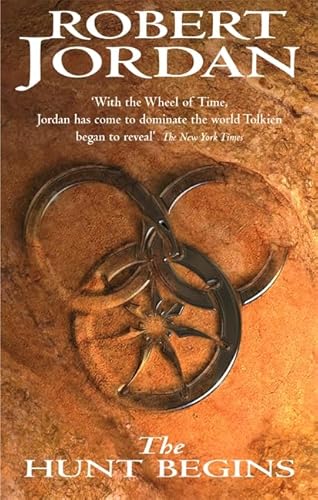
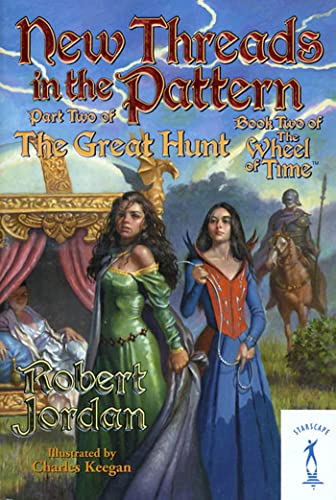
To make his long novels accessible to wider audiences, publisher variations split early installments into smaller parts, producing titles such as From the Two Rivers: The Eye of the World, Part 1, New Threads in the Pattern: The Great Hunt, Part 2, and The Hunt Begins. Short companion pieces and standalone commentaries, such as The Strike at Shayol Ghul (published in Spanish as El ataque a Shayol Ghul) and promotional previews like Glimmers: Prologue to Crossroads of Twilight and What the Storm Means: Prologue to The Gathering Storm, further expanded the lore of his fictional universe.

Major Works

  • The Eye of the World — The 1990 inaugural novel of The Wheel of Time series, introducing the village of Emond's Field, the One Power, and the Shadow's resurgence. Also published in split editions such as From the Two Rivers: The Eye of the World, Part 1.
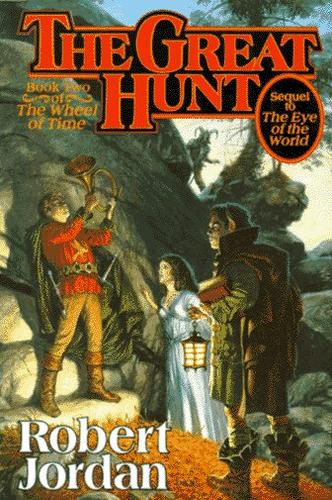
  • The Great Hunt — The second volume in The Wheel of Time, published in 1990, following the search for the Horn of Valere. Early segments were also adapted into separate releases such as The Hunt Begins and New Threads in the Pattern: The Great Hunt, Part 2.
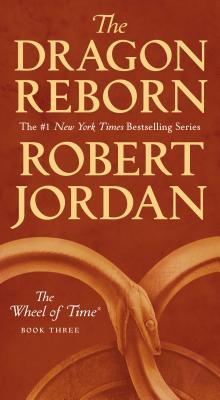
  • The Dragon Reborn — The third installment in the main series, published in 1991, focusing on Rand al'Thor's journey toward the fortress of Tear to fulfill ancient prophecy.
  • The Shadow Rising — The fourth novel in The Wheel of Time, published in 1992, taking the characters into the Aiel Waste and exploring the deep history of the Age of Legends.
  • The Fires of Heaven — The fifth entry in the saga, published in 1993, dealing with major military clashes and political maneuvers across the Westlands.
  • A Crown of Swords — The seventh volume of The Wheel of Time, continuing the complex power struggles in Ebou Dar and Illian.
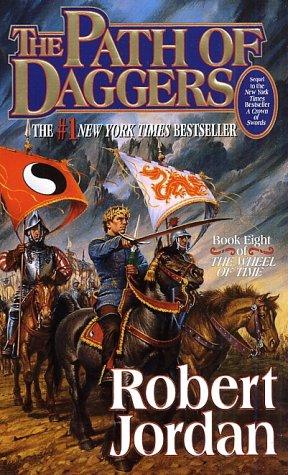
  • The Path of Daggers — The eighth novel in the main sequence, detailing campaign struggles against invading forces and weather anomalies caused by the Dark One.
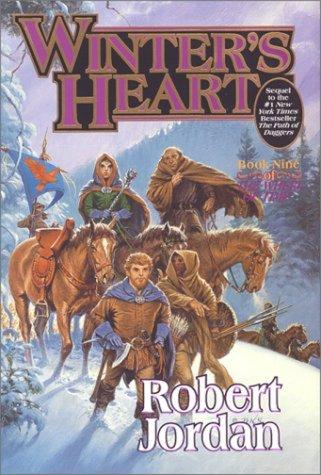
  • Winter's Heart — The ninth novel in the fantasy series, published in 2000, featuring a pivotal attempt to cleanse the male half of the True Source.
  • Crossroads of Twilight — The tenth book in The Wheel of Time, accompanied by the preview release Glimmers: Prologue to Crossroads of Twilight.
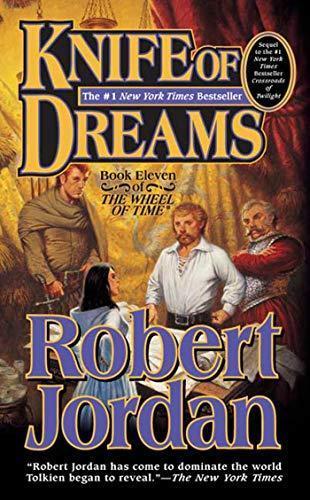
  • Knife of Dreams — The eleventh novel in the series, published in 2005, and the final volume completed entirely by Jordan before his death.
  • The Gathering Storm — The twelfth volume of The Wheel of Time, released with the preview What the Storm Means: Prologue to The Gathering Storm, advancing the story toward the Last Battle.
  • The Strike at Shayol Ghul — A short foundational work detailing the historic sealing of the Dark One's prison, also translated into Spanish as El ataque a Shayol Ghul.

§Featured Series

The Wheel of Time

Glimmers: Prologue to Crossroads of Twilight

ROBERT JORDAN

Glimmers: Prologue to Crossroads of Twilight

Robert Jordan, 2002
Cover of The Strike at Shayol Ghul by Robert Jordan

The Strike at Shayol Ghul

Robert Jordan, 1996
Cover of El ataque a Shayol Ghul by Robert Jordan

El ataque a Shayol Ghul

Robert Jordan, 1996
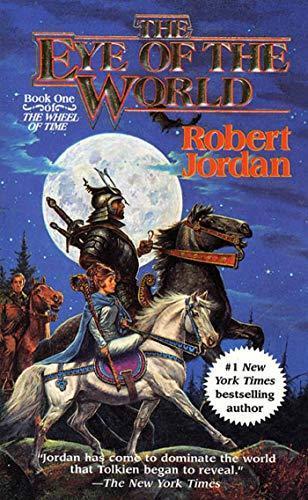
Cover of The Eye of the World by Robert Jordan

The Eye of the World

Robert Jordan, 1990
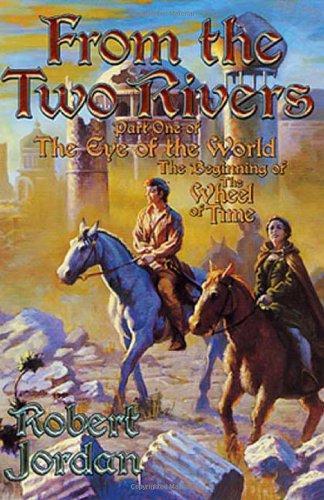
Cover of From the Two Rivers: The Eye of the World, Part 1 by Robert Jordan

From the Two Rivers: The Eye of the World, Part 1

Robert Jordan, 1990
Cover of The Great Hunt by Robert Jordan

The Great Hunt

Robert Jordan, 1990
Cover of The Hunt Begins by Robert Jordan

The Hunt Begins

Robert Jordan, 1990
Cover of New Threads in the Pattern: The Great Hunt, Part 2 by Robert Jordan

New Threads in the Pattern: The Great Hunt, Part 2

Robert Jordan, 1990
Cover of The Dragon Reborn by Robert Jordan

The Dragon Reborn

Robert Jordan, 1991
Cover of Le Dragon Réincarné - première partie by Robert Jordan

Le Dragon Réincarné - première partie

Robert Jordan, 1991
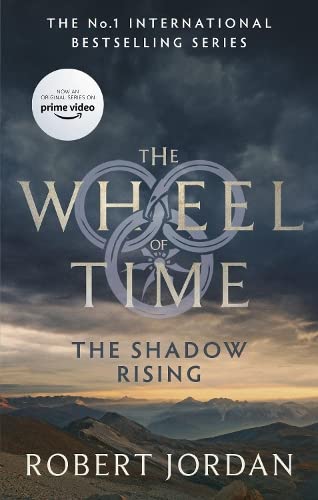
Cover of The Shadow Rising by Robert Jordan

The Shadow Rising

Robert Jordan, 1990
Cover of The Fires of Heaven by Robert Jordan

The Fires of Heaven

Robert Jordan, 1993

Heer van Chaos

ROBERT JORDAN

Heer van Chaos

Robert Jordan, 1994
Cover of A Crown of Swords by Robert Jordan

A Crown of Swords

Robert Jordan, 1996
Cover of The Path of Daggers by Robert Jordan

The Path of Daggers

Robert Jordan, 1998
Cover of Winter's Heart by Robert Jordan

Winter's Heart

Robert Jordan, 2000
Cover of Crossroads of Twilight by Robert Jordan

Crossroads of Twilight

Robert Jordan, 2003
Cover of Knife of Dreams by Robert Jordan

Knife of Dreams

Robert Jordan, 2003
Cover of What the Storm Means: Prologue to The Gathering Storm by Robert Jordan, Brandon Sanderson

What the Storm Means: Prologue to The Gathering Storm

Robert Jordan, 2009
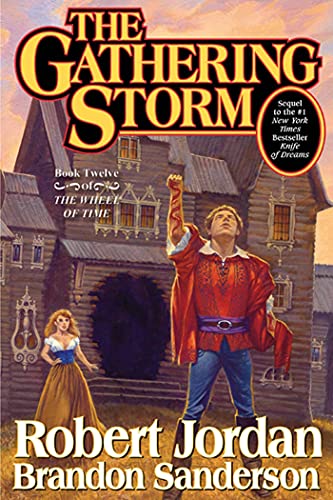
Cover of The Gathering Storm by Brandon Sanderson, Robert Jordan

The Gathering Storm

Brandon Sanderson, 2007

§Other Editions

Showing 2 of 43 editions
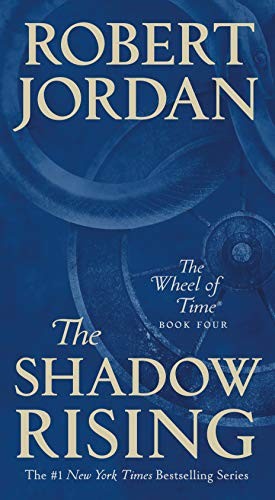
Cover of The Shadow Rising

The Shadow Rising

engMass Market PaperbackMedia tie-in
Tor Fantasy20199781250251923
Amazon
Cover of The Shadow Rising

The Shadow Rising

engMass Market Paperback
Macmillan19929780812513738
§Genres
fantasy2adventure1classics1fantasy fiction1fiction1literary criticism1russian1
§Content Warnings
§Moods
adventurous1challenging1emotional1funny1inspiring1mysterious1
§Tags
#diverse characters1#loveable characters1#not diverse characters1#plot driven1#strong character development1

Metadata

ISBN-139780748115372
ISBN-100748115374
ASIN1250251923

Editions and availability

Find The Shadow Rising Robert Jordan in PDF, EPUB, ebook, audiobook, print, or library editions.

View on Amazon
Bookshop.orgGoogle Play BooksBarnes & NobleOpen Library