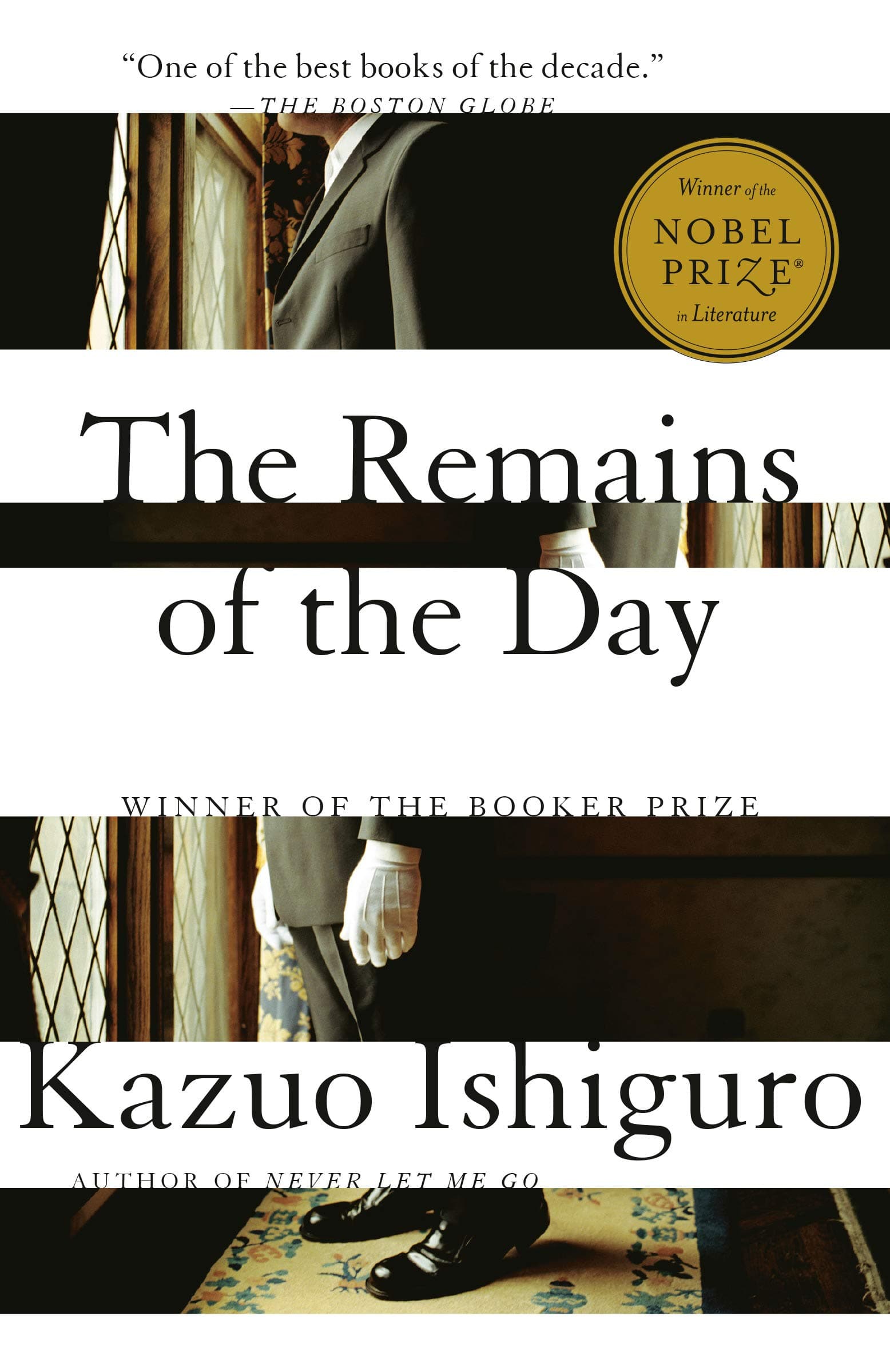
In the summer of 1956, Stevens, the ageing butler of Darlington Hall, embarks on a leisurely holiday that will take him deep into the countryside and into his past . . .A contemporary classic, The Remains of the Day is Kazuo Ishiguro's beautiful and haunting evocation of life between the wars in a Great English House, of lost causes and lost love.
Add to your library to track progress and write reviews
Find paris match Kazuo Ishiguro in PDF, EPUB, ebook, audiobook, print, or library editions.
7 books in catalog
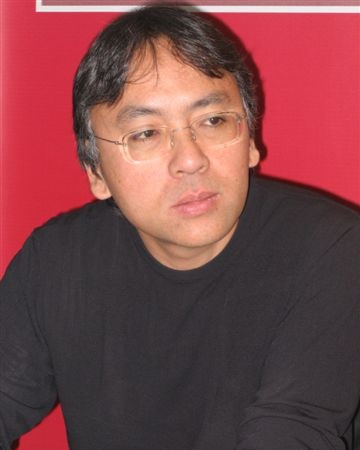
Explorations of memory, self-deception, and the passage of time define one of modern literature's most distinctive bodies of fiction, highlighted by the Booker Prize-winning novel The Remains of the Day. Kazuo Ishiguro, a British novelist of Japanese origin born in Nagasaki in 1954, has written acclaimed works spanning historical fiction, dystopian science fiction, and fantasy.
Ishiguro moved to England with his family in 1960. He completed his Bachelor's degree at the University of Kent in 1978 and earned a Master's degree from the University of East Anglia's creative writing program in 1980. After becoming a British citizen in 1982, he established himself as a full-time author based in London. His debut novel, A Pale View of Hills, won the 1982 Winifred Holtby Memorial Prize, followed by An Artist of the Floating World, which won the 1986 Whitbread Prize. His third novel, The Remains of the Day, won the 1989 Man Booker Prize and was adapted into an acclaimed film, while The Unconsoled received the 1995 Cheltenham Prize. In 2008, The Times ranked him 32nd on their list of "The 50 Greatest British Writers Since 1945". In 2017, he received the Nobel Prize in Literature, awarded by the Swedish Academy for uncovering "the abyss beneath our illusory sense of connection with the world".
Writing primarily in the first person, Ishiguro frequently employs unreliable narrators whose understated reflections gradually reveal deeper psychological truths, regret, and personal reckoning. His characters often grapple with historical shifts, societal obligations, and the fragility of human memory, whether situated in post-World War II Japan, interwar Britain, or speculative settings. Books such as Never Let Me Go and Klara and the Sun incorporate speculative elements like cloning and artificial intelligence to examine empathy, mortality, and what it means to be human.