SSansFiction
The libraryCollectionsJournalStatsFor authors
Sign inJoin now
Sansfiction,

A digital library for books. Made by readers, for readers.

v 2.0 · 2026
The library
  • Discover
  • Collections
  • Book tracker
  • Journal
  • Stats
For authors
  • SF Links
  • Analytics
  • How it works
  • FAQ
Elsewhere
  • X / @sansfiction
  • Privacy
  • Terms
  • Contact
© 2026 SansFiction · Digital · GlobalA quiet room for your reading life.
The libraryCollectionsJournalStatsFor authors
Sign inJoin now →
Navigation
Library
Bookshelf
Journal
Discover
Collections
Tierlists
Stats
Profile
Author Page
Link Builder
Account
Sign in
S
G
BooksadventureThe Remains of the Day
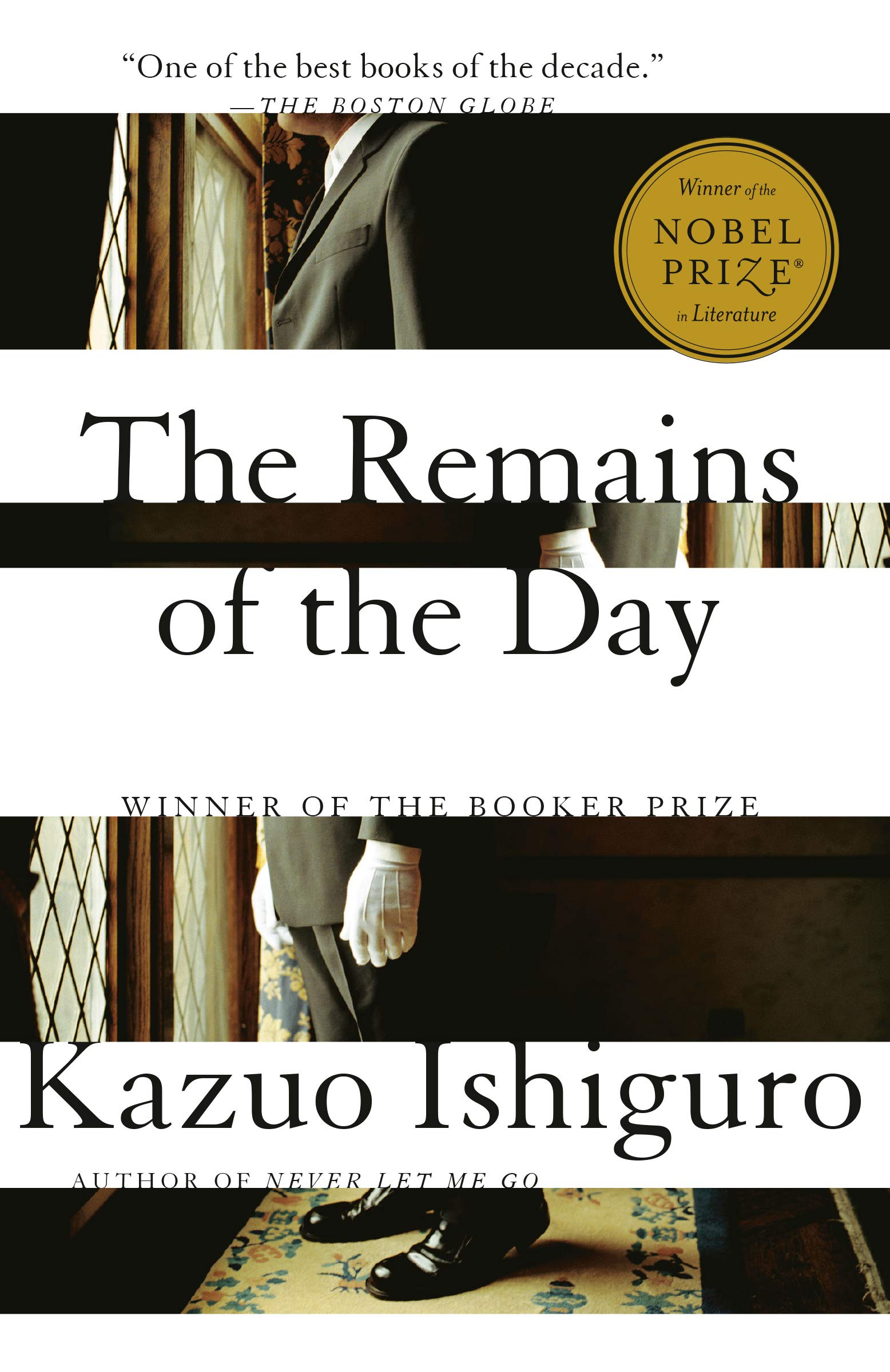
Cover of The Remains of the Day by Kazuo Ishiguro

The Remains of the Day,

by Kazuo Ishiguro

Ask AI
Rating4.2/ 5
Ratings628
Pages245
Reading Hours5h
Published2010
LanguageEnglish

§Synopsis

01

In the summer of 1956, Stevens, the ageing butler of Darlington Hall, embarks on a leisurely holiday that will take him deep into the countryside and into his past . . .A contemporary classic, The Remains of the Day is Kazuo Ishiguro's beautiful and haunting evocation of life between the wars in a Great English House, of lost causes and lost love.

§Our take

The whole book lives in what Stevens will not say. His formal courtesy can be funny, moving and maddening, because the reader sees what he cannot bring himself to face. He is not trying to deceive anyone; he is editing his life to preserve the dignity he has made synonymous with service.

The 1956 journey is mostly a frame for memory. The house's politics and Stevens's bond with Miss Kenton sharpen the moral and emotional cost of his restraint. Ishiguro keeps nearly all the action inside Stevens's voice, so the silences become the argument.

§Themes

Professional dignity
Stevens treats total professional composure as a moral ideal, though obedience narrows what he can see.
Memory as self-editing
The 1956 road trip opens onto memories that Stevens reshapes to protect his picture of a life well spent.
Love under restraint
His bond with Miss Kenton makes the personal cost of Stevens's restraint impossible for the reader to miss.
Service and complicity
His loyalty to Lord Darlington binds service to class deference and raises the question of Stevens's own responsibility.
Englishness and class
Critics read Stevens's formal deference as a way of examining English identity and class.

§How it was received

The novel won the 1989 Booker Prize and has become a landmark of post-war British fiction; it was Ishiguro's third book. Kathleen Wall argues that Stevens can be trusted on events but not on his interpretations, the basis of the unreliable-narrator reading, while Steven Connor reads the book as a study of English national identity. The Compulsive Reader calls it lovely, praising its plain surface and deeper view of dignity and service but noting the lack of present-day action.

§Read it if

  • You like quiet, character-led fiction where voice and subtext carry more than event
  • You enjoy a narrator whose evasions are moving, funny and exasperating
  • You want class, service, lost love and politics to meet inside one careful mind

§Skip it if

  • You need plot momentum. Very little happens in the 1956 frame; the book lives in recollection.
  • You dislike guarded narrators. Stevens's refusal to face his feelings can feel like evasion rather than restraint.

§Before you start

Reading experience
The pace is quiet and slow, but the prose is easy to read; the difficulty lies in catching what Stevens leaves unsaid.
Content notes
No graphic content; A 1930s political backdrop of appeasement and antisemitism in an aristocratic household; A parent's death and lifelong emotional repression.

§Common questions

Must Ishiguro's earlier novels be read first?
No. It is standalone, though it is his third novel.
Is Stevens an unreliable narrator?
Not as a liar. He can be trusted on what happened but not on what it means, because his polished judgments protect the professional self-image he has built.
Is it mainly a love story or a political novel?
Both, in oblique form. Miss Kenton shows the cost of Stevens's restraint, while Lord Darlington's politics pull class and conscience into the same house.

§If you liked this

  • Never Let Me Go by Kazuo Ishiguro — Another Ishiguro novel with a calm, restrained first-person narrator who understands less than the reader, making it the closest obvious companion.
  • An Artist of the Floating World by Kazuo Ishiguro — Ishiguro's preceding novel offers another first-person return to a past the narrator would prefer to see differently.
  • The Go-Between by L. P. Hartley — Hartley also uses an adult narrator looking back through memory and class barriers, making it a natural companion for readers who favor reflective fiction.
Sources
  • Wikipedia
  • Wikipedia
  • Wikipedia
  • The Compulsive Reader (Magdalena Ball, 2015)

Track this book

Add to your library to track progress and write reviews
§Genres
adventure1classics1country homes1fiction1general1historical fiction1history1
§Content Warnings
§Moods
emotional1funny1hopeful1informative1lighthearted1reflective1relaxing1
§Tags
#diverse characters1#grief1#loveable characters1#not diverse characters1#slow-paced1#strong character development1

§About the Author

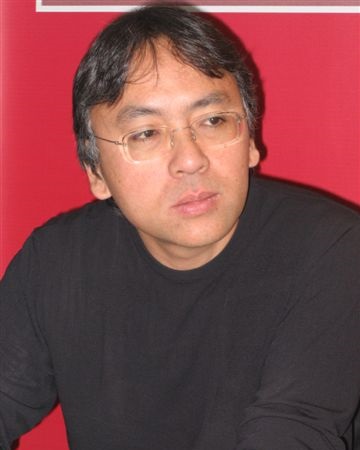
Kazuo Ishiguro
Kazuo Ishiguro

7 books in catalog

Explorations of memory, self-deception, and the passage of time define one of modern literature's most distinctive bodies of fiction, highlighted by the Booker Prize-winning novel The Remains of the Day. Kazuo Ishiguro, a British novelist of Japanese origin born in Nagasaki in 1954, has written acclaimed works spanning historical fiction, dystopian science fiction, and fantasy.

Career & Background

Ishiguro moved to England with his family in 1960. He completed his Bachelor's degree at the University of Kent in 1978 and earned a Master's degree from the University of East Anglia's creative writing program in 1980. After becoming a British citizen in 1982, he established himself as a full-time author based in London. His debut novel, A Pale View of Hills, won the 1982 Winifred Holtby Memorial Prize, followed by An Artist of the Floating World, which won the 1986 Whitbread Prize. His third novel, The Remains of the Day, won the 1989 Man Booker Prize and was adapted into an acclaimed film, while The Unconsoled received the 1995 Cheltenham Prize. In 2008, The Times ranked him 32nd on their list of "The 50 Greatest British Writers Since 1945". In 2017, he received the Nobel Prize in Literature, awarded by the Swedish Academy for uncovering "the abyss beneath our illusory sense of connection with the world".

Writing Style & Themes

Writing primarily in the first person, Ishiguro frequently employs unreliable narrators whose understated reflections gradually reveal deeper psychological truths, regret, and personal reckoning. His characters often grapple with historical shifts, societal obligations, and the fragility of human memory, whether situated in post-World War II Japan, interwar Britain, or speculative settings. Books such as Never Let Me Go and Klara and the Sun incorporate speculative elements like cloning and artificial intelligence to examine empathy, mortality, and what it means to be human.

Major Works

  • A Pale View of Hills — Published in 1982, Ishiguro's debut novel explores memory and trauma in post-World War II Nagasaki through the recollections of a Japanese woman living in England, winning the 1982 Winifred Holtby Memorial Prize.
  • An Artist of the Floating World — Set in post-1945 Japan, this 1986 novel won the Whitbread Prize and depicts an aging painter reflecting on his career, ideology, and changing societal values.
  • The Remains of the Day — Awarded the 1989 Man Booker Prize, this novel details the life and buried emotions of an English butler looking back on decades of service to an aristocratic employer.
  • The Unconsoled — This surreal 1995 novel won the Cheltenham Prize and follows a renowned pianist navigating an unfamiliar European city amidst confusing expectations and shifting deadlines.
  • Never Let Me Go — A dystopian 2005 novel that examines love, ethics, and human identity through the lives of students raised at a specialized boarding school.
  • The Buried Giant — A New York Times bestseller set in post-Arthurian Britain, blending fantasy elements with an investigation of collective memory and forgotten history.
  • Klara and the Sun — A speculative novel told from the perspective of an Artificial Friend who observes human emotion, love, and loss with meticulous devotion.

§Other Editions

Showing 2 of 88 editions
Cover of The Remains of the Day

The Remains of the Day

engAudible
Random House Audio2019B07YM45NMG
Amazon
Cover of paris match

paris match

engPaperback
Putnam Publishing Group20149780399169120
§Genres
adventure1classics1country homes1fiction1general1historical fiction1history1
§Content Warnings
§Moods
emotional1funny1hopeful1informative1lighthearted1reflective1relaxing1
§Tags
#diverse characters1#grief1#loveable characters1#not diverse characters1#slow-paced1#strong character development1

Metadata

ISBN-139780307576187
ISBN-100307576183
ASINB003VPWX6K

Editions and availability

Find The Remains of the Day Kazuo Ishiguro in PDF, EPUB, ebook, audiobook, print, or library editions.

View on Amazon
Bookshop.orgGoogle Play BooksBarnes & NobleOpen Library

Featured In Lists

Book cover from this collectionBook cover from this collectionBook cover from this collectionBook cover from this collection
Book cover from this collection

List 1001 Books Boxall

1000 books
Book cover from this collectionBook cover from this collectionBook cover from this collectionBook cover from this collection
Book cover from this collection

Winners of the Booker Prize

61 books