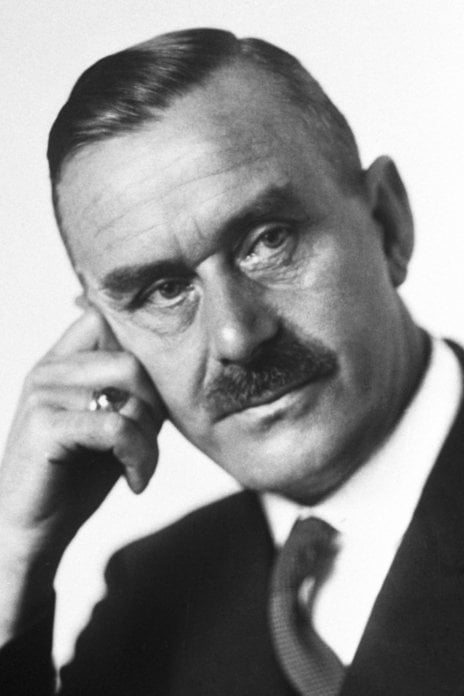
A multi-generational saga detailing the gradual decline of a wealthy merchant family, Buddenbrooks established an enduring tradition of ironic social critique and psychological depth in German literature. Its author, Thomas Mann, crafted epic novels, novellas, and essays that subjected European intellectual life and the psychology of artists to meticulous analysis.
Career & Background
Born on June 6, 1875, in Lübeck to a merchant and senator father and a German-Brazilian mother, Thomas Mann worked on early prose sketches before achieving early renown with his debut novel. His older brother was the radical writer Heinrich Mann, and three of his six children—Erika Mann, Klaus Mann, and Golo Mann—also became prominent German writers. In 1929, Mann was awarded the Nobel Prize in Literature, primarily in recognition of Buddenbrooks. As a prominent social critic, essayist, philanthropist, and anti-fascist, Mann fled to Switzerland when Hitler came to power in 1933. When World War II broke out in 1939, he emigrated to the United States, later returning to Switzerland in 1952. Through these relocations, he became one of the primary exponents of German exile literature (Exilliteratur).
Writing Style & Themes
Throughout his career as a novelist, short story writer, and essayist, Mann developed a highly symbolic and ironic style focused on the inner tensions between artistic temperament and bourgeois life. His narratives examine the psychology of the artist and the intellectual while probing the moral and cultural state of the European and German soul. To execute these critiques, Mann utilized modernizations of German and Biblical stories alongside the philosophical traditions of Johann Wolfgang von Goethe, Friedrich Nietzsche, and Arthur Schopenhauer.
Major Works
- Buddenbrooks — First published as a debut novel written when the author was twenty-five, this chronicle follows four generations of a Lübeck merchant family and served as a major reason for his 1929 Nobel Prize in Literature.
- Death in Venice — This 1912 novella explores the psychological collision between artistic discipline and obsession through an aging writer visiting Italy.
- The Magic Mountain — Set in an alpine sanatorium on the eve of World War I, this 1924 novel functions as a psychological and philosophical microcosm of pre-war European society.
- Joseph and His Brothers — A four-part novel sequence that reinterprets the Biblical narrative of Joseph through mythic and psychological themes.
- Doctor Faustus — A tragic novel recasting the Faust legend through a modern composer whose Faustian pact allegorizes Germany's cultural and political trajectory.