SSansFiction
The libraryCollectionsJournalStatsFor authors
Sign inJoin now
Sansfiction,

A digital library for books. Made by readers, for readers.

v 2.0 · 2026
The library
  • Discover
  • Collections
  • Book tracker
  • Journal
  • Stats
For authors
  • SF Links
  • Analytics
  • How it works
  • FAQ
Elsewhere
  • X / @sansfiction
  • Privacy
  • Terms
  • Contact
© 2026 SansFiction · Digital · GlobalA quiet room for your reading life.
The libraryCollectionsJournalStatsFor authors
Sign inJoin now →
Navigation
Library
Bookshelf
Journal
Discover
Collections
Tierlists
Stats
Profile
Author Page
Link Builder
Account
Sign in
S
G
Booksafrican american womenThe Help
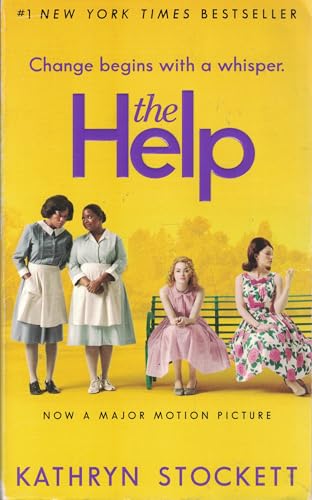
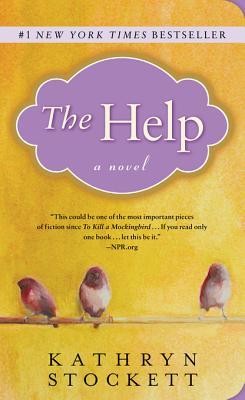
Cover of The Help by Kathryn Stockett

The Help,

by Kathryn Stockett

Ask AI
Rating4.2/ 5
Ratings875
Pages466
Reading Hours10h
Published2009
LanguageEnglish

§Synopsis

01

"Her friend Minny has never held her tongue but now must somehow keep secrets about her employer that leave her speechless. White socialite Skeeter just graduated college. She’s full of ambition, but without a husband, she’s considered a failure.

Together, these seemingly different women join together to write a tell-all book about work as a black maid in the South, that could forever alter their destinies and the life of a small town..."-- Provided by Amazon

§Our take

The Help is an easy, energetic read about a brutal history, but the novel cannot stop arguing with itself about who gets to tell the story. Kathryn Stockett’s debut follows Skeeter Phelan as she gathers accounts from Black maids in early-1960s Jackson, Mississippi, and turns them into a secret book. Aibileen and Minny receive first-person chapters, yet Skeeter organizes the project and remains its central figure. That structure makes the book lively and uneasy at once.

The voices can charm or grate. Kirkus called the book engrossing while warning that Aibileen’s and Minny’s inner lives sometimes feel patronizing; heavy dialect is the most repeated complaint from readers and critics. Stockett has said she was nervous about the voices and doubted she had got everything right. The lighter tone makes the novel easy to recommend and harder to square with Jim Crow. Read it for the uneasy alliance among the three women, but keep the argument about voice and authorship in view.

§Themes

Who owns the story
Aibileen and Minny speak in first person, but Skeeter organizes the project that gathers their testimony, leaving power unevenly distributed.
Dialect that divides
Aibileen and Minny speak in heavy dialect while Skeeter does not, making the voice choices the novel’s most persistent point of friction.
Friendship under pressure
The three women build trust through a shared secret, but race and social power keep the arrangement precarious.
Optimism against Jim Crow
The book’s warmth is both its appeal and a disputed softening of a brutal social order.

§How it was received

Publishers Weekly praised the debut as optimistic and timely and predicted a bestseller. Kirkus called it engrossing while flagging a hint of white-liberal self-congratulation and some patronising distance from Aibileen and Minny. Readers also praised the memorable cast and easy flow, while the Association of Black Women Historians later criticised the book and film for reviving the “Mammy” stereotype, exaggerating dialect and downplaying the era’s activism and violence.

§Read it if

  • You want an easy, engaging read with memorable characters and a secret book at its centre
  • You like historical fiction that mixes friendship, ambition and social pressure without becoming solemn throughout
  • You’re willing to argue about voice, authorship and whose story frames the book

§Skip it if

  • Heavy dialect makes you tense. It is the most repeated complaint about the prose.
  • You need Black women to have full narrative control. Skeeter’s project still organises their stories.

§Before you start

Reading experience
Three alternating first-person narrators keep the story easy to follow, though Aibileen’s and Minny’s heavy dialect may slow readers who aren’t used to it.
Reading order
Standalone novel. There is no series order.
Content notes
Jim Crow-era racism, including segregation, racial slurs and demeaning treatment of Black workers; Domestic abuse and miscarriage; The assassination of Medgar Evers appears as historical backdrop; Alcohol, smoking and profanity.

§Common questions

Is The Help part of a series?
No. It is a standalone novel with no series order.
Is The Help based on a true story?
No, it is fiction. Stockett's afterword describes her family's maid, Demetrie, and the questions she wishes she had asked her.
Why is The Help controversial?
Critics point to heavy dialect, patronising distance from Black characters, the “Mammy” stereotype and a white-led frame. Stockett has said she doubted she got every voice right.

§If you liked this

  • The Secret Life of Bees by Sue Monk Kidd — Another 1960s Southern story about race and women’s bonds, with the same broad book-club appeal.
  • The Color Purple by Alice Walker — A Black author’s first-person story of Black women in the South, offering a useful contrast on voice and authorship.
  • Blanche on the Lam by Barbara Neely — Barbara Neely's mystery puts a Black domestic worker in charge of her own story, a sharp counterpoint to Skeeter's project.
  • The Invention of Wings by Sue Monk Kidd — A white woman’s story involving an enslaved Black woman, which raises the same authorship questions in an earlier period.
  • Small Great Things by Jodi Picoult — A mainstream novel by a white author with a Black protagonist, useful for testing the same questions about who gets to tell the story.
Sources
  • Wikipedia
  • Kirkus Reviews
  • Publishers Weekly
  • AALBC (reprint of Association of Black Women Historians open statement)
  • Deseret News (AP)
  • ABA Journal
  • CBS News
  • LitLovers
  • Entertainment Tonight
  • Common Sense Media

Track this book

Add to your library to track progress and write reviews
§Genres
african american women1classics1fiction1literature1young adult1
§Moods
challenging1emotional1funny1hopeful1inspiring1reflective1sad1
§Tags
#audible1#diverse characters1#loveable characters1#strong character development1

§About the Author

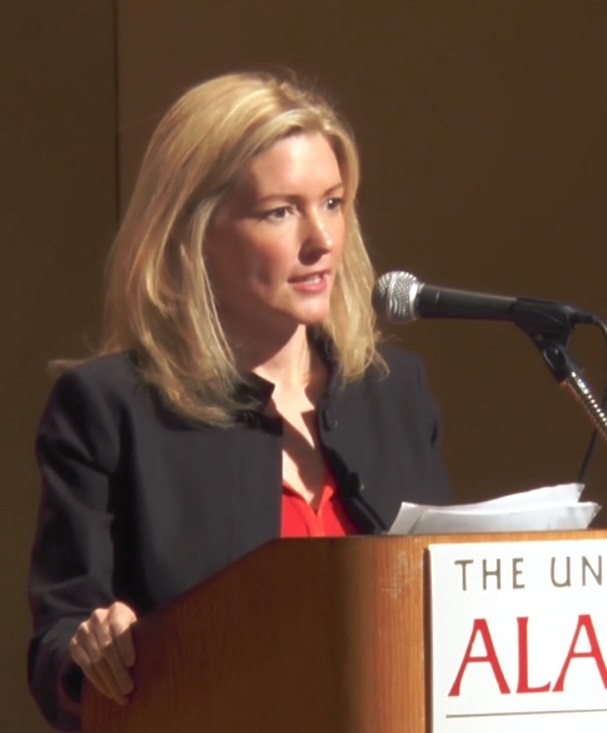
Kathryn Stockett
Kathryn Stockett

3 books in catalog

Set in early 1960s Mississippi, the historical fiction novel The Help examines the complex social boundaries and personal relationships between African American domestic workers and the white households that employed them. Novelist Kathryn Stockett drew directly on her childhood observations in Jackson to construct a multi-perspective narrative that captured millions of readers worldwide.

Career & Background

Born in Jackson, Mississippi, on February 6, 1969, Stockett attended Jackson Preparatory School before earning a degree in English and creative writing from the University of Alabama in Tuscaloosa. Following her graduation, she moved to New York City to work in magazine publishing and marketing, a professional period that lasted nine years before she transitioned to writing fiction.

Stockett spent five years completing her debut novel, The Help, which faced initial hurdles when sixty literary agents rejected the manuscript. The book was eventually accepted by Amy Einhorn Books, an imprint of Penguin Group USA, and published in 2009. The novel became a major commercial success, spending over 100 weeks on The New York Times bestseller list, selling more than 15 million copies worldwide, and being translated into 42 languages. Its popularity led to an Academy Award-winning film adaptation and a feature on PBS's The Great American Read. Stockett currently divides her time between Mississippi and New York City.

Writing Style & Themes

Stockett's narrative approach in The Help relies on interweaving the distinct first-person voices of three women in 1960s Jackson to portray systemic racial division and domestic labor dynamics. By centering the personal accounts of Black maids alongside a young white woman seeking to publish their stories, her work highlights subtle acts of quiet courage, community solidarity, and cross-cultural tension.

Beyond its central exploration of Southern racial politics and class hierarchies, Stockett's writing addresses themes of social conformity and female identity within tight-knit communities. Local catalog selections such as The Help and The Calamity Club reflect reader interest in character-driven fiction that examines Southern tradition, domestic boundaries, and social change.

Major Works

  • The Help — Published in 2009, this debut novel set in Jackson, Mississippi, follows three women during the Civil Rights Era who secretly record the experiences of African American domestic workers. The bestseller spent over 100 weeks on The New York Times bestseller list, sold over 15 million copies, was translated into 42 languages, and was adapted into an Academy Award-winning feature film.
  • The Calamity Club — Represented in local catalog collections alongside Kathryn Stockett's signature work, this title highlights fictional narratives exploring Southern social dynamics, domestic life, and regional traditions.

§Other Editions

Showing 2 of 39 editions
Cover of The Help

The Help

engPaperback
Berkley20119780425245132
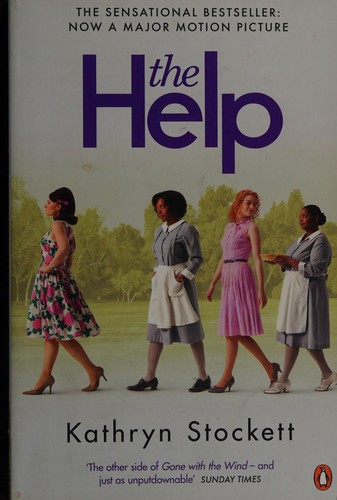
Cover of The Help

The Help

engPaperbackFilm Edition
Penguin UK20099780241956533
§Genres
african american women1classics1fiction1literature1young adult1
§Moods
challenging1emotional1funny1hopeful1inspiring1reflective1sad1
§Tags
#audible1#diverse characters1#loveable characters1#strong character development1

Metadata

ISBN-139781440697661
ISBN-101440697663

Editions and availability

Find The Help Kathryn Stockett in PDF, EPUB, ebook, audiobook, print, or library editions.

Bookshop.orgGoogle Play BooksBarnes & NobleOpen Library

Featured In Lists

Book cover from this collectionBook cover from this collectionBook cover from this collectionBook cover from this collection
Book cover from this collection

MegaReadingList

91 books