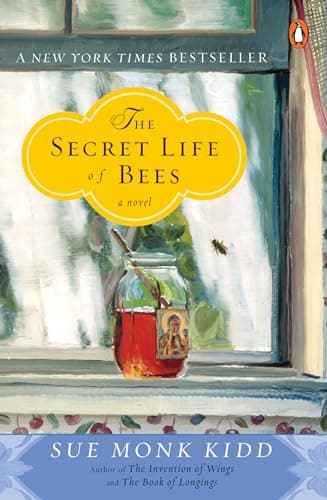
Set in South Carolina in 1964, The Secret Life of Bees tells the story of Lily Owens, whose life has been shaped around the blurred memory of the afternoon her mother was killed. When Lily's fierce-hearted black "stand-in mother," Rosaleen, insults three of the deepest racists in town, Lily decides to spring them both free. They escape to Tiburon, South Carolina--a town that holds the secret to her mother's past. Taken in by an eccentric trio of black beekeeping sisters, Lily is introduced to their mesmerizing world of bees and honey, and the Black Madonna. This is a remarkable novel about divine female power, a story women will share and pass on to their daughters for years to come.
Add to your library to track progress and write reviews
Find The Secret Life of Bees Sue Monk Kidd in PDF, EPUB, ebook, audiobook, print, or library editions.

2 books in catalog
Historical fiction exploring intersectional faith, racial injustice, and female self-discovery in the American South has reached millions of readers worldwide through acclaimed bestsellers. American author Sue Monk Kidd came to prominence with her debut novel, The Secret Life of Bees, which spent more than one hundred weeks on the New York Times bestseller list, was translated into thirty-six languages, and was adapted into both a feature film and a stage musical. Her expansive body of work blends rich historical detail with intimate spiritual and narrative depth.
Born in Albany, Georgia, on August 12, 1948, and raised in the town of Sylvester in Worth County, Sue Monk Kidd grew up listening to stories told by her father and the African American women who worked in her family's home, while also drawing inspiration from writers like Henry David Thoreau and Kate Chopin. After graduating from Texas Christian University in 1970 with a degree in nursing, she spent her twenties working as a pediatric nurse and nursing instructor at the Medical College of Georgia. She married Sanford Kidd, with whom she had two children, Bob and Ann. In her forties, she shifted her focus toward creative writing, taking courses at Emory University and Anderson College and attending writers' conferences at Sewanee and Bread Loaf. She initially published spiritual memoirs, including The Dance of the Dissident Daughter and Traveling with Pomegranates, before turning to fiction. Over her career, she received the South Carolina Fellowship in Literature, was inducted into the South Carolina Academy of Authors in 2011, received an honorary doctor of letters from Texas Christian University in 2016, and was inducted into the Georgia Writers Hall of Fame in 2022.
Kidd's historical novels frequently deal with central themes of race, feminism, and religion, examining how women navigate societal constraints, personal grief, and spiritual awakenings. Set against deeply rendered Southern landscapes or key historical moments, her narrative style combines rigorous research with an emphasis on human connection, belonging, and moral courage. Whether probing early nineteenth-century abolitionist movements or mid-twentieth-century racial tension, her writing highlights women seeking agency and purpose within traditional social structures.