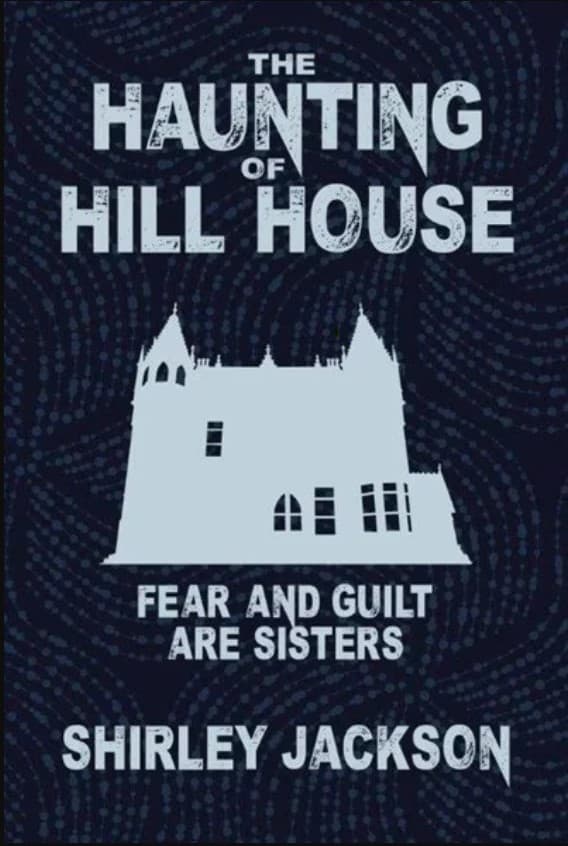
Hill House is an 80 year-old mansion built by long-deceased Hugh Crain. The story concerns four main characters: Dr. John Montague, an investigator of the supernatural; Eleanor Vance, a shy young woman who resents having lived as a recluse caring for her demanding invalid mother; Theodora, a flamboyant, bohemian, possibly lesbian artist; and Luke Sanderson, the young heir to Hill House, who is also the host to the others. Dr. Montague hopes to find scientific evidence of the existence of the supernatural. He rents Hill House for a summer and invites as his guests several people whom he has chosen because of their past experience with paranormal events. Of these, only Eleanor and Theodora accept. All four of the inhabitants begin to experience strange events while in the house, including unseen noises and ghosts roaming the halls at night, strange writing on the walls and other unexplained events. Eleanor tends to experience phenomena to which the others are oblivious. At the same time, Eleanor may be losing touch with reality... A finalist for the National Book Award, The Haunting of Hill House is considered as one of the best literary ghost stories published during the 20th century, even by stalwarts like Stephen King. It has been made into two feature films, a TV series and a play. Jackson's novel relies on terror rather than horror to elicit emotion in the reader, utilizing complex relationships between the mysterious events in the house and the characters' psyches. A must read!
Add to your library to track progress and write reviews
Find The Haunting of Hill House Shirley Jackson in PDF, EPUB, ebook, audiobook, print, or library editions.

2 books in catalog
American gothic horror and psychological suspense were profoundly shaped by mid-twentieth-century short fiction and novels, most famously exemplified by The Haunting of Hill House and the chilling short story The Lottery. Shirley Jackson crafted six completed novels, two memoirs, and over 200 short stories during a writing career spanning more than two decades. Critical evaluations documented through 2025 highlight her ability to reveal the sinister undercurrents and psychological tension beneath ordinary suburban and small-town American life.
Born in San Francisco, California, in 1916, Jackson grew up in nearby Burlingame and attended the University of Rochester before transferring to Syracuse University. She graduated from Syracuse in 1940, where she served as fiction editor of the campus humor magazine and met her future husband, literary critic Stanley Edgar Hyman. The couple married in 1940, lived briefly in New York City, and settled in North Bennington, Vermont, in 1945. Balancing domestic responsibilities for four children with a prolific writing schedule, Jackson published her first novel alongside dozens of magazine stories in the late 1940s. Her national profile expanded rapidly after The New Yorker published The Lottery in 1948, generating widespread reader response and intense public debate.
A central theme across Jackson's fiction is the presence of evil, chaos, and social cruelty just beneath the surface of everyday life. Her stories frequently explore small-town conformity, isolation, persecution, and psychological disorientation. In sharp contrast to her gothic suspense fiction, her bestselling memoirs Life Among the Savages (1953) and Raising Demons (1957) maintain a light comic tone that chronicles the humorous realities of raising four children. This duality between lighthearted domestic humor and dark psychological terror demonstrates her stylistic versatility, combining sharp observation with unsettling ambiguity.